For doctors and practice owners stuck between ₹10 and 25 Lakhs a month who want ₹50 Lakhs+
Hiring, training and SOPs

Build A Team That Converts Without You In Every Conversation. Hired Right, Trained Weekly, Run On SOPs.

Systems only work when people run them. Most clinics hire in a hurry, train once and hope. We help you hire for the right roles, train your front desk, coordinators and doctors on real calls and consultations, and write the SOPs that keep standards up when you are not watching.

In one line

The right people hired, trained on real calls and consultations, and running from simple SOPs, so the practice grows without you in every room.

Sound familiar?

What we usually find

You hired a receptionist when you needed someone who could convert.
Training happened once, on the first day, and never again.
Every staff change takes your clinic back to square one.
There is no written way of doing anything, so everyone does it their own way.

What we build

The system, piece by piece

01

Hiring for clinics

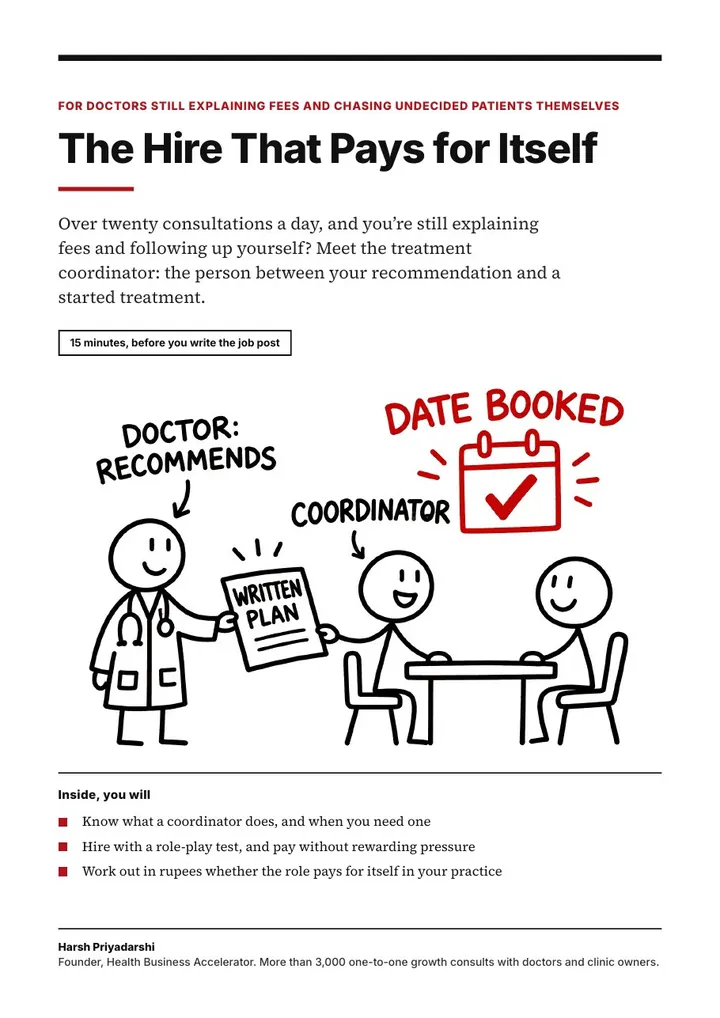
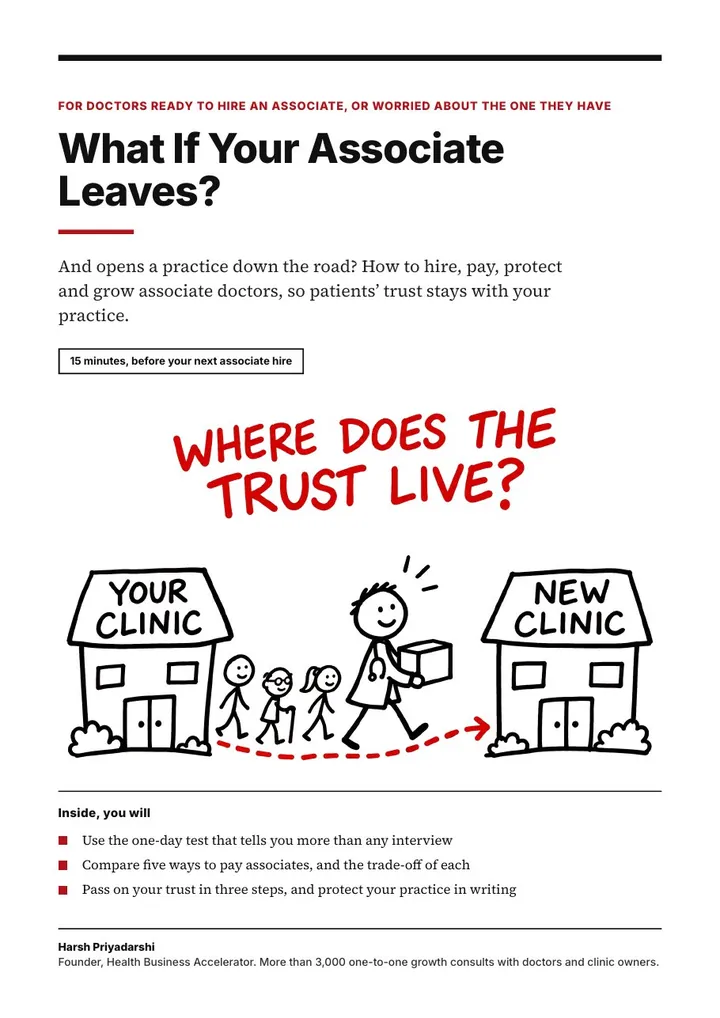
Role cards, job descriptions, interview scorecards and trial tasks for front desk, coordinators, managers and associates.

02

Front desk training

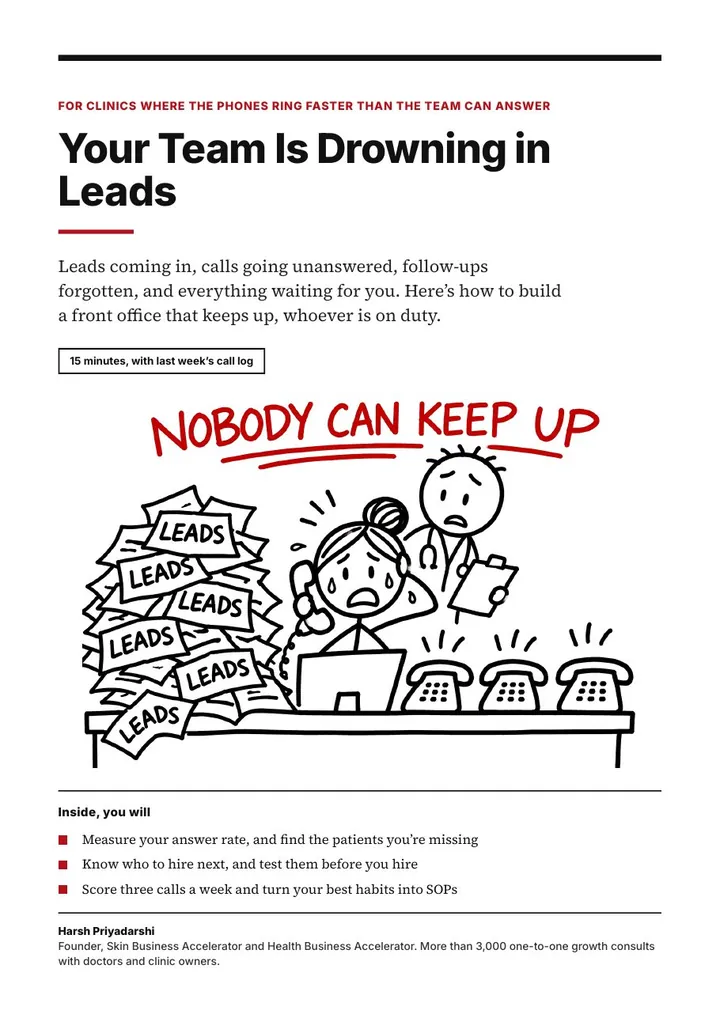
The five-step call, booking scripts and WhatsApp replies, practised in weekly role-plays and scored on real calls.

03

Consultation training for doctors

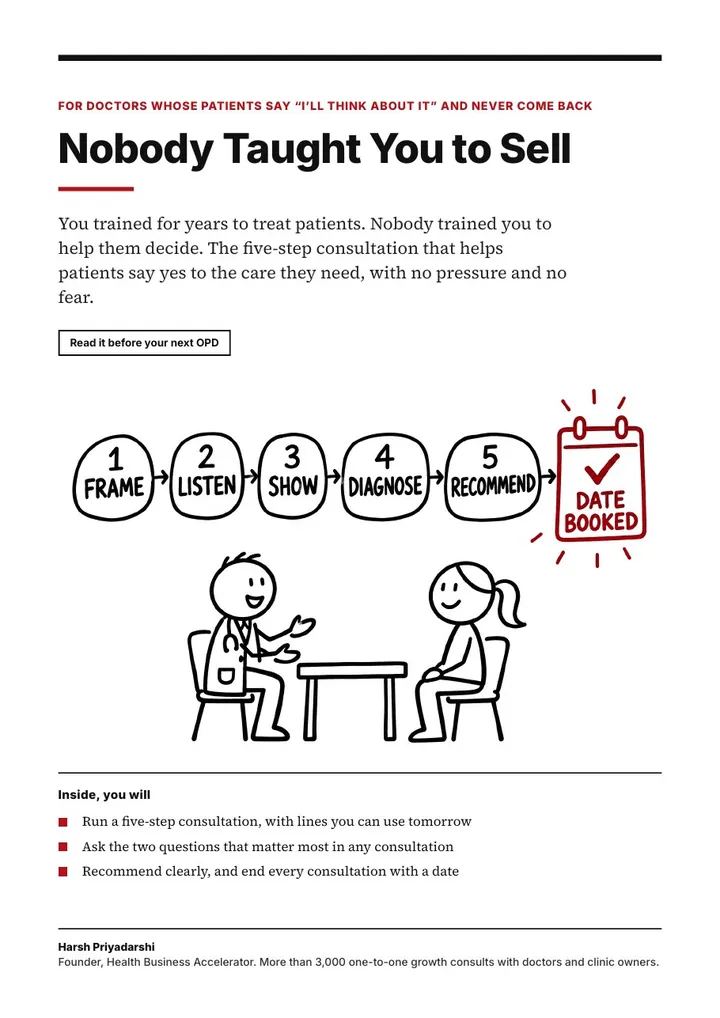
The TEPQ consultation sequence, plans with three honest options and objection handling, without ever cheapening your skill.

04

SOP manuals

Every repeating task written as a short checklist, from opening the clinic to following up an undecided patient.

05

Scorecards and incentives

Clear numbers for every role and incentives tied to what the clinic actually needs, reviewed every week.

06

The DMF Residency

A done-with-you programme where your own team runs the work from our scripts, templates and SOPs, with weekly group calls and a monthly one-to-one.

How we deliver it

Tools, not opinions

  • Call scoring on real front desk calls
  • Consultation audits against the TEPQ blueprint
  • Role-play libraries and weekly practice sessions
  • Onboarding checklists for every new hire

Client stories

What this looked like in real practices

Dermatologist ends two flat years as others deliver over half her revenue

18 monthsto end two flat years
50%+of revenue now delivered by her team

The problem. A dermatologist had a busy practice with a team of fifteen but still saw almost every patient herself and approved every decision. Her revenue had been flat for two years; the problem wasn't demand, it was her.

What we did. We helped her hire her first associate doctor and bring in a practice manager. We helped her write down how everything was done.

The result. Within eighteen months, more than half her revenue came from work she didn't personally deliver, and the practice was growing again.

From Rich Doctors Walk Away, Chapter 2

Plastic surgeon moves to a premium niche and leaves budget competition

The problem. A plastic surgeon was priced in the middle of his market: a little more expensive than the budget clinics, a little cheaper than the premium ones, and remembered by nobody.

What we did. We moved him to a premium niche with one clear speciality, priced at the top of his market. We rebuilt his offer around the premium promise: longer consultations, one coordinator from start to finish and a structured aftercare programme.

The result. He stopped competing with the budget clinics entirely.

From Good Doctors Go Broke, Chapter 4

OncologyOncologist, North India

An oncologist who wanted the system, run by his own team

The problem. A senior oncologist wanted a predictable flow of the right patients, but wanted his own team, not an agency, to run it.

What we did. He joined our done-with-you Residency: his team runs the work from our scripts, templates and SOPs, with a weekly group call and a monthly one-to-one, building the numbers review, front desk, positioning and acquisition systems in order.

From our current client work

Surgical practices

Surgeon's surgeries rise to match consultations after definite endings

The problem. A surgeon had a strong booking rate and a strong show rate, yet his surgery numbers barely moved. Patients loved the consultation, said they would think about it, and went home with nothing in writing and no one following up.

What we did. We gave every consultation a definite ending. We set up a coordinator follow-up within a day.

The result. Patients stopped disappearing, and surgeries finally rose to match the consultations.

From Good Doctors Go Broke, Chapter 5

Specialist practices

Clinic gets far more bookings from the same enquiries and budget

The problem. A clinic with enquiries flat for months asked for a bigger ad budget. Mapping its numbers stage by stage showed the enquiries were healthy; the booking rate was the problem, because most callers were never offered an appointment.

What we did. We didn't touch the ad budget. We rebuilt the front desk call structure and trained the team for a month.

The result. The same enquiries started producing far more bookings.

From Good Doctors Go Broke, Chapter 5

Hair transplant surgeon ends per-graft pricing and wins on outcomes

The problem. A hair transplant surgeon quoted every patient a price per graft, like every other clinic in his city. Patients called five clinics, compared the per-graft number and went with the cheapest.

What we did. We replaced the per-graft quote with three hairline restoration plans, each built around an outcome rather than a graft count. We trained the doctor to recommend one plan after every diagnosis and explain why. The front desk stopped quoting exact prices on the phone and gave an honest range with an invitation to come in.

The result. Patients stopped comparing grafts and started comparing outcomes. Most patients now choose his recommended plan.

From Good Doctors Go Broke, Chapter 4

Read all 104 client storiesFilter by your speciality

Questions doctors ask

Hiring, training and SOPs: common questions

What does hiring, training and sops mean for a clinic?

The right people hired, trained on real calls and consultations, and running from simple SOPs, so the practice grows without you in every room. Systems only work when people run them.

How do you measure hiring, training and sops?

The numbers each role owns: booking rate and call scores for the front desk, plan acceptance for coordinators, consult conversion for doctors, and how quickly new hires reach their numbers.

Does this work for my speciality?

Yes. The system is the same wherever patients enquire, book, walk in and decide on treatment, across dermatology, orthopaedics, IVF, dental, urology, eye care, ENT, gynaecology, oncology and more. The words, channels and benchmarks are adjusted for each speciality.

Where should I start?

With a free growth call. Our team traces your last month from enquiry to treated patient, shows you your biggest leak in rupees and gives you a 30-90-180 day plan, which you keep even if we never work together.

Next step

Find your biggest leak in one call.

Forty-five minutes with our team. Your last month traced from enquiry to treatment. Your biggest leak in rupees, and a 30-90-180 day plan to fix it.

Book my free growth callFree. You keep the audit and the plan, even if we never work together.

Prefer to speak to Harsh himself? Book a 60-minute call with Harsh (₹4,999, credited in full if you work with us).