Bhubaneswar clinics should hire front desk staff and treatment coordinators for warmth, persistence and comfort in Odia plus Hindi or English, and design shifts that cover evenings and weekends. Test candidates with a phone call in two languages, role-plays and a WhatsApp reply, pay a fair salary plus incentives on arrivals or started treatments, and follow a written 30-day training plan.
A Bhubaneswar clinic I would want to work with has a simple test for every new hire. The candidate answers three practice calls: a mother from Jajpur speaking only Odia, a student from another state speaking Hindi, and a professional in English who has already compared three clinics online and wants straight answers. Candidates who stay warm and clear in all three get the job. The others do not, however good their CV looks.
That test captures what the front desk and coordinator roles need in this city.
Which roles does a growing Bhubaneswar clinic need?
At around ₹15 to 50 lakh a month, most clinics need patient-facing roles that are clearly separated:
- Lead handler: owns every new enquiry by phone and WhatsApp, from first reply to confirmed booking. Measured on answer rate, speed to first contact, booking rate and show rate.
- Front desk: owns arrivals, the waiting room and payments.
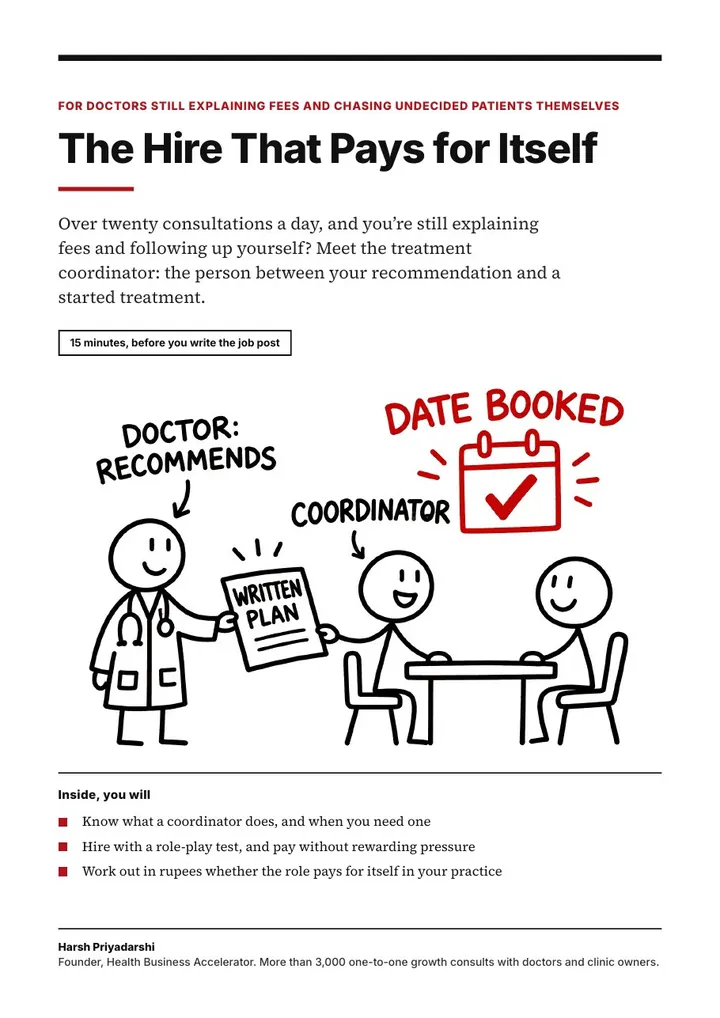
- Treatment coordinator: owns the journey from the doctor's recommendation to a treatment that is paid for and started, plus follow-up for undecided patients. Needed once you pass about twenty consultations a day.
- Practice manager: owns schedules, SOPs and the weekly numbers review.
For each role, a single page is enough: the patient moments it owns, the numbers it reports every Monday and an example of a great week.
How should you plan shifts in Bhubaneswar?
Many clinics hire for a 10 to 6 day, then lose the evening enquiries from professionals and students. Before hiring, count your enquiries by hour for two weeks. If a large share arrives after six, plan a staggered shift, with one person starting later and covering the evening, rather than paying everyone to sit through quiet mornings.
Here is an example of why it pays. Say an evening shift costs an extra ₹20,000 a month. If it books just four more consultations a week from enquiries that would otherwise go cold, and one in four of those starts a plan with an example value of ₹30,000, that is roughly four extra plans a month, or ₹1.2 lakh, for ₹20,000.
What should you hire for?
- Warmth you can hear, because the first voice is the first step of treatment.
- Language comfort: at least one Odia speaker on every shift, and someone comfortable in Hindi and English.
- Clear explaining, because Bhubaneswar's researchers ask detailed questions.
- Persistence to follow up several times without sounding pushy.
- Calm confidence about money, especially for coordinators.
- Follow-up discipline: every patient, every time, without reminders.
Good English is useful here, because many patients use it. But it is not enough on its own, and warmth matters more.
Where can you find candidates in Bhubaneswar? Look where people already handle anxious customers and important decisions:
- Graduates from the city's colleges and universities, many of whom speak Odia, Hindi and English.
- Patient counsellors and coordinators at hospitals in Bhubaneswar and Cuttack.
- Nurses who are great with patients and want a non-clinical role. They often make excellent coordinators.
- Hospitality staff from hotels, including those used to looking after visitors and families.
- Banking and insurance staff, who are comfortable with payments and paperwork.
- Your own team, where someone may be ready to step up.
How should you test candidates?
| Test | What you are looking for |
|---|---|
| A phone call, half in Odia and half in English or Hindi | Warmth, patience and easy switching between languages |
| Role-play: "Just tell me the fee, I am comparing three clinics" | Asking about the problem, giving an honest range and offering two slots |
| Role-play: "My parents in Balasore need to agree first" | Including the family, holding a slot and setting a follow-up day |
| A WhatsApp reply to a Hindi message in Roman letters | Short, warm, correct and in the patient's own script |
| A shadow day in the clinic | How they treat patients, attendants and the team |
What hiring mistakes should Bhubaneswar clinics avoid?
Three are common. Hiring only for polished English, then finding the new person cannot comfort an Odia-speaking grandmother on the phone. Giving one person the phone, walk-ins, billing and the pharmacy, then wondering why evening enquiries wait until morning. And promoting a confident salesperson to coordinator, who then pushes families too hard. In a city where colleagues, neighbours and relatives compare notes, that pressure shows up quickly in reviews and in fewer referrals.
How should you pay them?
Combine a fair salary with a small reward for the result each role controls. The lead handler earns on patients who turn up, not on bookings that never arrive. The coordinator earns on treatments that actually begin. Put brakes on it too: watch complaints and refund requests, and listen to a few conversations every week, so nobody is paid for pushing.
Then give people a path. In a city with large hospitals hiring constantly, good staff leave when they cannot see a future. Show them the ladder from front desk to lead handler, coordinator and practice manager, with training and a clear raise at each step.
What does a 30-day training plan look like?
- Days 1 to 3: your niche, the doctor, the treatments at a patient's level, and the clinic's tour from a patient's view.
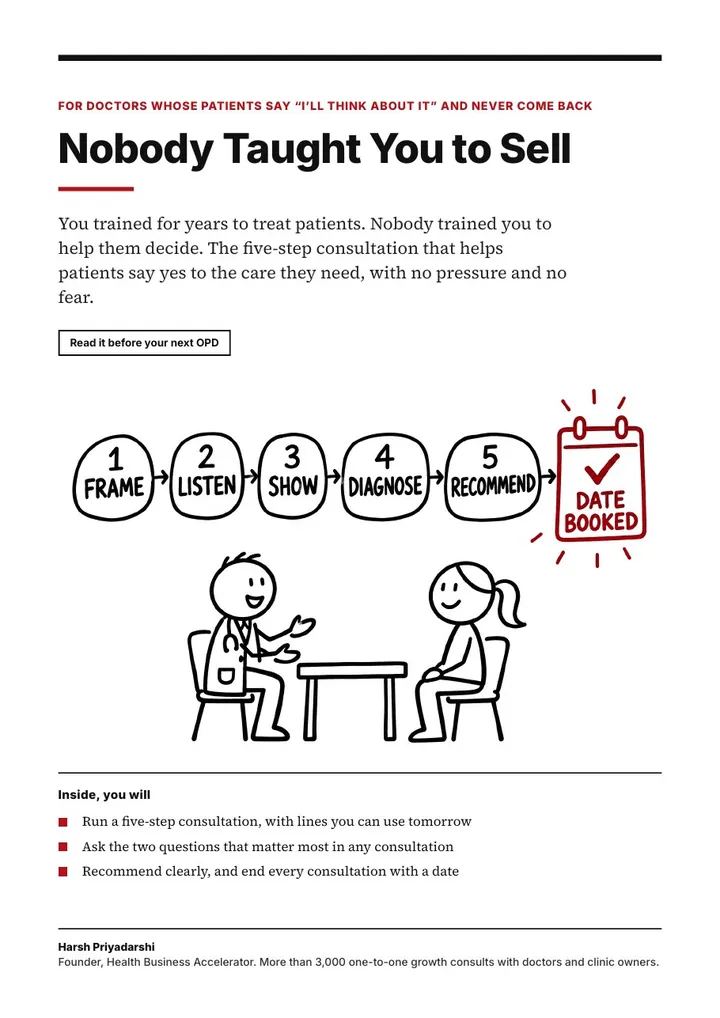
- Days 4 to 7: the five-step call (open warmly, discover, reassure, offer two slots, confirm), the WhatsApp templates in Odia, Hindi and English, and the CRM. Listen to recorded calls, good and bad.
- Week 2: daily role-plays in all three languages, including price questions, family decisions and "another clinic is cheaper".
- Week 3: handling live calls with a senior colleague listening, then a daily review.
- Week 4 for coordinators: the plans, the three options and every payment option, sitting in on consultations, objection handling, and the follow-up cadence of same day, next day, then days three, seven and fourteen.
From day 31, the learning moves into the weekly rhythm: a short call review on Fridays, the numbers on Mondays and a new role-play whenever a new objection keeps coming up. Our team training work runs this with clinic teams, alongside our conversion systems. How these roles fit into a growing practice is covered in Rich Doctors Walk Away, and more on practices here is on our Bhubaneswar page.
The short version
- Separate the lead handler, front desk, coordinator and practice manager roles, each with one page.
- Count enquiries by hour and plan shifts that cover evenings.
- Hire for warmth and Odia plus Hindi or English, and test with calls, role-plays and WhatsApp.
- Pay for arrivals and started treatments, with guardrails, and show people a path to grow.
- Follow a written 30-day training plan, then review calls every week.
Frequently asked questions
Does my Bhubaneswar front desk need to speak Odia, Hindi and English?
Ideally the team does, even if each person does not speak all three. Have at least one Odia speaker on every shift for families and older patients, and someone comfortable in Hindi and English for students, professionals and families from other states.
How do I know if my clinic needs an evening shift?
Count your calls and WhatsApp enquiries by hour for two weeks, and check how long evening enquiries wait for a reply. If many arrive after closing and wait until the next day, a staggered shift or at least an instant reply with a morning callback will usually pay for itself.
What should a treatment coordinator be paid in Bhubaneswar?
Pay a fair fixed salary for the local market plus an incentive on treatments actually started, not on consultations. Add guardrails, such as tracking complaints and reviewing conversations, so nobody is rewarded for pressure. Check the structure with your accountant.
How long does it take to train a new clinic front desk person?
Plan a structured first month: the basics in the first week, daily role-plays in the second, live calls with supervision in the third, and coordinators learning plans and payments in the fourth. After that, weekly call reviews keep standards high.
On a free growth call, my team traces your last month from enquiry to treatment and shows you your biggest leak in rupees.