Chandigarh clinics should hire front desk staff and treatment coordinators who are warm, persistent and comfortable switching between Punjabi, Hindi and English. Test them on a phone call and a role-play with a son calling from abroad. Pay a fair salary plus an incentive on show-ups or started treatments, train for two to four weeks, and write every routine down so knowledge stays when people move on.
The best treatment coordinator I have seen in a tricity clinic was not the most polished candidate. She had worked at a bank in Mohali. She spoke Punjabi with older patients, Hindi with families from Haryana, and English with the daughter in Melbourne who joined every big decision on a video call at nine at night. Patients asked for her by name. When she left to join her husband abroad, the clinic's conversions dropped for three months, because everything she knew lived in her head.
That story has both lessons of hiring in Chandigarh. Hire for the right things. And build the job so it does not leave with the person.
Which roles does your clinic need now?
It depends on your size. At ₹3 to 15 lakh a month, the most important hire is one front desk person who can actually convert leads. At ₹15 to 50 lakh a month, roles start to split:
- A dedicated enquiry handler for calls and WhatsApp, separate from walk-ins and billing. They own answer rate, speed to first contact, booking rate and show rate.
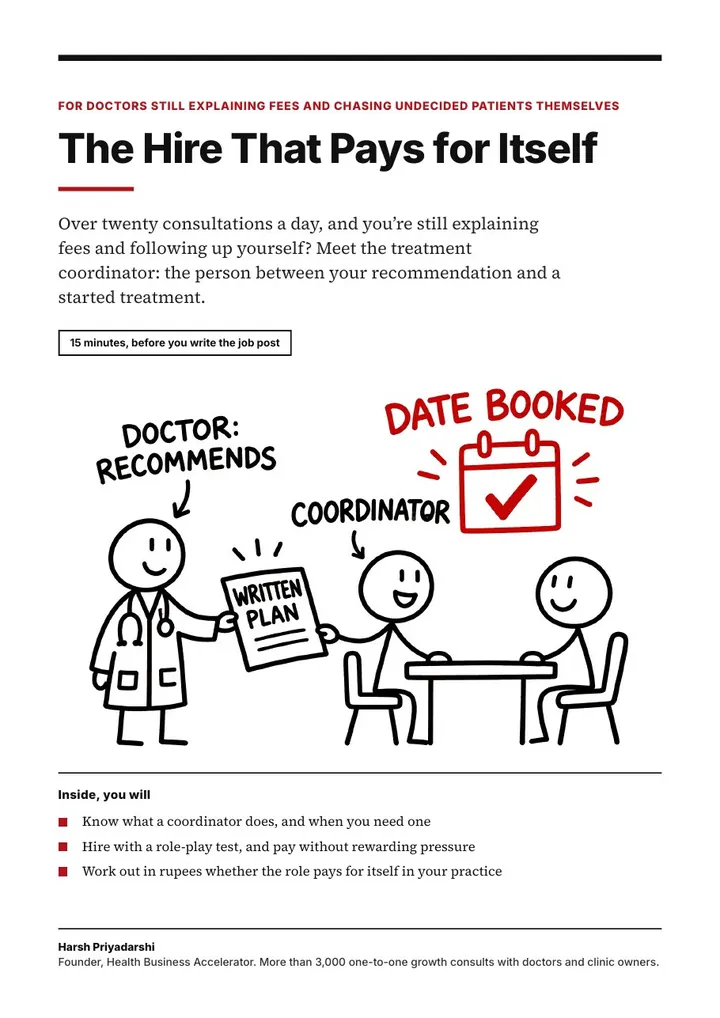
- A treatment coordinator once you pass about twenty consultations a day. They own the journey from the doctor's recommendation to a paid, started treatment, and the follow-up of undecided patients.
- A practice manager, part-time at first, who owns the daily running and the Monday numbers.
Write one page for each role: what they own, the numbers they are measured on, and what a great week looks like. That page beats any long job description.
Do not let one person carry all three jobs. In a busy tricity clinic, the same receptionist often checks in a family from Patiala, takes a card payment, answers the phone and replies to WhatsApp, all in the same five minutes. Something always slips, and it is usually the new enquiry, because the person standing in front of her feels more urgent than the one on the phone. Separate the roles, even if the enquiry handler sits two metres away.
What should you hire for in the tricity?
For both roles: warmth you can hear in a voice, patience, persistence, and fluency in your patients' languages. In Chandigarh that usually means being comfortable in Punjabi, Hindi and English, and switching without effort. A receptionist who answers a Punjabi-speaking father in English will lose him, however polite she is.
Coordinators also need to be calm about money, clear when explaining, good listeners and disciplined about follow-up. Tricity coordinators also need to be at ease with family members on video calls from abroad, often in the evening, often asking detailed questions about costs and timelines.
Where do good candidates come from?
- Nurses ready for a break from clinical shifts who already have patients' trust.
- Patient counsellors at hospitals and clinics in Chandigarh, Mohali and Panchkula.
- Banks, insurance, hotels and airlines, where people learn to handle anxious customers and money conversations.
- Your own team, especially the person patients already trust.
- Referrals from staff and other doctors, and job portals.
How do you test them?
- The phone test. Call before any interview and talk for five minutes. Switch language halfway through and see how they follow.
- The front desk role-play. You are a father from near Ropar who asks in Punjabi, "Bas eh dasso, kinna kharcha?" (Just tell me, how much?) Watch whether they ask his name, the problem, how long and why now, or just quote.
- The NRI role-play for coordinators. You are a son calling from Canada: "Back home here, I'd get a full written estimate by email before deciding. Why can't you just send the price?" Watch whether they stay calm, explain why the plan needs a diagnosis, offer a video call with the doctor, and promise a written plan with options and payment details after the consultation.
- A shadow day before you decide.
How should you pay them?
A fair fixed salary plus an incentive. For the front desk, on patients who book and actually turn up, not just bookings. For the coordinator, on treatments started.
Add guardrails. Never reward pressure. Track refund requests and complaints. Listen to a handful of their conversations each week. A coordinator who pushes a family into a plan they regret does more damage in a close-knit region than any target is worth.
How do you train them, and keep the knowledge when they leave?
Front desk, first two weeks: your niche and doctor at a patient's level, the fee sheet, the five-step call in all three languages, WhatsApp templates, confirmations with the exact sector address and parking, and daily role-plays.
Coordinator, first four weeks: your core treatments at a patient's level, sitting in on consultations, the three options and every payment option including payment links for families abroad, objection handling, and the follow-up process in your CRM.
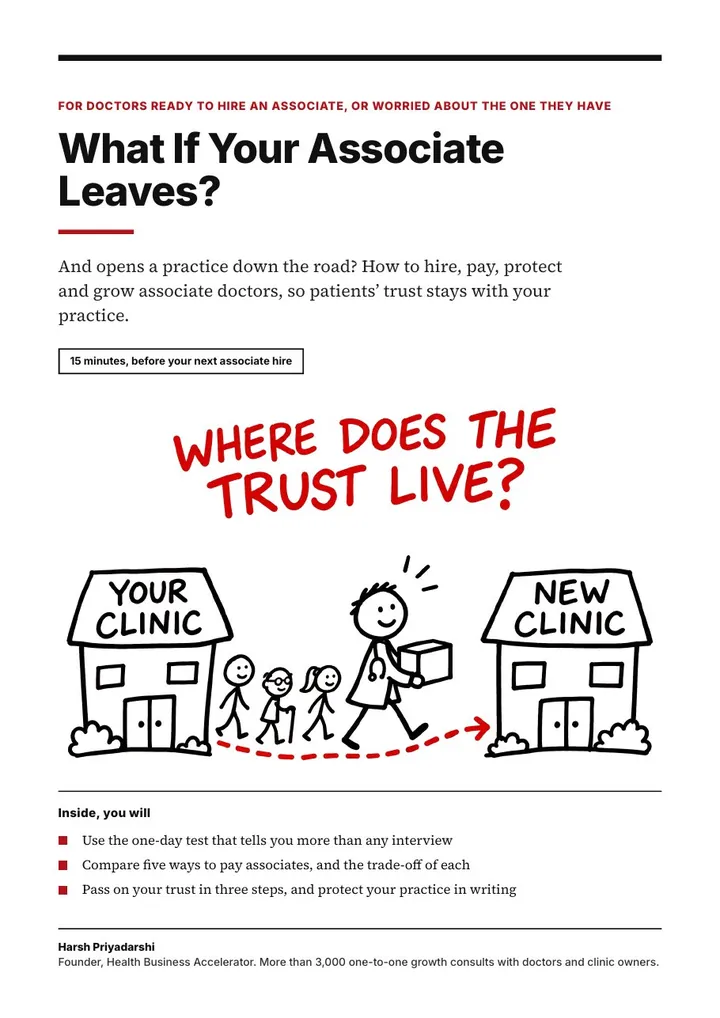
Good staff in the tricity sometimes move on, for further study, for marriage, or for a move abroad. You cannot stop that. You can stop it from costing you three months. Write every routine as a simple checklist: lead handling, the consultation handover, follow-ups, payments, confirmations. Record short videos for anything practical. Keep everything in one place. Then a new hire learns your clinic's way in weeks, not from scratch.
What keeps the team sharp?
A ten-minute huddle every morning: today's appointments, anxious patients, yesterday's leads still to call, and any family abroad expecting a call. A weekly call review where you score three recorded calls out of five, together. Celebrating great calls in front of everyone. And four numbers every Monday: answer rate, speed to first contact, booking rate and show rate.
Our team training runs hiring, role-plays and call reviews with clinics, and our growth consulting helps set up the roles and SOPs as you grow. The detail on teams is in Rich Doctors Walk Away. See how we work with clinics in Chandigarh.
The short version
- Hire for warmth, persistence and easy switching between Punjabi, Hindi and English.
- Separate enquiry handling from walk-ins and billing, and add a coordinator past twenty consultations a day.
- Test with a phone call, a Punjabi price role-play and an NRI son role-play.
- Pay on show-ups and started treatments, with guardrails against pressure.
- Write every routine down so the knowledge stays when people move on.
Frequently asked questions
What should I look for when hiring a clinic receptionist in Chandigarh?
Warmth on the phone, patience, persistence and the ability to switch comfortably between Punjabi, Hindi and English. Test with a phone call where you change language halfway, and a role-play where a patient only asks the price. The right person asks about the patient before giving information and ends with two specific slots.
How do I train a coordinator to handle NRI family members?
Role-play calls with a son or daughter abroad who asks for a full estimate by email. Train the coordinator to explain why the exact plan needs a diagnosis, offer a video call with the doctor, then send a written plan with three options, the monthly figure and payment links. Schedule calls at times that suit the family's time zone.
How do I stop losing clinic knowledge when staff leave?
Write every routine as a short checklist: lead handling, confirmations, the consultation handover, follow-ups, payments and complaints. Record short videos for anything practical and keep them all in one shared place. Review them once a year. A new hire can then learn your clinic's way in weeks instead of starting from nothing.
Should front desk staff get incentives?
Yes, alongside a fair fixed salary. Base the incentive on patients who book and actually turn up, not on bookings alone, so nobody books people who will never come. For coordinators, base it on treatments started. Guard against pressure by tracking refunds and complaints and reviewing a sample of conversations every week.
On a free growth call, my team traces your last month from enquiry to treatment and shows you your biggest leak in rupees.