Hire Bhopal front desk staff for warmth, persistence and fluency in Hindi, with comfort in Urdu-flavoured Hindustani and enough English for transferred families, not for polish alone. Test with a phone call before the interview and a price role-play. Pay a fair salary plus an incentive for patients who show up, train for a full week, and add a treatment coordinator past twenty consultations a day.
A skin clinic in Bhopal hired the candidate with the best English and the smartest CV. Within a month, the booking rate had dropped. When we listened to her calls, the problem was obvious. She was polite, but she sounded like a bank's helpline. Callers from Raisen and the old city kept saying "theek hai, baad mein call karte hain" ("okay, we'll call later") and never did.
The candidate the clinic had rejected, a nursing graduate who spoke warm, easy Hindi and a little Urdu from her family, would have booked half of them. Most clinics hire the front desk for the wrong things. Here is how I would hire in Bhopal.
What should a Bhopal clinic hire for?
Not good English, a nice appearance and a low salary. Those are what most clinics hire for, and it shows in their numbers. Hire for these instead:
- Warmth you can hear in a voice. Patients decide on the phone, before they see anyone.
- Empathy for people who are anxious, in pain or embarrassed.
- Persistence to follow up five times without sounding pushy.
- Fluency in your patients' language. In Bhopal that means natural Hindi, comfort with the softer Hindustani many old-city families use, and enough English for transferred officers and professionals who prefer it.
For a treatment coordinator, add calm confidence about money, clear explaining and follow-up discipline.
Where can you find good candidates in Bhopal?
Look where people already deal with anxious customers and important decisions.
- Patient counsellors and coordinators at other hospitals and clinics in the city.
- Nurses who are great with patients and want to move out of clinical work. They understand both the medicine and the fear.
- People from hospitality, banking and insurance sales. They bring service skills and comfort with money conversations.
- Graduates from the city's nursing institutes and colleges who have grown up speaking the way your patients speak.
- Your own team. Someone at the front desk may be ready to become a coordinator.
Ask your team and network for referrals, post on job portals, and look at people already in your patients' world.
How do you test a candidate before hiring?
You won't find warmth on a CV. Test it.
First, the phone test. Before any interview, call the candidate and have a short conversation. That is exactly how your patients will hear them. Notice whether they ask questions or just answer.
Then, the role-play. You play a worried caller. Try this one: "Beta, mere pati ke ghutne mein dard hai, Sehore se aana padega, aur sunte hain bahut mehenga hai." ("My husband has knee pain, we'll have to come from Sehore, and we hear it's very expensive.") The best candidates ask about the pain, the journey and why now, then offer two slots. The worst ones read out a price.
For coordinators, a harder role-play. You loved the doctor, but the fee is more than you expected and you need to ask your son, who lives in Pune. Watch whether they listen, separate the total from the timing, suggest a video call with the son, and end with a next step on the calendar.
Finally, a shadow day. Let your best candidate spend a day at the clinic before you decide.
How should you pay front desk staff and coordinators?
A fair fixed salary, plus an incentive tied to the right outcome.
For the front desk, the incentive is for patients who book and actually show up, not just bookings. That one detail stops people booking anyone to hit a number.
For a coordinator, the incentive is for treatments actually started, with guardrails: never reward pressure, track refunds and complaints, and review a sample of conversations every week.
Here is an example of why a coordinator pays for herself. Say she brings back just one undecided patient a week through proper follow-up, on a plan worth ₹40,000. That is about ₹1.6 lakh a month in treatment that would otherwise have walked out, far more than the cost of the role. The figures are illustrative, but in most clinics past twenty consultations a day, the real number is larger.
What does the first week of training look like?
Nobody is born knowing how to do this. Plan the first week day by day.
- Day 1: your niche, your doctors, and what each treatment is for, at a patient's level.
- Day 2: your plans, the fee sheet and the three options for each core treatment.
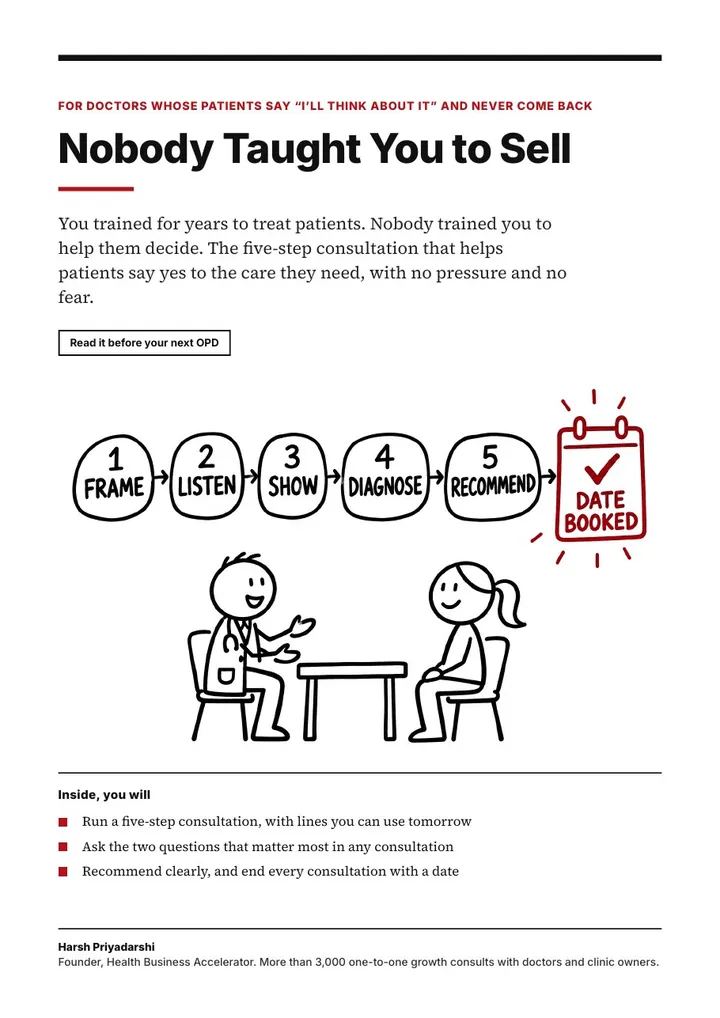
- Day 3: listen to recorded calls, good and bad, and score them on the five steps.
- Day 4: role-plays in Hindi and English with the callers your clinic actually gets: district families, office workers, older relatives.
- Day 5: your CRM, WhatsApp templates, confirmations, reminders and the follow-up cadence.
- Day 6: live calls with a senior team member listening, followed by feedback.
After that, training never stops. Record every call with the caller's knowledge, review three a week together, celebrate great calls in front of the team, and track answer rate, speed to first contact, booking rate and show rate. Our team training runs this programme with clinic teams on video calls.
When does a Bhopal clinic need a treatment coordinator?
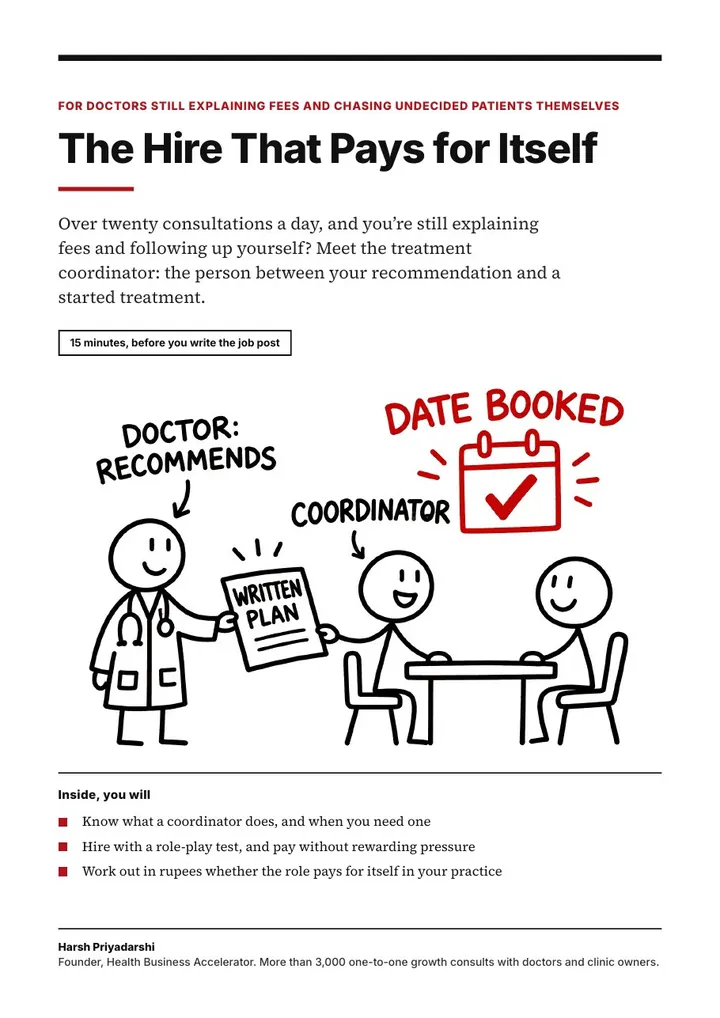
When you cross twenty consultations a day. Below that, the doctor and a well-trained front desk can usually share the job. Above it, undecided patients walk out every day and nobody follows up.
The coordinator sits with the patient after the consultation, walks through the written plan, explains the options, payment and EMI, helps with insurance paperwork, books the date, and talks to the family. In Bhopal, that family conversation often happens on a video call with a relative in another city. Your coordinator should be comfortable leading it. They negotiate the plan, never the price.
The doctor's handover by name transfers trust: "Anjali will take you through the plan, and she'll be your point of contact from here." Our conversion systems work builds that handover, and Good Doctors Go Broke covers the coordinator role in full. More on the city is on our Bhopal page.
The short version
- Hire for warmth, persistence and natural Hindi, not polish.
- Test with a phone call, a realistic role-play and a shadow day.
- Pay front desk incentives on show-ups, coordinator incentives on started treatments, with guardrails.
- Train for a full first week, then review recorded calls every week.
- Past twenty consultations a day, add a treatment coordinator who can lead family conversations.
Frequently asked questions
Should my clinic receptionist in Bhopal speak fluent English?
Enough English to help patients who prefer it, yes, but fluency in your patients' everyday Hindi matters far more. Most callers decide whether they trust the clinic within the first minute, and a warm voice in their own language wins that minute. Test candidates on a phone call in Hindi before judging their English.
Can a nurse become a treatment coordinator?
Often, yes, and some make outstanding coordinators. Nurses who are great with patients and ready to move out of clinical work already understand the treatment and the fear around it. Train them on your plans, the three options, payment and EMI, objection handling and your CRM, and they usually earn families' trust very quickly.
How do I stop front desk staff booking patients who never show up?
Change what you reward. Pay the incentive on patients who book and actually arrive, not on bookings alone. Then support show rate with WhatsApp confirmations, a reminder the day before, another on the day, and a same-day call to anyone who misses. Review show rate every Monday alongside booking rate.
How long does it take to train a new clinic front desk person?
A focused first week covers the basics: your treatments, the fee sheet, recorded calls, role-plays, your CRM and WhatsApp templates. Most people need a few more weeks of live calls with feedback before the call structure feels natural. Weekly call reviews after that keep standards from slipping.
On a free growth call, my team traces your last month from enquiry to treatment and shows you your biggest leak in rupees.