Tier 2 knee surgeon becomes the region's go-to name for knee replacement
5,000+knee replacements behind the positioning
The problem. An orthopaedic surgeon in a tier 2 city practised inside his family's multispecialty hospital, which the town knew as the place for everything, so nobody saw him as the knee specialist. He was about to bring in a robotic surgery system nobody knew was coming, and online his joint unit did not show up when people searched for knee replacement in his city.
What we did. We built his positioning around one outcome, helping people walk without knee pain again, and gave his unit its own identity: a dedicated joint centre with its own name, website and Instagram at the same hospital address. We set up a separate Google Business Profile for the joint centre with weekly educational posts, and built separate knee and hip replacement landing pages in Hindi, each with its own tracking and lead forms flowing into the CRM. We ran a "coming soon" content build-up before the robot launched and made short Hindi educational videos that did not need the doctor on camera.
The result. Within months, the joint centre started showing up on the map for the exact problem it solves. When someone in that region thinks about knee replacement now, they think of him.
From Known Doctors Get Booked, Chapters 1 and 2
Fertility centre stops losing couples between the first consult and the first cycle
The problem. Couples came in for a first consultation, left with a long list of tests and a cost estimate, and many never came back.
What we did. We gave every couple one written treatment plan with three options and the monthly figure next to the fee. A counsellor took over the fee conversation and called on a fixed schedule after the consultation, a private WhatsApp line answered questions couples didn't want to ask on the phone, and evening slots made room for working couples.
The result. More couples started their first cycle from the same number of consultations, and far fewer dropped out between the tests and the treatment.
Composite story from our client work
Eye hospital fills its cataract list from patients already in its OPD
The problem. The OPD was busy with check-ups and glasses, but most cataract surgeries came from low-priced camps. Patients told to come back later simply never did.
What we did. We logged every patient advised to wait in the CRM with a review date and reminders, explained lens options to the family as three clear choices, and sent a short video that walks the patient through the day of surgery.
The result. Patients advised to wait came back on time, and more families chose the recommended lens once the options were laid out side by side.
Composite story from our client work
Obstetric practice stops depending on deliveries alone
The problem. The practice was busy, but revenue rose and fell with the number of deliveries, and most mothers were never seen again after the first check-up.
What we did. We booked a post-natal care pathway before every discharge, set yearly well-woman reminders, and started talks on PCOS and menopause for working women's groups and housing societies, with WhatsApp follow-ups after every talk.
The result. Mothers kept coming back after delivery, and PCOS and menopause care grew into a steady second line of the practice.
Composite story from our client work
Cardiologist turns one-off scare visits into long-term care
The problem. Patients came in after a scare, got their tests done and were never seen again, until the next scare took them somewhere else.
What we did. Every first visit now ends with a follow-up schedule on the calendar and reminders on WhatsApp. We added an annual heart review, ran heart health talks for nearby offices, and sent every referring GP a short update after each consultation.
The result. Follow-up visits held steady month after month, and GP referrals became a regular source of new patients.
Composite story from our client work
Gastro clinic stops losing endoscopy patients on the price call
The problem. Callers asked what an endoscopy costs, the front desk read out a price, and most of them were never heard from again.
What we did. We gave the front desk a five-step call that asks about symptoms first and books a consultation, sent preparation instructions on WhatsApp with a reminder the day before, and kept a same-day slot free for urgent cases.
The result. Far more price callers booked a consultation, and fewer procedures were cancelled because of poor preparation.
Composite story from our client work



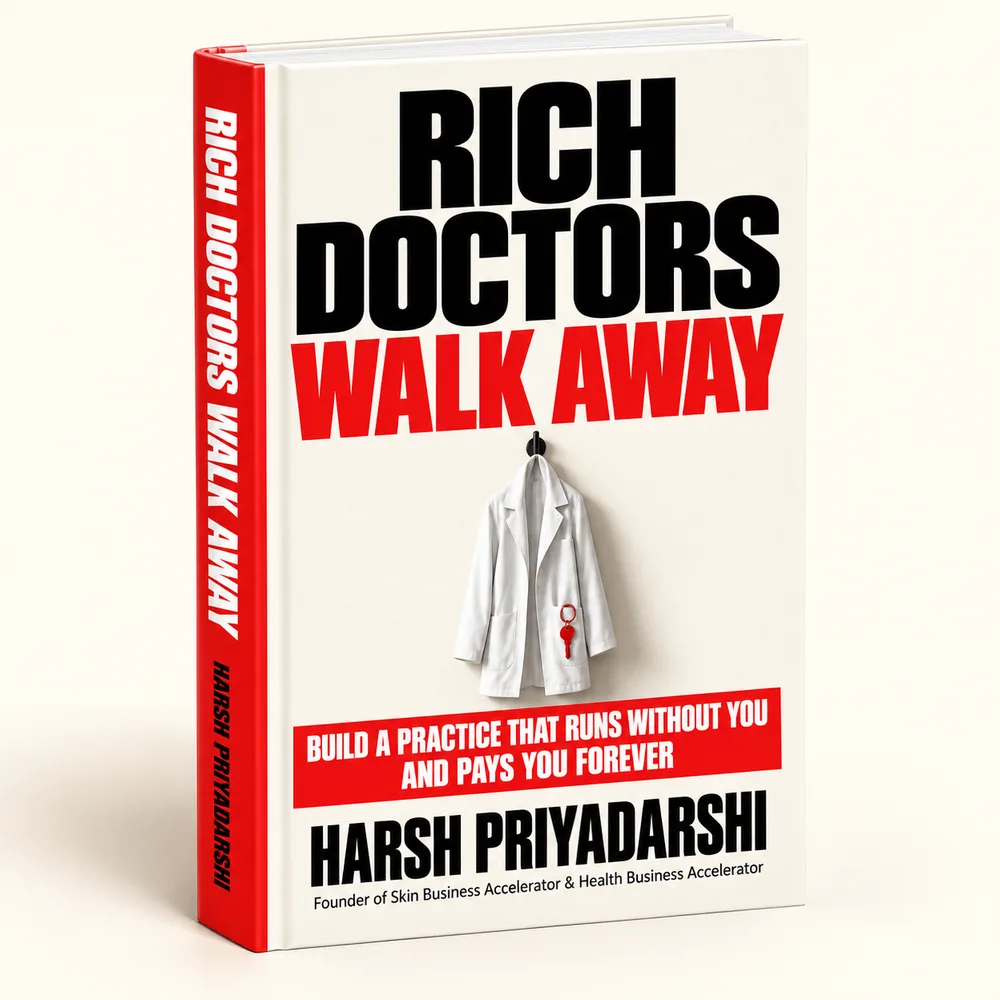 Rich Doctors Walk Away