Nagpur clinics should hire front desk staff and treatment coordinators for warmth, persistence and natural Marathi and Hindi, tested with a phone call and role-plays built around a family travelling from another district. Pay a fair salary plus incentives on patients who show up or start treatment, train for a full week and keep reviewing calls. Busy practices should consider a dedicated desk for out-of-town patients.
A hospital unit in Nagpur had a front desk that was good at the work right in front of it: walk-ins, billing, files. What it was not good at was the patient who was not there yet. The family in Chandrapur who had called twice. The patient from Seoni whose scan had arrived on WhatsApp the night before. The son in Pune trying to understand his father's surgery plan. Nobody owned those people, so they slipped away. The fix was not a better receptionist. It was a different role.
What should you hire for at a Nagpur front desk?
Four things matter more than anything on a CV:
- Warmth you can hear on the phone. The first contact is usually a call or a WhatsApp message.
- Empathy for people who are anxious, in pain, and often tired from travel.
- Persistence in following up without sounding pushy.
- Natural Marathi and Hindi. Patients from Vidarbha often prefer Marathi; families from neighbouring states and many in the city prefer Hindi. A receptionist who switches easily puts both at ease.
And for Nagpur in particular, look for patience with logistics. A good front desk person here plans trips, not just appointments.
Does your clinic need an out-of-town patient desk?
If a large share of your patients travel in from other districts, consider making one person responsible for them. This is not a new department. It is one clearly owned job:
- Planning the visit on the first call: early slot, which tests to expect, what to bring.
- Collecting photos of old reports and scans on WhatsApp before the visit, and sharing them with the doctor.
- Sending directions from the railway station and bus stand.
- Keeping a simple list of nearby places to stay, for families who need it.
- Booking reviews before the family leaves, and reminding them well ahead.
- Updating referring doctors after the visit, with the patient's consent.
When this is everybody's job, it is nobody's. When one person owns it, out-of-town show rates and decisions usually improve, because someone is finally watching that journey.
Where do you find good candidates in Nagpur?
- Patient counsellors and front office staff at hospitals. Nagpur has many hospitals, so experienced people are there to be found.
- Nurses who want to move into non-clinical work. They make outstanding coordinators.
- Hospitality, banking and insurance, for service skills and calm money conversations.
- Graduates from the city's colleges, if they pass the tests below.
- Your own team, and referrals from staff you trust.
How do you test candidates?
- The phone test. Call before any interview. Start in Marathi, then let a "relative" take the phone and continue in Hindi.
- The trip role-play. You are a caller from Yavatmal whose mother needs a knee check. You ask, "Kharcha kitna hoga?" The best candidates ask where you are coming from, whether you have reports, and offer an early slot. The worst read out a number.
- The family role-play for coordinators. You loved the doctor, but your husband in another town must agree before you decide. Watch whether they offer a video call and book a follow-up, or simply say "think about it".
- A shadow day, with feedback from your team.
How should you pay them?
A fair fixed salary, plus an incentive. For the front desk, pay the incentive on patients who book and actually show up, not bookings. For coordinators, on treatments actually started. Add guardrails: never reward pressure, track complaints and refund requests, and review a sample of conversations every week.
Here is a worked example of why good people are worth paying for. Say an out-of-town patient is worth ₹70,000 to your practice in the first year. If better trip planning and follow-up save just five such patients a month who would otherwise have gone elsewhere, that is ₹3.5 lakh a month. The role pays for itself many times over.
What should the first week of training cover?
| Day | Focus |
|---|---|
| Day 1 | Your niche, doctors and the common problems patients bring |
| Day 2 | Plans, three options and the fee sheet, quoted word for word |
| Day 3 | Recorded calls, local and out-of-town, scored together |
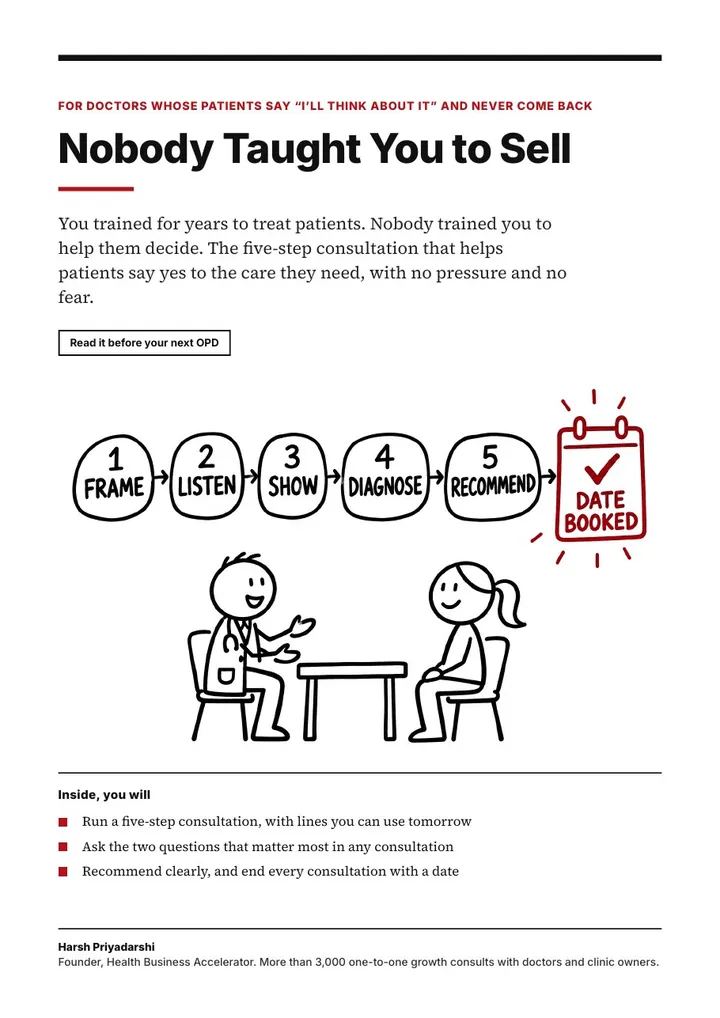
| Day 4 | The five-step call, plus trip planning, in Marathi and Hindi role-plays |
| Day 5 | The CRM, WhatsApp templates, report collection and the follow-up cadence |
| Day 6 | Live calls with a senior person listening |
After that, review a few calls every week, celebrate great ones in front of the team, and track answer rate, speed, booking rate and show rate, split by local and out-of-town patients. We run this kind of training in team training, including for hospitals.
When is a treatment coordinator worth hiring?
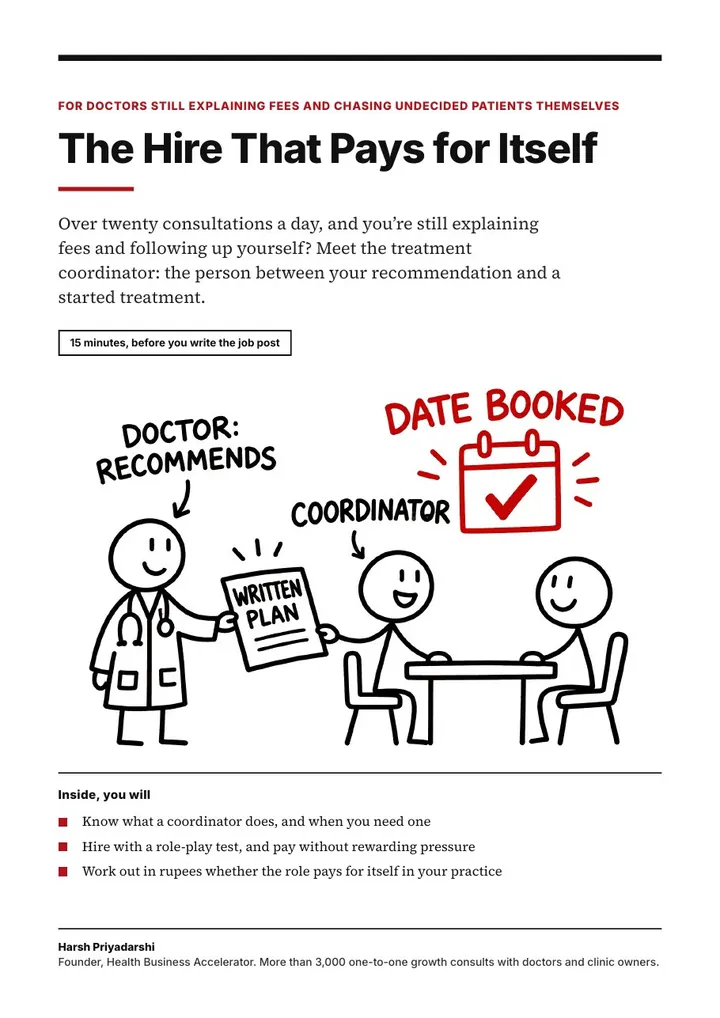
Past twenty consultations a day. Below that, the doctor and a well-trained front desk can share the work with a clear handover. Above it, undecided patients leave every day with nobody following up, and in Nagpur, many of them leave the city too.
The coordinator walks the family through the written plan, the three options and payment choices, books dates, and handles family calls, often with a relative who stayed at home. The doctor introduces them by name: "Snehal will take you through the plan and stay in touch after you go home." Then the follow-up: same day, next day, day three, seven and fourteen. The coordinator negotiates the plan, never the price.
Give every role a one-page card: what they own, how they are measured, and what a great week looks like. We help clinics in Nagpur set this up through conversion systems.
The short version
- Hire for warmth, persistence, patience with logistics and natural Marathi and Hindi.
- If many patients travel in, give one person ownership of the out-of-town journey.
- Test with a language-switching phone call, a trip role-play and a family role-play.
- Pay for show-ups and started treatments with guardrails, train for a week, and add a coordinator past twenty consultations a day.
Frequently asked questions
What does an out-of-town patient desk do in a clinic?
One person owns the journey of patients travelling from other districts: planning the visit on the first call, collecting old reports on WhatsApp, sending directions, sharing a list of nearby places to stay, booking reviews before they leave, and updating referring doctors with consent. It stops these patients slipping between roles.
Should clinic staff in Nagpur speak Marathi?
Ideally both Marathi and Hindi. Many patients from Vidarbha prefer Marathi, while families from neighbouring states and many city residents prefer Hindi. Test both in the hiring phone call, and write your call scripts and WhatsApp templates in both languages so every patient hears their own.
How do I test a candidate for a clinic front desk job?
Call them before any interview to hear how they sound on the phone. Then run a role-play where you play a worried caller asking about cost. Good candidates ask questions and try to help; weaker ones just read out a number. Finish with a shadow day and your team's feedback.
Is a treatment coordinator worth the cost for a small clinic?
Once you pass about twenty consultations a day, usually yes, because undecided patients otherwise leave with nobody following up. Below that, train the front desk and the doctor to share the role with a clear handover. Track the coordinator on treatments started and undecided patients brought back.
On a free growth call, my team traces your last month from enquiry to treatment and shows you your biggest leak in rupees.