Thiruvananthapuram clinics should hire front desk staff who switch warmly between Malayalam and English, and treatment coordinators who are calm about money and good at keeping family abroad informed. Test with a phone call and role-plays, including a son abroad questioning every detail, look at experienced nurses for the coordinator role, pay fixed salaries with incentives on arrivals and started treatments, and train properly first.
Kerala is known across India and abroad for its nurses, and Thiruvananthapuram clinics benefit from that every day in clinical care. What surprises many doctors here is that some of their best hires for the front desk and the coordinator role come from the same pool: people who know how to calm an anxious patient, explain a process clearly and stay patient with a worried family. The hiring mistake I see most often, in Thiruvananthapuram as anywhere, is not a lack of good people. It is hiring for the wrong qualities and then not training them.
What should a Thiruvananthapuram clinic hire for?
Most clinics hire the front desk for polished English, appearance and a low salary. What actually drives bookings is different.
| Role | What they own | What to hire for | Numbers they own |
|---|---|---|---|
| Front desk | Calls, WhatsApp, bookings, confirmations, reminders | Warmth, persistence, smooth switching between Malayalam and English | Answer rate, speed to first contact, booking rate, show rate |
| Treatment coordinator | Recommendation to paid and started treatment, family conversations, follow-ups | Calm with money, clear explaining, listening, follow-up discipline | Started treatments, days to decide, average plan value |
| Practice manager | Daily running, SOPs, rotas, the Monday review | Organisation, fairness, comfort with numbers | Weekly numbers, SOPs followed, staff stability |
Give each person a single page that says what they own, which numbers they answer for, and what a great week looks like.
Why does the coordinator matter so much here?
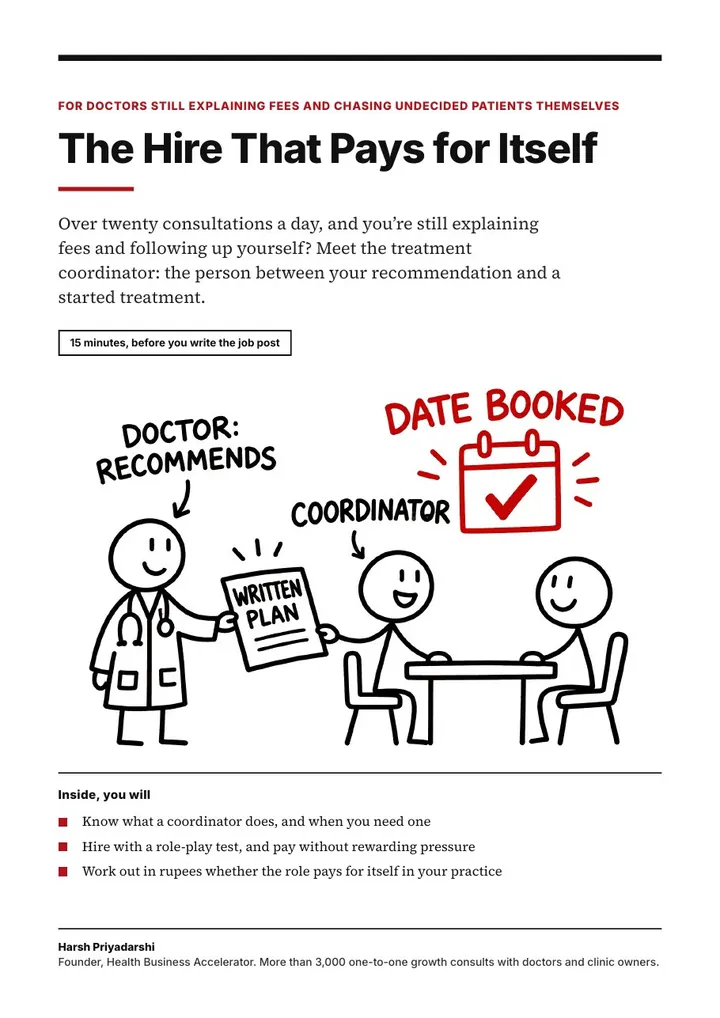
The coordinator is the bridge between the doctor's recommendation and the patient's decision. In Thiruvananthapuram, that bridge often stretches abroad. A patient may say yes in the room and still need her son in Riyadh or her daughter in London to agree, and often to pay. Someone has to call them, at a time that suits their working day, walk them through the written plan, explain the options and EMI, and book the date.
My rule of thumb is that past twenty consultations a day, you need a dedicated coordinator. Under that, the doctor and a trained front desk can split the work, as long as the handover is clear. Either way, a coordinator never negotiates the price. What they negotiate is the plan, the payment schedule and the date.
Where can I find good candidates in the city?
- Experienced nurses who want to move out of bedside work, including some who have returned from working abroad. They understand the medicine, the fear and often the family dynamics of children living overseas.
- Patient counsellors and coordinators at other hospitals and clinics.
- People from banking, insurance, airlines and hospitality, who are comfortable with service and money conversations.
- Your own team. Someone at your desk may be ready to step up.
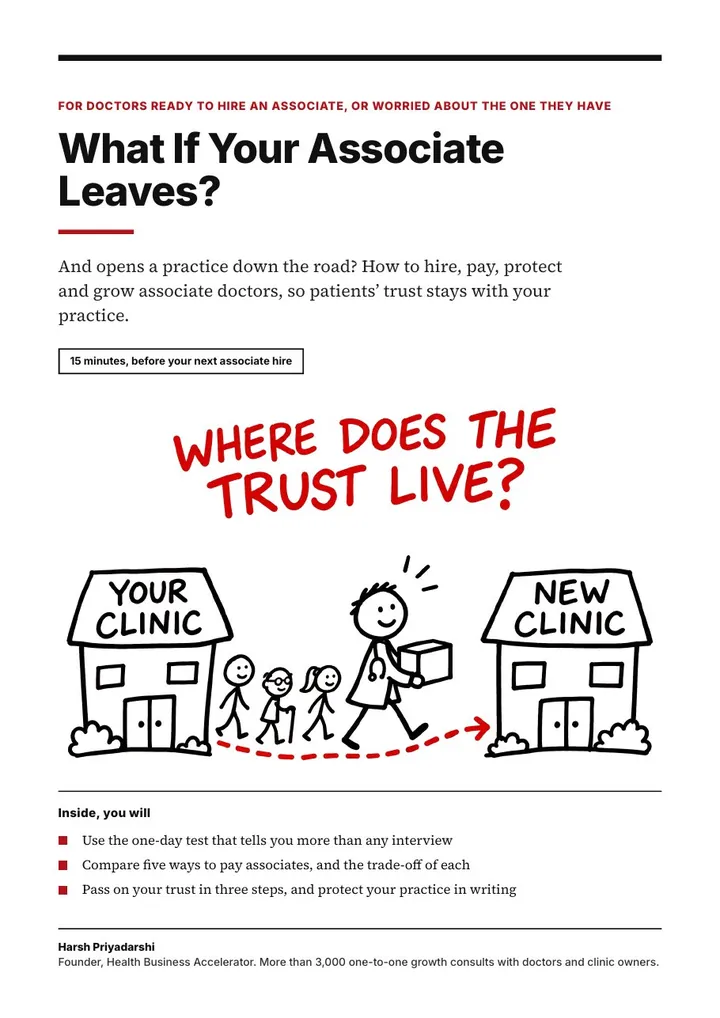
Think about retention from day one, too. Good staff in this city have options, including jobs abroad, so the people who stay are usually the ones who can see a path: from front desk to coordinator, from coordinator to practice manager. Put that path on paper during the interview. A clear role card, fair incentives and a weekly review where good work is noticed keep people longer than a slightly higher starting salary.
Check language comfort both ways. Older patients may want Malayalam, family abroad may prefer English, and the best staff switch without the caller noticing. Check written skills too, because much of the family conversation happens on WhatsApp.
How should I test candidates?
- The phone test. Call before the interview. That is how patients will hear them.
- The informed caller role-play. You play a patient who has read about the condition and asks five specific questions. Good candidates answer process questions confidently, stay away from medical advice, and move to two slots.
- The family abroad role-play. You play a son on a video call who questions every line of the plan and says the fee is high. Watch whether the candidate listens, separates the total from paying it all at once, explains EMI calmly and ends with a next step on the calendar.
- A short written test. Ask them to write the WhatsApp message they would send after that call. Clear, warm and specific is what you want.
- A shadow day before you decide.
How should I pay them?
A fair fixed salary, plus an incentive on what matters. For the front desk, reward patients who book and arrive, not just bookings. For the coordinator, reward treatments started, not consultations held.
This shows the structure only; it is not a salary benchmark. Say a coordinator earns an incentive of ₹400 for every plan started. If 25 plans start in a month, that is ₹10,000 above the fixed salary, earned only when patients genuinely go ahead.
Add guardrails: never reward pressure, track complaints and refund requests, and review a sample of conversations every week. In a city where families talk and reviews are read closely, a pushy coordinator costs more than any target is worth.
How should I train new staff?
Front desk, first week: your speciality, your doctors, the plans and fee sheet, the five-step call structure, WhatsApp templates in both languages, and the CRM. Listen to recorded calls, good and bad, and role-play until the structure feels natural.
Coordinator, first four weeks:
- Learn the core treatments at a patient's level.
- Observe consultations, and procedures where possible.
- Master the plans, three options, fee sheet and every payment method, including payments from abroad.
- Practise objection handling, especially money, family and timing.
- Follow up undecided patients on the same day, the next day, and on days 3, 7 and 14.
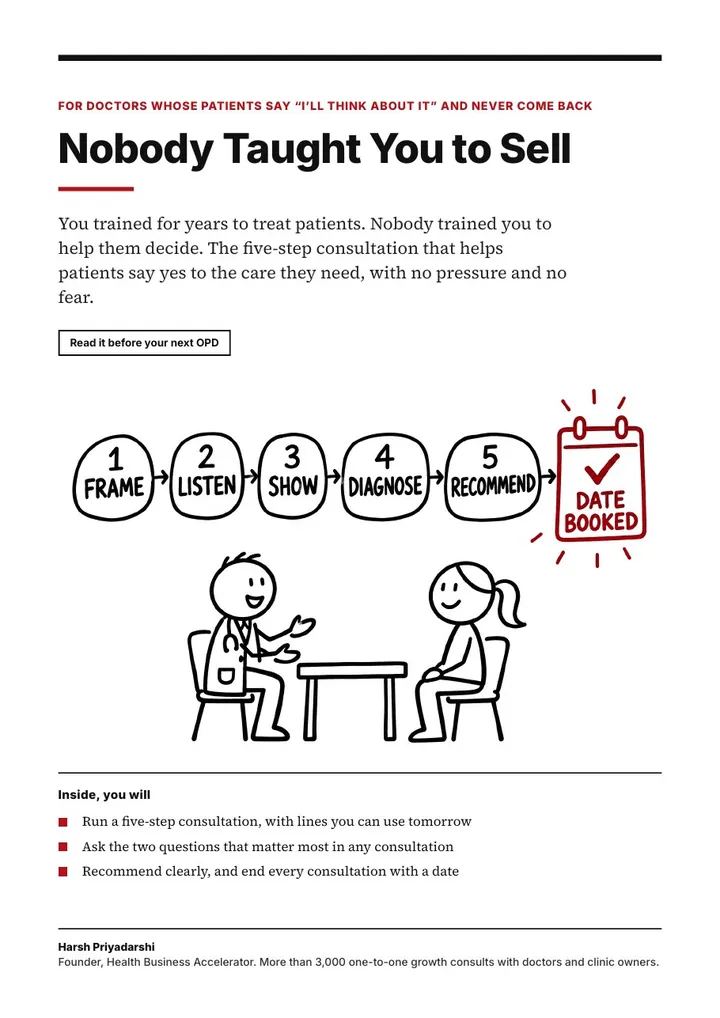
Then the doctor introduces the coordinator by name at the end of every consultation: "Divya will take you through the plan and stay in touch with your family." That one sentence transfers trust.
After that, training never stops. Record calls with the caller's knowledge, score three a week, and celebrate the best ones. We run this under team training, with the systems around it under conversion systems. The coordinator method is in Good Doctors Go Broke, and our Thiruvananthapuram page explains why the coordinator often works across time zones.
The short version
- Hire for warmth and smooth Malayalam and English switching, not polish.
- Past twenty consultations a day, hire a coordinator who also owns the family abroad.
- Experienced nurses and patient counsellors often make excellent coordinators.
- Test with informed caller and family abroad role-plays, plus a written WhatsApp test.
- Reward patients who arrive and treatments that start, and watch closely for pressure.
Frequently asked questions
Do nurses make good treatment coordinators?
Often, yes. Experienced nurses understand both the medicine and the patient's fear, and patients and families tend to trust them quickly. They still need training on your plans, fee sheet, payment options and objection handling, and practice talking calmly about money, before they work with patients and families on their own.
What languages should my clinic front desk speak in Thiruvananthapuram?
Fluent Malayalam and English, with the ability to switch smoothly to whatever the caller uses. Older patients often prefer Malayalam, while family members abroad and some professionals may prefer English. Test both in the phone interview and role-plays, and check written WhatsApp skills in both languages too.
How should I incentivise my clinic's treatment coordinator?
Pay a fair fixed salary plus an incentive on treatments actually started, not on consultations or bookings. Add guardrails: track complaints and refund requests, review a sample of conversations weekly, and never reward pressure. The goal is a coordinator who helps patients decide well, not one who pushes them.
How long does it take to train a clinic coordinator?
Plan for about four weeks before they handle patients alone: learning core treatments at a patient's level, sitting in on consultations, mastering plans and payment options, practising objection handling and learning the CRM and follow-up cadence. After that, weekly reviews of conversations and numbers keep improving them.
On a free growth call, my team traces your last month from enquiry to treatment and shows you your biggest leak in rupees.