Kolkata clinics should hire front desk staff and coordinators for warmth, patience with families and comfortable Bengali and Hindi, with English as needed. Test every candidate with a phone call and a role-play before any interview. Plan shifts around how staff actually commute, pay a fair salary plus incentives on patients who show up or start treatment, and train for four weeks with recorded calls.
A surgeon with three chambers in Kolkata told me he had "tried everything" with his front desk. He had hired four people in two years. Each one started well and left within months.
When we looked closely, the pattern was clear. Each person was answering three chamber phones, registering walk-ins, collecting fees and helping at the pharmacy counter. Their shift ended at 8 pm, but the last chamber patient often left at 9.30, and the last local train home was a worry every night. They were not bad hires. They had an impossible job.
Hiring well in Kolkata starts with designing a job a good person can actually do.
What roles does a growing Kolkata practice need?
Write one role card for each: what the person owns, the numbers they are measured on, and what a great week looks like.
- Central desk and lead handler: every call and WhatsApp for every chamber, bookings, confirmations and reminders. Measured on answer rate, speed to first contact, booking rate and show rate.
- Chamber assistant: patient arrival, flow on the day and payments at that chamber. Measured on waiting times and smooth handovers.
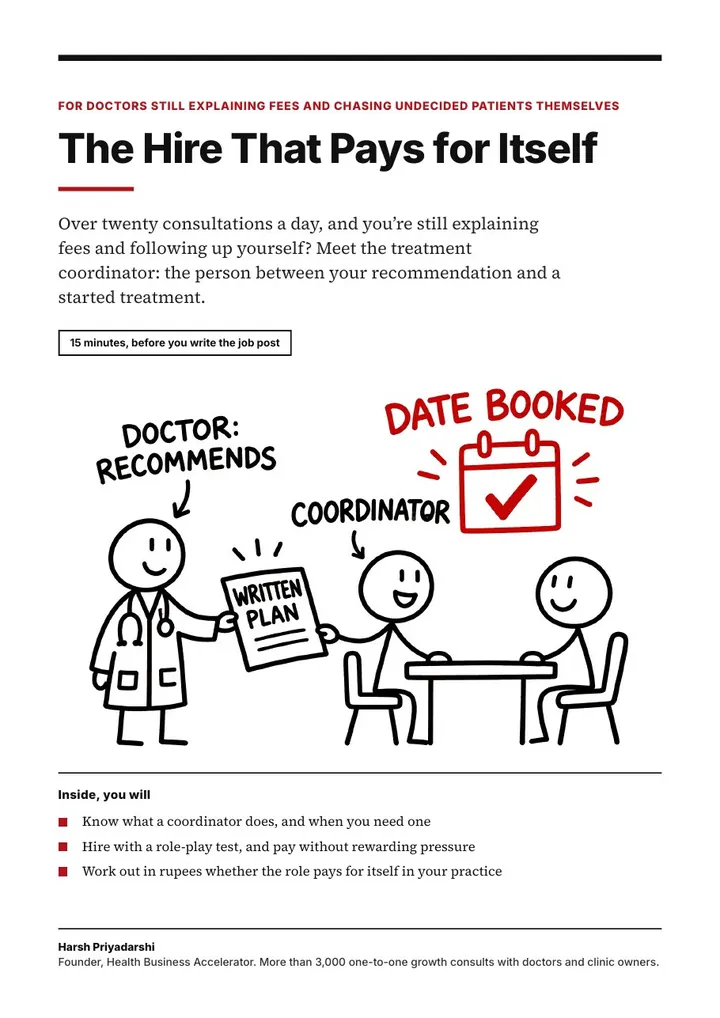
- Treatment coordinator: the written plan, payments and EMI, dates, family conversations and follow-ups. Measured on the share of consultations that start treatment and how many undecided patients come back.
- Practice manager, once you have several chambers or doctors: schedules, SOPs, complaints and the Monday numbers review.
The coordinator becomes essential once your chambers together pass about twenty consultations a day. Before that, many Kolkata practices manage with the doctor explaining the plan and a trained central desk doing the follow-up calls, as long as the handover between them is written down.
What should you hire for?
| Trait | Why it matters in Kolkata | How to test it |
|---|---|---|
| Warmth you can hear | Families judge the clinic by the first voice | A phone test before the interview |
| Comfortable Bengali | Most local and district patients prefer it | Part of the role-play |
| Comfortable Hindi | Hindi-speaking families and patients from neighbouring states | Part of the role-play |
| Patience with families | Decisions often involve several relatives | A role-play with a family member calling |
| Calm about money | Coordinators discuss packages, EMI and insurance daily | A role-play about cost |
| Written clarity | District patients need clear WhatsApp instructions | Ask them to write a confirmation message |
Polish and perfect English are less important than most clinics think.
Where can you find good people in Kolkata?
- Hospital front offices, patient counsellors and coordinators, who already handle anxious patients and paperwork.
- Nurses who want to move out of clinical work. They understand both the medicine and the fear, and patients trust them quickly.
- Hospitality, retail and airline staff, who bring service habits.
- Banking and insurance staff, comfortable with EMI and documents.
- Your own chamber assistants, some of whom may be ready to step up.
How do commutes affect hiring?
More than most clinics plan for. Many staff in Kolkata travel in from the suburbs by local train, bus or metro, and long evenings are hard if the journey home is uncertain.
- Ask about the commute in the first conversation, and be honest about the hours.
- Design shifts around real chamber timings. If evening chambers run late, have a later shift start later, rather than stretching one person's day.
- Hire near the clinic or near a good transport line where you can, especially for evening roles.
- Let the central desk work flexibly, since calls and WhatsApp can be handled from one place for every chamber.
People who are not exhausted by the job stay longer, and staff who stay are the ones who learn your patients by name.
How do you test candidates?
The phone test. Call before any interview and talk for five minutes. That is how patients will meet them.
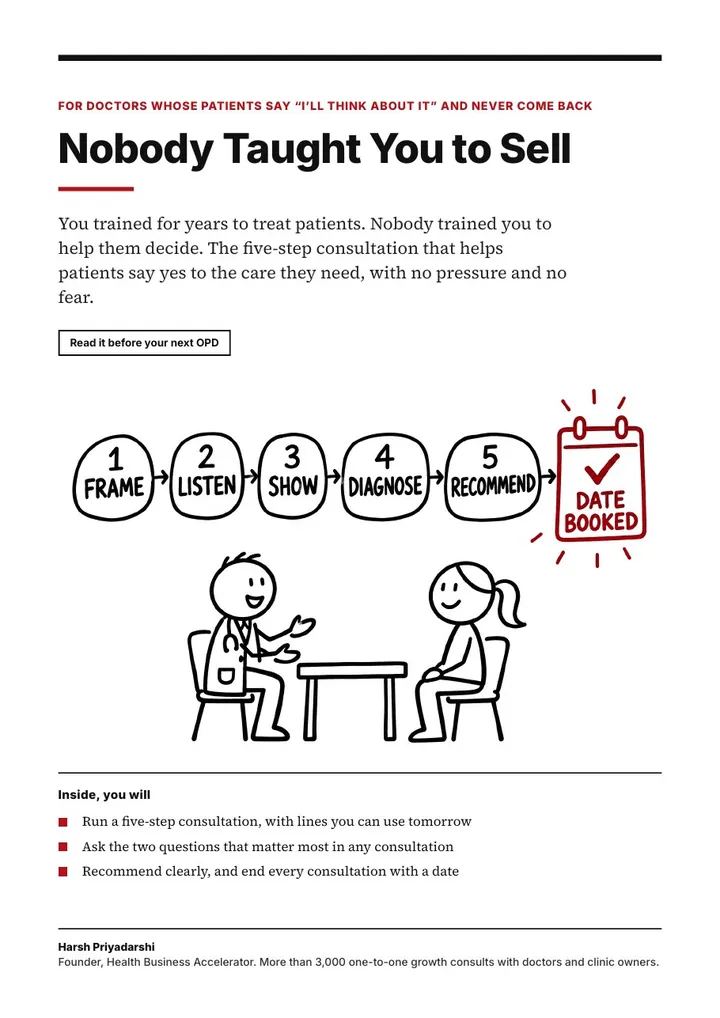
The front desk role-play. You call in Bengali, asking "Doctor babu kobe bosben?" for your mother, then switch to Hindi halfway. Watch whether they follow you, ask about the problem and why now, check which chamber is closer, and offer two specific times.
The coordinator role-play. You are a patient's son who liked the doctor but says the package is more than the family planned, and your uncle in Durgapur usually helps decide. Watch whether they ask if it is the total or paying at once, suggest bringing the uncle into a call, and end with a next step on the calendar.
Then let the best candidate shadow a full chamber evening.
How should you pay and train them?
Pay a fair fixed salary plus an incentive tied to good outcomes: patients who book and actually show up for the desk, and treatments actually started for the coordinator. Add guardrails, such as tracking complaints and refunds and reviewing a sample of conversations every week, so nobody is rewarded for pressure. Check the structure with your accountant.
Example: say the central desk earns a fixed salary plus a small amount for each booked patient who turns up. If the show rate for the month falls below 60%, the team looks at the reminder process together before the incentive is paid. The incentive rewards the whole job, not just the booking.
Then train for four weeks:
- Week one: the speciality at a patient's level, the chamber schedule, the fee sheet, scripts in Bengali, Hindi and English, and the CRM.
- Week two: daily role-plays of the five-step call and common objections.
- Week three: live calls with a senior person listening. Coordinators sit in on consultations.
- Week four: independent work, with three recorded calls scored out of five every week.
After that, keep the weekly call review going and show each person the numbers they own in the Monday meeting. Our team training work runs these sessions, and our front desk and conversion work provides the scripts and scorecards.
We work with clinics across India, including Kolkata, mostly on video calls. See our Kolkata page.
The short version
- Design a job one person can do: separate the central desk from chamber duties.
- Hire for warmth, patience and comfortable Bengali and Hindi, tested with role-plays.
- Plan shifts around real chamber hours and how your staff get home.
- Pay for show-ups and started treatments, with guardrails, and review calls every week.
Frequently asked questions
How many front desk staff does a Kolkata clinic with several chambers need?
Separate the jobs first. One central desk handles every call and WhatsApp for all chambers, while chamber assistants manage patients on the day. The exact number depends on your enquiry volume, but no one person should be answering phones, registering walk-ins and collecting payments at once.
Should clinic staff in Kolkata speak Hindi as well as Bengali?
Yes, at least one person on every shift should be comfortable in Hindi. Many families in the city and patients from neighbouring states prefer it. Bengali remains essential for most local and district patients, and English helps with professionals and some patients from elsewhere.
What is a good incentive for a clinic receptionist?
Reward patients who book and actually show up, not bookings alone, on top of a fair fixed salary. That stops people booking anyone just to hit a number. Add guardrails such as reviewing complaints and recorded calls. Ask your accountant to check the structure before you start.
How do I hire a good treatment coordinator?
Look at hospital patient counsellors, nurses moving out of clinical work, and people from hospitality, banking or insurance. Hire for warmth, calm about money and comfortable Bengali and Hindi. Test with a role-play about a family worried about cost, then let them shadow a full chamber evening.
On a free growth call, my team traces your last month from enquiry to treatment and shows you your biggest leak in rupees.