Hire front desk staff in Indore for warmth you can hear, persistence and fluent, respectful Hindi, not polished English on a CV. Test every candidate with a phone call and a price-objection role-play, pay a fair salary plus an incentive on patients who actually show up, and train them for a full week. Add a dedicated treatment coordinator once you pass twenty consultations a day.
A clinic owner in Indore once hired a receptionist because her English was the best of all the candidates. Within a month, the complaints started. Not about rudeness, but about distance. Older patients from Ratlam and Dhar felt rushed. Families who asked questions in Hindi got answers in careful, formal English. Nobody was booking. The clinic had hired for the wrong thing, which is the most common hiring mistake I see.
What should you hire for at an Indore front desk?
Your front desk is not a receptionist. It is the first step of your treatment plan. So hire for what that step needs:
- Warmth you can hear in a voice. Most first contact is on the phone or WhatsApp.
- Empathy for people who are anxious, in pain or worried about a parent.
- Persistence to follow up without sounding pushy.
- Fluency in your patients' language. In Indore that means comfortable, respectful Hindi, the kind that puts an elder from a small town at ease, plus enough English for younger professionals.
Good English, a nice appearance and a low salary are what most clinics hire for. None of them books a single patient.
Where do you find good candidates in Indore?
Look where people already deal with anxious customers and important decisions:
- Patient counsellors and front office staff at hospitals and clinics in the city.
- Nurses who are great with patients and want to move out of clinical work. They often make outstanding coordinators.
- Hospitality. Indore has a large hotel, restaurant and events trade, and people from there know service.
- Banking, insurance and telecom sales, for comfort with money conversations.
- Your own team. Someone in your clinic may be ready to step up.
- Referrals from staff and from your network.
Fresh graduates from the city's colleges can do well too, if they pass the tests below. Attitude and voice can't be trained in. Scripts and systems can.
How do you test candidates before hiring?
You will not find warmth on a CV. Test for it.
- The phone test, before any interview. Call the candidate and have a short conversation. That is exactly how your patients will meet them.
- The role-play. You play a worried caller: "Mere pitaji ko ghutne ka dard hai, Ujjain se aana padega, kitna lagega?" Watch whether they ask questions and try to help, or read out information.
- The WhatsApp test. Give them three sample patient messages and ten minutes to reply. Look for warmth, clarity and whether they move towards a booking.
- A shadow day. Let your best candidate spend a day in the clinic before you decide, and ask your team what they thought.
For a treatment coordinator, add one more role-play. You are a patient who loved the doctor but says the fee is more than expected and you need to ask your husband first. See how they listen, what they ask, and whether they move gently to a next step, like a family call.
How should you pay front desk staff and coordinators?
A fair fixed salary, plus an incentive.
- Front desk: an incentive for patients who book and actually show up, not just bookings. That one detail stops people booking anyone to hit a number.
- Treatment coordinator: an incentive on treatments actually started, not consultations.
Then add guardrails. Never reward pressure. Track refund requests and complaints. Review a sample of every person's calls and conversations every week. A coordinator who pushes patients into plans they regret will cost you far more in reputation than any target they hit.
Here is a worked example of why paying for quality makes sense. Say a treated patient is worth ₹60,000 to your clinic in the first year. If a weak front desk loses just three patients a month that a good one would have booked, that is ₹1.8 lakh a month walking away. The salary difference between an average hire and a great one is small next to that.
What does the first week of training look like?
Nobody is born knowing how to do this. Give every new hire a proper first week.
| Day | Focus |
|---|---|
| Day 1 | Your niche, your doctors and the problems patients come with |
| Day 2 | Your plans, three options and the fee sheet, word for word |
| Day 3 | Listening to recorded calls, good and bad, and scoring them |
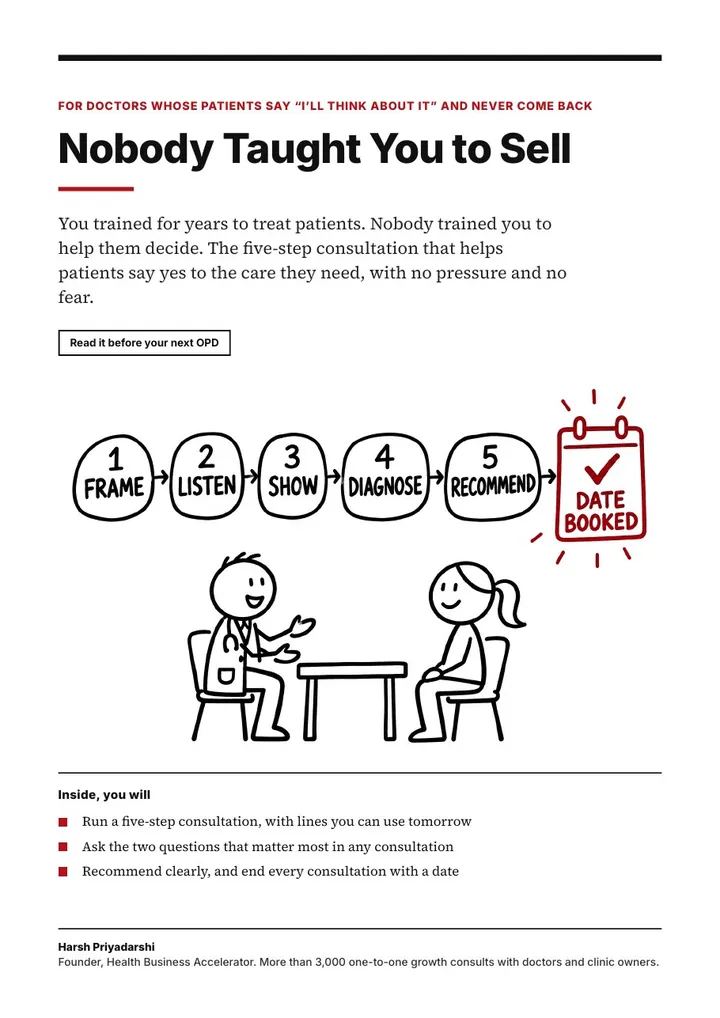
| Day 4 | The five-step call: open, discover, reassure, two slots, confirm, in role-plays |
| Day 5 | The CRM, WhatsApp templates and the follow-up cadence |
| Day 6 | Live calls, with a senior person listening and coaching |
After that, training never stops. Record calls with the caller's knowledge, review a few every week together, celebrate great calls in front of the team, and track answer rate, speed to first contact, booking rate and show rate. We run this kind of programme in team training.
When do you need a treatment coordinator?
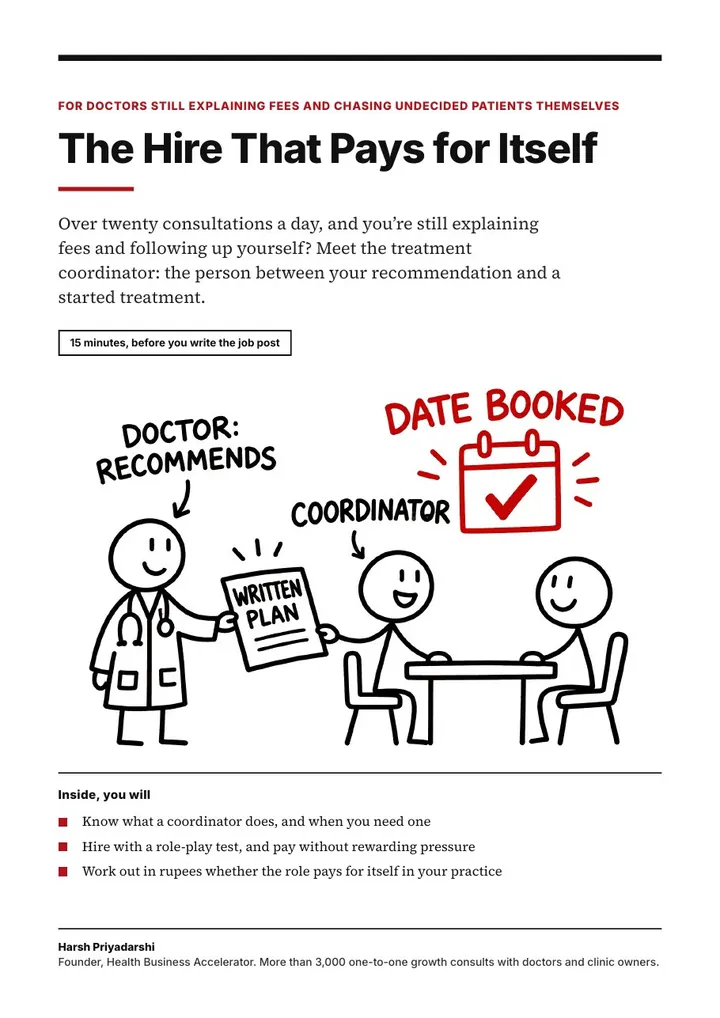
Once you pass twenty consultations a day. Below that, the doctor and a well-trained front desk can share the job with a clear handover. Above it, undecided patients walk out every day and nobody follows up.
The coordinator sits with the patient after the consultation, walks through the written plan and the three options again, explains payments and EMI, helps with insurance paperwork, books the procedure date, and talks to the family. In Indore, that family conversation often happens on a video call with a son or an elder at home.
The handover matters most. The doctor introduces the coordinator by name in front of the patient: "Anjali will take you through the plan and be your point of contact from here." That one sentence transfers trust. Then, for anyone undecided: a message the same day, a call the next day, and check-ins on day three, seven and fourteen. The coordinator negotiates the plan, never the price.
How do you make every role clear?
Write a one-page role card for every role: what they own, the numbers they are measured on, and what a great week looks like. That page does more than any long job description. We help clinics in Indore and across India build these cards, scripts and training as part of conversion systems, and the wider team structure is covered in Rich Doctors Walk Away.
The short version
- Hire for warmth, empathy, persistence and respectful Hindi, not CV English.
- Test with a phone call, a price role-play, a WhatsApp test and a shadow day.
- Pay a fair salary plus incentives on show-ups or started treatments, with guardrails.
- Train for a full week, review calls weekly, and add a coordinator past twenty consultations a day.
Frequently asked questions
What qualities should I look for in a clinic receptionist?
Warmth you can hear on the phone, empathy for anxious patients, persistence in following up, and fluency in your patients' language. Test these with a phone call before the interview and a role-play where you play a worried caller asking about price. Polished English and appearance matter far less than how patients feel on the call.
How should I pay my clinic front desk staff?
Pay a fair fixed salary plus an incentive linked to patients who book and actually show up, not just bookings. Add guardrails: review calls every week and watch for complaints. This rewards real results without encouraging staff to book anyone at all just to hit a number.
When does a clinic need a treatment coordinator?
Once you regularly see more than twenty consultations a day. At that point, undecided patients slip through every day because the doctor has no time for payment, family and scheduling questions. Below twenty, the doctor and a well-trained front desk can usually share the role with a clear handover.
How long does it take to train a new front desk person?
Plan a full first week covering your niche, fee sheet, recorded calls, role-plays, the CRM and supervised live calls. After that, training continues every week through call reviews. Most people grow confident within weeks if they get regular feedback on real calls, and an AI knowledge base of your scripts can speed it up.
On a free growth call, my team traces your last month from enquiry to treatment and shows you your biggest leak in rupees.