When a wife or parents have a say in a ₹1 to 2 lakh hair transplant, bring them into the process instead of waiting for a verdict at home. Invite them to the consultation or a short video call, let the surgeon answer their safety, appearance and money worries directly, and give the patient a family copy of the written plan in plain language to discuss at home.
"Mummy-papa se baat karke batata hoon."
When a 27-year-old says this after a good consultation, most clinics hear a polite no. It usually is not. In India, a young man living with his parents rarely spends ₹1.5 lakh on his own face without them knowing. A married man rarely does it without his wife. They are not trying to escape. They are telling you who else is in the decision.
The question is whether those people hear about the plan from the surgeon, or from a nervous patient trying to remember what he was told.
Who actually decides on a hair transplant at home?
It changes by patient, so the front desk should find out early. In hair clinics, I see three common situations:
- The married man. His wife is often the person whose opinion matters most. She may worry about safety, about it looking fake, or simply say "you look fine, why spend so much?"
- The young man living with parents. Parents may see it as vanity, worry about anaesthesia, or say "shaadi ke baad dekhenge". Often a father is paying, or helping to pay.
- The man about to marry. Sometimes his parents are involved, and sometimes the family he is marrying into has views on timing too.
Each of these needs a different conversation. But in all three, the same rule holds: bring them in, do not leave them outside.
How do you invite the family into the consultation?
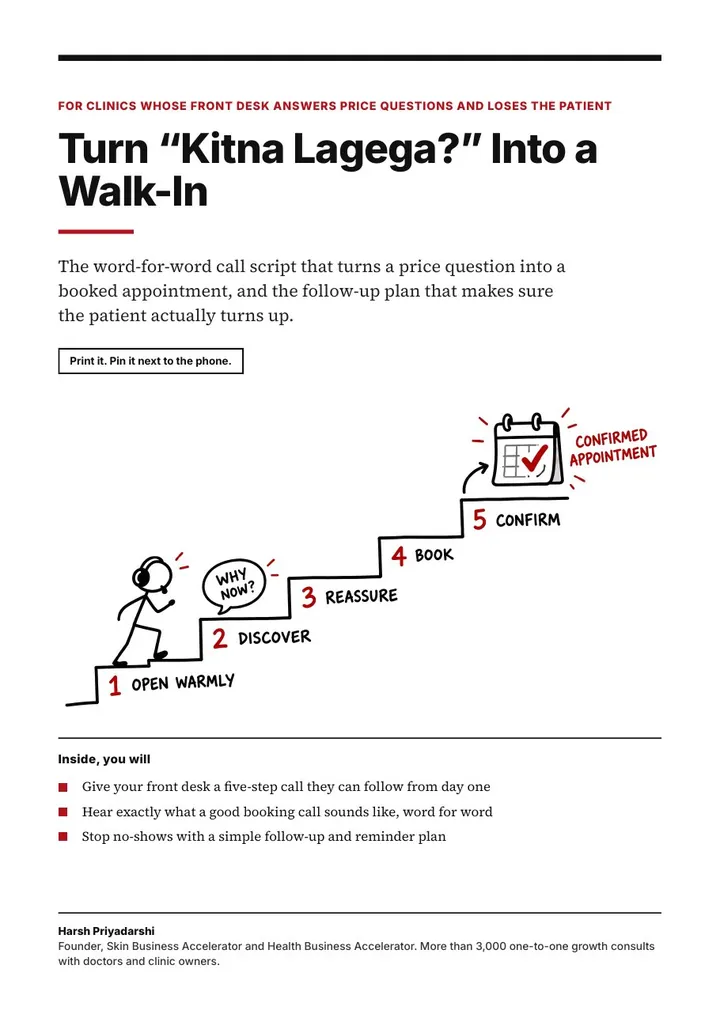
Start on the first call. When the front desk books, they can ask simply:
Front desk: "Many patients like to bring someone from the family, a wife, a parent, so they can hear the doctor directly and ask their own questions. Would you like to bring someone along?"
Then make it easy:
- Book a slot long enough for family questions. Add ten minutes if someone is coming.
- Seat them where they can see the examination and the hairline drawing.
- Offer a video call if the wife works or the parents live in another city. Fifteen minutes with the surgeon, booked before the patient leaves.
- Greet them by name and thank them for coming. They are not passengers. They are part of the decision.
When a consultation ends with "I need to ask my wife", do not fight it. Book the family session right there, as I describe in Good Doctors Go Broke. That is a definite next step, not a lost patient.
What worries does the family usually have, and who answers them?
Families rarely ask the same things the patient asks. Here is how I would split it.
| Who | Their usual worry | What helps | Who answers |
|---|---|---|---|
| Wife | "Will it look fake? Will he look different?" | Watching the hairline being drawn and hearing why it sits where it does | Surgeon |
| Wife | "Is this the right use of our savings?" | The full plan, what is included, payment options | Coordinator |
| Mother | "Is it safe? What about anaesthesia?" | A calm, specific explanation of the day and how safety is handled | Surgeon |
| Father | "Is it necessary? It's just hair." | The diagnosis explained plainly, and honesty about what doing nothing means | Surgeon |
| Father paying | "What exactly are we paying for?" | A written plan with every inclusion, the fee and the payment schedule | Coordinator |
| Anyone | "Can we wait until after the wedding?" | The timeline, honestly, and what the surgeon recommends | Surgeon |
Two rules here. The surgeon answers anything clinical, especially safety. And nobody, ever, overstates the result to win the family over. If a parent asks "will it be like before?", the honest answer is the realistic one, even if it is less exciting.
What should the written plan for the family say?
The patient goes home and tries to explain it all at the dinner table. Make that easy. Give him a family copy of the plan, in plain language, and in Hindi or the family's language if that helps.
One page, covering:
- What is happening to his hair, in two simple sentences.
- The hairline the surgeon recommends, with the photo of the drawn design, for the family only.
- What happens on the day, and how comfort and safety are handled.
- What recovery looks like, as the surgeon advises.
- What the plan includes: the procedure, medicines and supporting care, review visits.
- The fee and payment options, side by side: full payment, milestones, EMI through a lending partner.
- The surgeon's direct answer to "why now?"
- The coordinator's name and number for any family member to call.
Ask the patient: "Who at home will look at this?" Then say: "If your father has any questions, he can call Neha directly." That one sentence opens the door to a family member who might otherwise stay silent and say no.
How do you handle money when parents are paying?
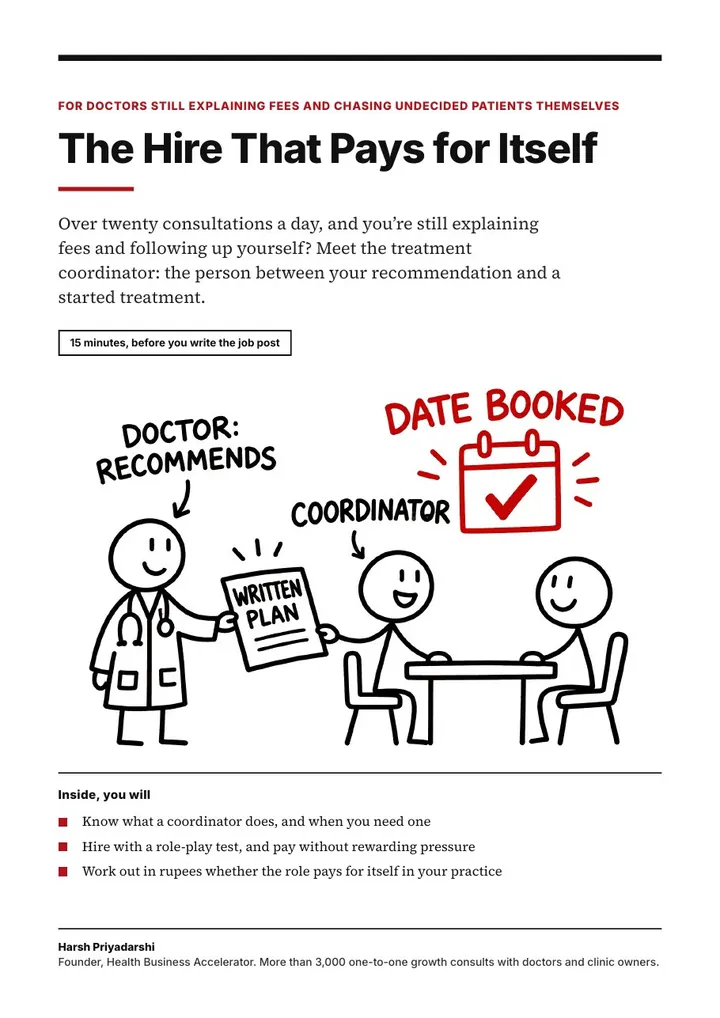
Carefully, and always with the patient present. The plan is his. The money may be theirs. Let the coordinator handle this conversation, not the doctor.
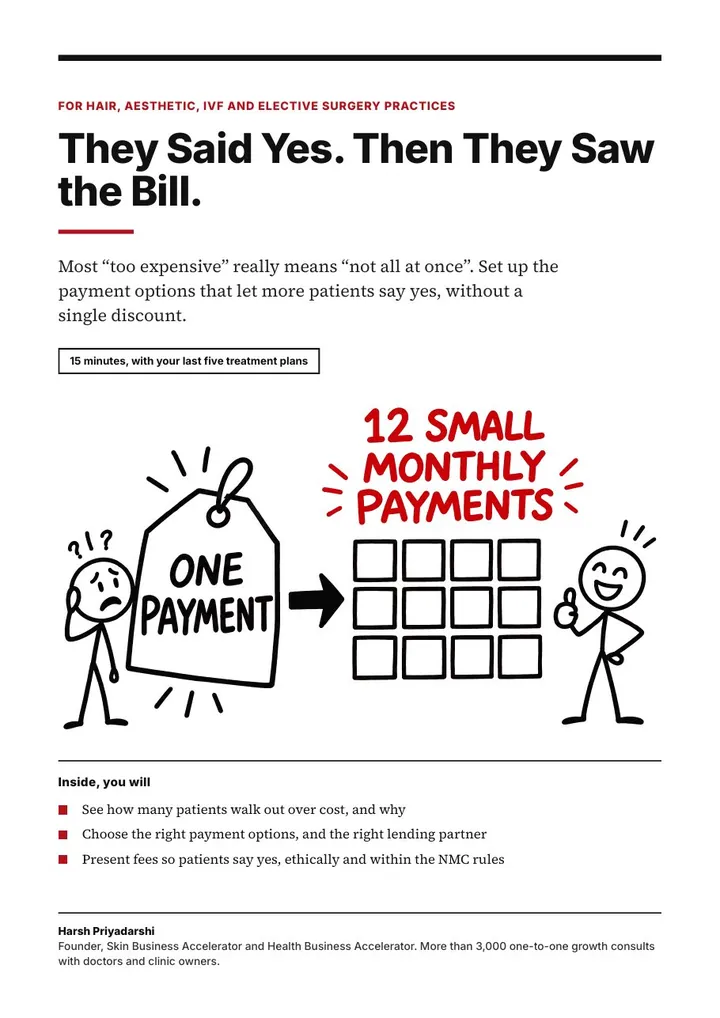
The same principle from every money objection applies. Ask whether the worry is the total amount or paying it all at once. If it is paying at once, a milestone plan or EMI often solves it. Here is an example: a ₹1,50,000 plan split into ₹30,000 at booking, ₹90,000 on surgery day and ₹30,000 at the first review. Or, through a lending partner, ₹12,500 a month for twelve months, with every charge explained.
Never push a family into a loan they are uncomfortable with. And never reduce the fee to win them over. If the budget truly does not fit, look at the Basic plan instead.
What if the family says no?
Sometimes they will. Respect it. Thank them for coming, leave the door open, and book a review or a follow-up call for a few months later, with the patient's agreement. Families change their minds when they feel respected, not when they feel pushed.
This is the heart of our conversion systems work, and more on how hair clinics run the full journey is on our hair transplant page.
The short version
- "I'll ask my parents" or "my wife" usually means "help me include them".
- Invite family on the first call, and offer a video call when they cannot come.
- The surgeon answers safety and appearance. The coordinator answers money.
- Send home a plain-language family copy of the plan with the coordinator's number.
- If parents are paying, separate the total from the timing. Never cut the fee.
Frequently asked questions
Should a hair transplant patient bring his wife to the consultation?
It often helps, especially if she has a say in the decision. She can watch the hairline being drawn, hear the surgeon explain the design and safety, and ask her own questions. Invite family on the booking call, and offer a short video call if she cannot come in.
How do I answer parents who think a hair transplant is unnecessary?
Let the surgeon explain the diagnosis plainly and honestly, including what doing nothing usually means for this kind of hair loss, without exaggerating. Answer safety questions specifically. Respect their view, give them a written plan, and offer a follow-up conversation rather than pushing.
What should a family copy of a hair transplant plan include?
Keep it to one plain-language page: what is happening to his hair, the recommended hairline, what happens on the day, recovery as the surgeon advises, what the plan includes, the fee and payment options side by side, and the coordinator's number for any family member to call.
Can I offer a lower fee to win over a hesitant family?
No. Lowering the fee to close a family tells everyone your price was never real. If the worry is paying all at once, offer milestones or EMI through a lending partner, with every charge explained. If the budget truly does not fit, discuss the Basic plan instead.
On a free growth call, my team traces your last month from enquiry to treatment and shows you your biggest leak in rupees.