A hair transplant clinic in India gets more patients by owning one outcome, such as a natural hairline nobody can spot, instead of selling grafts. Start with a strong Google profile, Meta ads and short video, reply to late-night enquiries within minutes, price outcome plans rather than per-graft quotes, and judge every channel by cost per treated patient against first-year plan value.
The man who books a hair transplant has usually been thinking about it for years. He has checked his hairline in every mirror, counted hair on the pillow, tried oils, shampoos, tablets and maybe PRP. He has watched dozens of videos, priced three chains and a cheaper local clinic, and wondered whether it is cheaper abroad. When he finally enquires, it is often at midnight, and the first thing he asks is "per graft rate kya hai?" How your clinic handles that man, from his first reel to his twelve-month review, is the whole growth story of a hair practice.
Who is the hair transplant patient, really?
Map him before you spend a rupee. For most clinics, the core patient looks something like this:
- Who: mostly men in their twenties and thirties with pattern hair loss, plus a smaller group of women with thinning.
- Stage: a receding hairline or thinning crown, often with a good amount of hair left, but able to see where it is heading.
- What he has tried: oils, shampoos, supplements, medicines, PRP, sometimes an earlier transplant that went wrong.
- What he compares you with: large chains, cheaper local clinics, clinics abroad, patches and wigs, and doing nothing at all.
- What he fears: that it will look fake, that people will notice, and that he is about to waste a lot of money.
- Why now: a wedding, because transplanted hair takes about nine to twelve months to reach full density. Or the realisation that hair loss keeps progressing, and every year of delay means a bigger procedure.
Every one of those lines is an ad, a video and a section of a landing page waiting to be made.
What should a hair clinic be known for?
Not "hair and skin". One outcome.
A dermatologist we worked with was doing excellent transplant work, but his marketing said "skin and hair clinic", which put him in a sea of identical clinics. His numbers showed transplants were his highest revenue service, with growing demand in his city. So he picked one outcome to own: helping men get a natural hairline back. He still treats everything he is trained for. His profile, content and ads now lead with hair, and his own take on FUE got a name.
That last part matters. Every clinic does FUE. Only you do your method. A named method with three to five phases, like design, harvest, place and protect, gives the patient a reason to stop comparing graft prices. More on how we position hair practices is on our hair transplant page.
Which channels bring hair transplant patients?
| Channel | Role | Why it fits hair |
|---|---|---|
| Google profile and hairline pages | Free | Every patient searches your name after a reel or a referral |
| Google search ads | Paid | People type "hair transplant cost in [city]" by name |
| Meta ads | Paid | Reaches men who have ignored their hairline for years |
| Short video | Trust | Hairline ratings and myth-busting build trust at scale |
| YouTube long video | Trust | High-ticket decisions take months, and long answers help |
| Database reactivation | Free | Consulted-but-undecided men, often months before a wedding |
| Word of mouth | Free | Friends, brothers and cousins notice the result |
A strong starting set: the Google profile, Meta ads and short video. If your enquiry logs show men naming the treatment and asking about cost, add Google ads early. And reactivate your database on day one. Every man who consulted and said "next year" is already halfway to booking.
What can a hair clinic afford to spend per patient?
Value the patient on his first year, not the procedure alone.
Example: Say your Recommended hairline plan, with the procedure, a year of medicines and supporting sessions, and reviews at three, six, nine and twelve months, comes to ₹1,50,000. At 10 to 20% of first-year value, you can spend roughly ₹15,000 to ₹30,000 to win that patient.
Now say a campaign spends ₹2,40,000 in a month and 12 men start treatment. That is ₹20,000 per treated patient, comfortably inside the range, even if cost per lead looked high.
Never judge hair campaigns on cost per lead. Cheap leads who never answer are the most expensive leads you can buy. Track every lead through booking, show-up and surgery date. Our patient acquisition work is built on that number.
Why do hair clinics lose patients they already paid for?
Three leaks show up in almost every hair clinic we audit.
- The per-graft quote. The front desk reads out a graft price, the patient compares it with five clinics, and picks the cheapest. Give an honest range and invite him to a consultation instead.
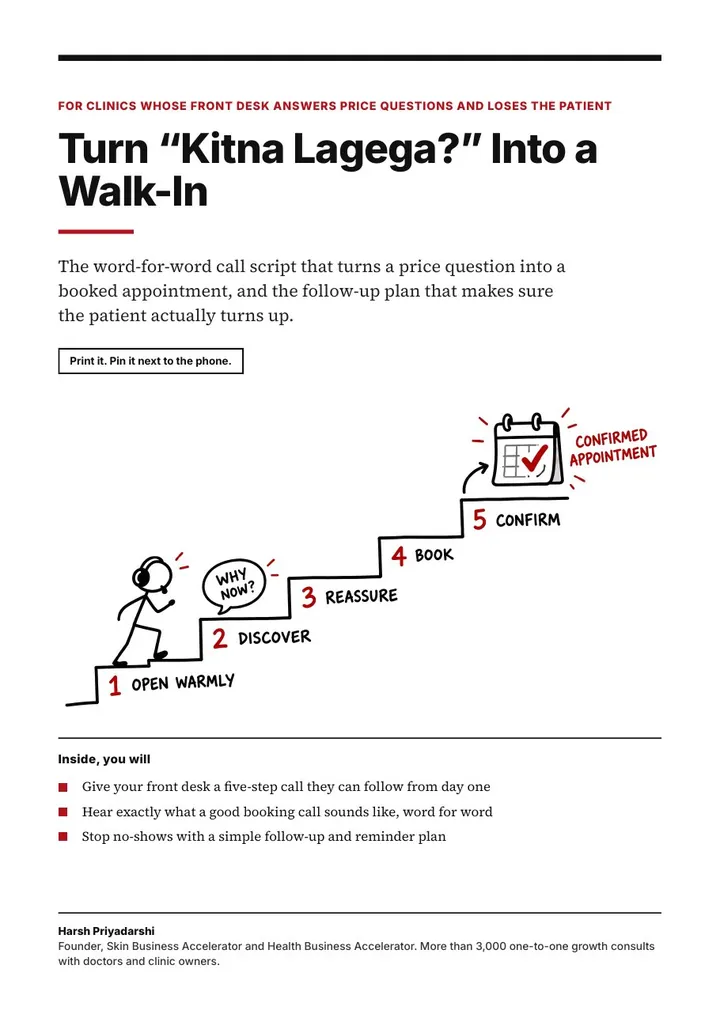
- Late-night silence. Many hair enquiries arrive late at night. If nobody replies until morning, he has already messaged the next clinic. An instant WhatsApp reply, an AI assistant that asks a few questions and offers real slots, and a human callback at a fixed time fix it.
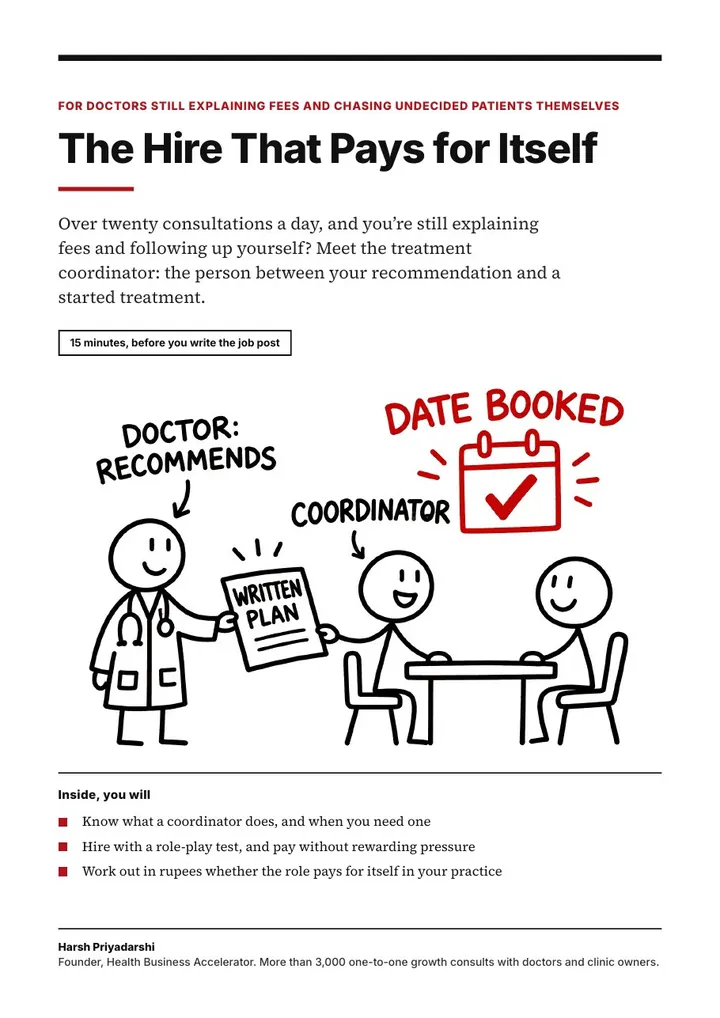
- "I'll think about it" with no follow-up. Men decide over weeks, often with family. Every undecided patient needs a written plan, a booked follow-up and a coordinator who calls.
Fix those before you increase the budget. Ads amplify whatever the clinic already is. The front desk and coordinator side is our conversion systems work.
Should a hair clinic chase outstation and international patients?
Often, yes. Men travel for a surgeon they trust, and hair transplants are one of the procedures where patients from other cities, and other countries, will travel for quality at a fair price. But it needs preparation: remote pre-consultations, help with travel and stay, a clear plan for the number of visits needed, and follow-ups after he goes home, by video where an examination is not needed.
Start with nearby cities that already send you patients. Build a genuinely useful page for each, explaining travel, stay and the visit plan, before you think about an international desk.
The short version
- Map the patient: his stage, what he tried, who he compares you with, his fear and his "why now".
- Own one outcome, a natural hairline, with a named method, and stop selling grafts.
- Start with the Google profile, Meta and short video, and reactivate undecided consults first.
- Value patients on first-year plan value and judge channels by cost per treated patient.
- Fix per-graft quoting, late-night silence and missing follow-up before spending more. Book a free growth call if you want help.
Frequently asked questions
How do hair transplant clinics get more patients in India?
By owning one outcome, such as a natural hairline, with a named method, then running three channels well: a strong Google profile, Meta ads and short video. Reply to every enquiry within minutes, including late at night, replace per-graft quotes with outcome plans, and follow up every undecided patient with a written plan and a booked next step.
What is the best marketing channel for a hair transplant clinic?
There is no single best channel. A common starting set is the Google profile, Meta ads and short video, with Google search ads added when patients search the treatment and its cost by name. Whatever you choose, never let one channel bring more than half your new patients, and judge each by cost per treated patient.
How much should a hair transplant clinic spend to get one patient?
In my framework, cost per new patient should sit around 10 to 20% of first-year value. For a hairline plan worth ₹1,50,000 including medicines, supporting sessions and reviews, that is roughly ₹15,000 to ₹30,000 per treated patient. Track every lead through to surgery, not just cost per lead.
Should hair clinics quote a price per graft?
I would not. Per-graft quotes make patients compare one number across five clinics and pick the cheapest. Give an honest range on the phone, explain what it depends on, and invite the patient to a consultation where he gets a written outcome plan. Patients who compare outcomes rarely choose on price alone.
On a free growth call, my team traces your last month from enquiry to treatment and shows you your biggest leak in rupees.