In India, surgery is usually a family decision, so treat the family as part of the consultation, not an obstacle. Ask early who else will help decide. Invite them to the consultation or a short video call with the doctor, give them a written plan they can read at home, answer their questions on safety, recovery and cost, and assign one coordinator to the family.
Here is a story from my second book. An orthopaedic surgeon kept losing knee replacement patients after what felt like a great consultation. The patient nodded, asked good questions, seemed convinced.
When we looked closer, the problem was obvious. The patient was convinced. But the patient wasn't the one deciding. The children were, and they had never heard the doctor explain anything.
So we built a family session into every plan, where the children could ask their own questions, in person or on a video call. We assigned one coordinator to every family. We added milestone payments and insurance support to the written plan, right next to the fee.
The family stopped being the obstacle and became the reason the patient said yes.
Why is surgery a family decision in India?
Because in most Indian homes, a surgery touches everyone.
Someone is paying, or sharing the cost. Someone will take leave to sit in the hospital. Someone will manage the recovery at home, the meals, the physiotherapy visits. An adult son in Pune or a daughter in Dubai wants to know their mother is in safe hands. An elder in the house has an opinion, and it carries weight.
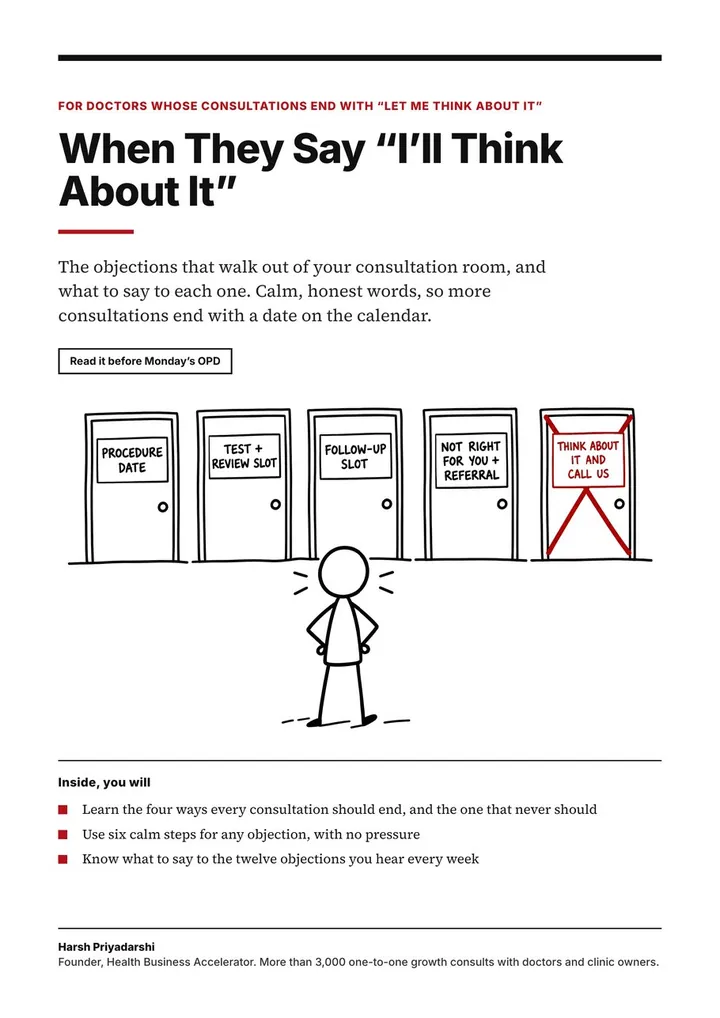
So when a patient says "I need to discuss it with my family", that is not an excuse. It is completely reasonable. The mistake is treating it as the end of the conversation instead of the start of a new one.
How do you find out who really decides?
Ask, early and kindly.
At the first call, the front desk can ask: "Will anyone else be part of this decision? You're very welcome to bring them to the consultation." That one line gives the real decision-makers a chance to hear the doctor directly, instead of hearing a nervous summary later.
In the consultation, notice who is asking the questions, who looks at the fee, and who the patient keeps glancing at.
At the handover, the coordinator should note in the CRM who decides, where they live and what they are likely to worry about. That note shapes every follow-up.
What do different family members usually worry about?
These are patterns from many conversations, not rules. Use them as a starting point, then listen.
| Who | What they often worry about | What usually helps |
|---|---|---|
| Adult children in another city | Is this doctor experienced? Is it safe? Who will look after Papa? | A video call with the doctor, credentials and similar-case proof, a clear recovery plan |
| Spouse | Time off work, recovery at home, the total cost | A written timeline, milestone payments, what each week of recovery looks like |
| Parents of a younger patient | Is this really needed? Is it safe at this age? | An honest explanation of fit, including when a procedure isn't needed |
| An elder in the family | "At this age, why take the risk?" | A calm explanation of what waiting really means, and how risks are managed |
Notice that most of these are not questions about price. They are questions about safety, trust and who will help.
How do you bring the family into the consultation?
Invite them at booking. The easiest family session is the one where the family comes to the first consultation.
Build a family session into every surgical plan. In person or on video, where relatives ask their own questions directly to the doctor. Book it before the patient leaves the clinic, never "call us when they're free."
Let the doctor speak to them directly. Hearing the surgeon explain the procedure, the method and the recovery in plain words answers in ten minutes what weeks of WhatsApp forwards can't.
On the call, speak to the family first, then to the problem. Something like: "Thank you for joining. Your mother told me the knee pain has stopped her walking to the market. Let me show you what I found, what I recommend, and what the recovery will look like. Then please ask me anything." Families relax when they feel the doctor is speaking to them, not around them.
Send the written plan home. The diagnosis, the outcome, the method, the options, the support and the fees, in language the family can read at the dinner table.
Help outstation families. Simple guidance on travel and stay, and remote follow-ups where possible.
One coordinator for the whole family. A single named person, with a WhatsApp number that gets answered, from the first scan to the last physiotherapy session.
How do you handle money conversations with the family?
Money is often shared, so uncertainty about the final number causes delay.
Another story from my first book: an orthopaedic surgeon billed knee replacements the way most hospitals do, with surgery, room, implant and physiotherapy priced separately. Families couldn't work out the final cost, and that uncertainty made them delay. We turned it into one all-inclusive plan, from the first scan to walking without support, with milestone payments and help with insurance paperwork. Families finally knew the full number on day one.
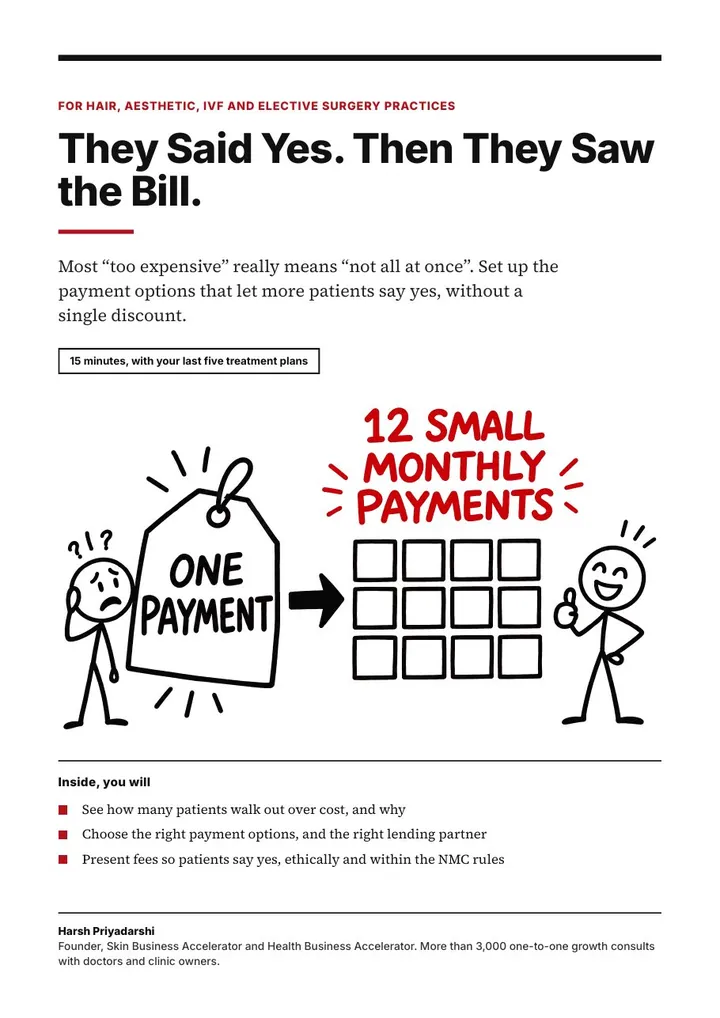
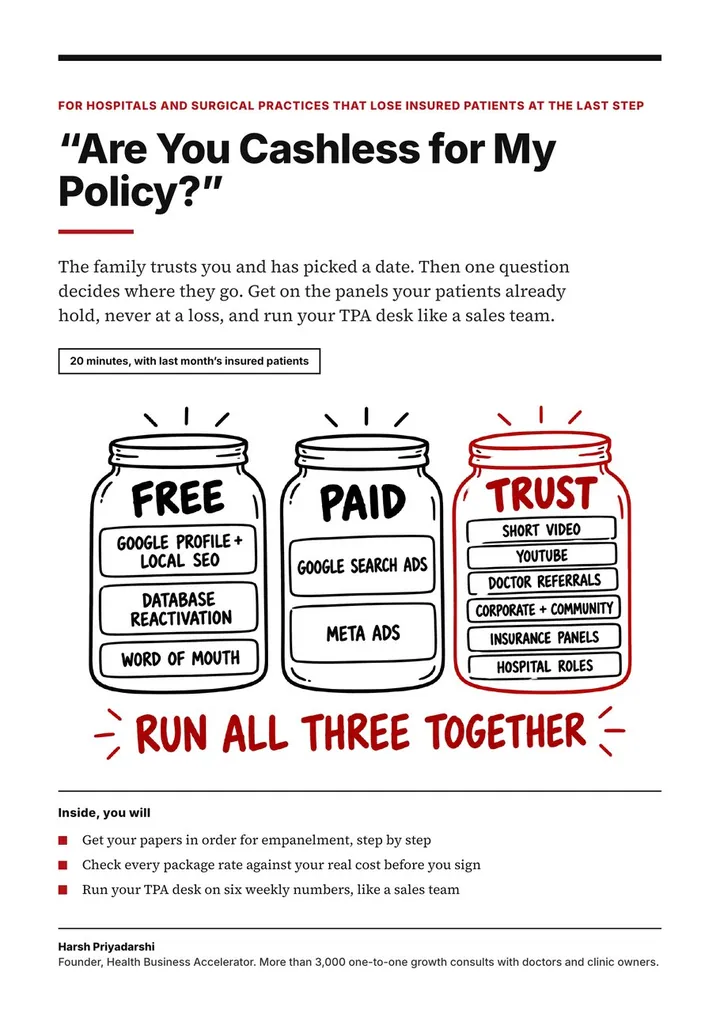
So give families one clear number, in writing. Show milestone payments tied to the phases of treatment, EMI options with the monthly figure, and insurance or TPA support where it applies. Let the coordinator lead this conversation, not the surgeon.
What should you never do?
- Never pressure the family. You are helping them see clearly, not winning an argument.
- Never share medical details without the patient's agreement. The patient decides who hears about their health.
- Never argue with a relative's opinion. Listen, acknowledge, find the real concern, answer it honestly.
- Never criticise another doctor the family has consulted. Help them compare on outcomes, aftercare and experience.
This works across specialities, but it matters most in orthopaedics and joint replacement and in hospitals, where older patients and adult children decide together. The family session and the offer around it are in Known Doctors Get Booked, and we build the coordinator role and follow-up into clinics through our conversion systems work. If families keep stalling your surgery decisions, book a free growth call.
The short version
- In India, surgery is usually a family decision. Treat the family as part of the consultation.
- Ask early who else will help decide, and invite them to the consultation.
- Book a family session or video call with the doctor before the patient leaves.
- Send home a written plan with one clear number, milestone payments and insurance support.
- One coordinator per family, no pressure, and nothing shared without the patient's agreement.
Frequently asked questions
How do I convince a patient's family to agree to surgery?
Don't try to convince them. Help them understand. Offer a session where they can ask the doctor their own questions, in person or on video, and send home a written plan with the diagnosis, recovery timeline, options and one clear fee. Most family hesitation is about safety, care at home and cost, not the surgery itself.
What if the patient's son lives in another city?
Offer a short video call with the doctor, booked before the patient leaves the clinic. Send the written plan to the patient on WhatsApp so they can forward it. Give the family one coordinator's number for questions. Hearing the doctor directly usually answers doubts faster than weeks of messages passed through the patient.
Should the doctor talk to the family about cost?
The doctor should explain the plan and the recommendation. The detailed money conversation, including milestone payments, EMI and insurance support, is best handled by the treatment coordinator. That keeps the doctor's role clinical and gives the family someone they can comfortably ask about money without feeling awkward.
How early should we involve the family in a surgical decision?
As early as possible. At the first call, the front desk can ask whether anyone else will be part of the decision and invite them to the consultation. The earlier the real decision-makers hear the doctor directly, the fewer second-hand doubts build up at home later.
On a free growth call, my team traces your last month from enquiry to treatment and shows you your biggest leak in rupees.