When a caller wants a second opinion, the front desk should welcome it, ask what was advised and by when, and ask them to bring every report, scan, prescription and the other doctor's written plan. Book a longer slot, and nobody comments on the other doctor. In the consult, the doctor gives a fair, written view and a clear next step, even if that step is elsewhere.
"Doosre hospital ne angioplasty bola hai. Main ek baar aur dikhana chahta hoon." A man in his fifties, nervous, calling a cardiology clinic on a Sunday evening. His daughter is on the line too.
How your clinic handles the next two minutes decides a lot. If the front desk says "haan, wahan sab kuch operation hi bolte hain", you've insulted a colleague and promised something you can't. If she says "come and see the doctor" with nothing else, he turns up without his reports, and the consult goes nowhere.
Second-opinion patients are some of the most serious, most thoughtful patients you will ever meet. They deserve a process built for them.
Why are second-opinion consults different?
Three things make them different from a normal first visit.
- There's already a plan on the table. The patient isn't asking "what's wrong with me?" They're asking "is this plan right for me?"
- There's anxiety and often family involvement. A big procedure has been advised, and the whole family is involved in the decision.
- The records matter more than usual. Without the reports, the scans and the other doctor's plan, your doctor is starting from zero and can't give a fair opinion.
So the front desk's job is to make sure the patient arrives with everything, and the doctor's job is to be fair.
What should the front desk say and ask?
Start by welcoming the request. Never treat it as unusual.
Front desk: "That's a very sensible thing to do before a big decision. Can I ask your name, and what has been advised?"
Then four questions:
- What was advised? The procedure name, as the patient understands it.
- When were they told to have it? "Within a week" and "sometime in the next few months" need different slots.
- Who will come? For big decisions, the spouse, son or daughter should come along.
- Are there any symptoms right now? If the caller describes something urgent, like chest pain happening now, the desk tells them to go to the nearest emergency immediately. That's never a booking call.
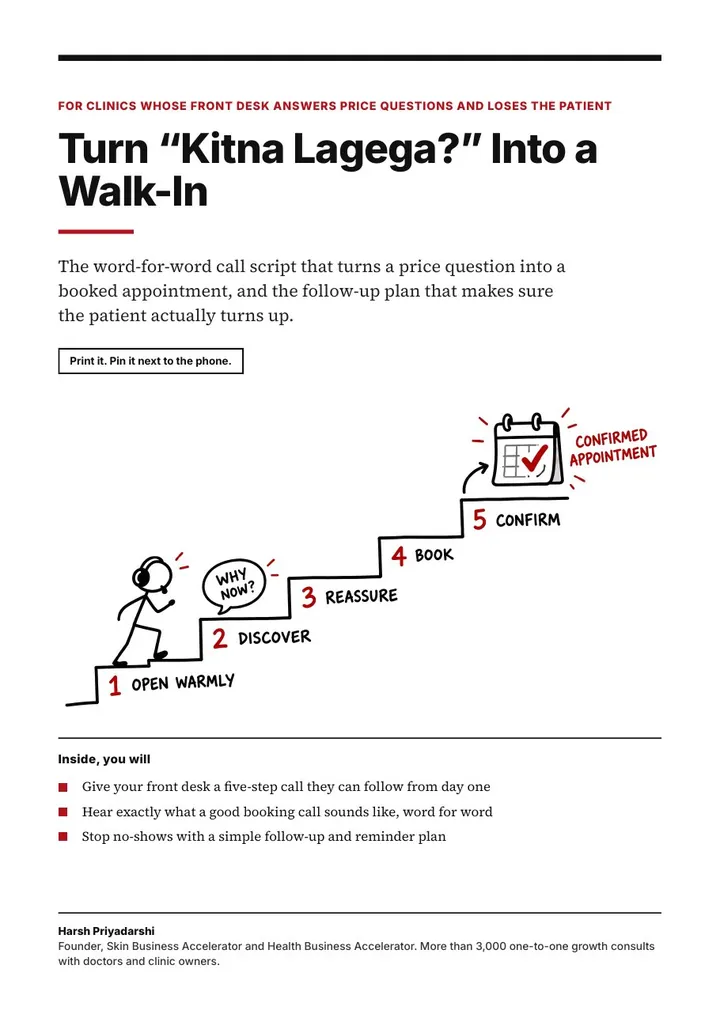
Then book a longer slot. Second opinions take more time, because the doctor has to read records before examining. If your normal slot is 15 minutes, book 30.
What should the patient bring?
Send this as a WhatsApp checklist straight after the call. It's the single most useful thing the front desk does for a second-opinion patient.
| Bring this | Why it matters |
|---|---|
| All reports, oldest to newest | The doctor sees how things changed over time |
| Scans or imaging, with the CD, pen drive or online link | Reports alone often aren't enough |
| The other doctor's written advice or plan | So the opinion is about the actual plan, not a memory of it |
| The current list of medicines | Doses and combinations matter |
| Any discharge summaries | Past procedures change the picture |
| A family member who'll help decide | So the explanation is heard once, by everyone |
Also ask them to write down their questions. Second-opinion patients often freeze in the room and remember everything on the drive home.
Why must nobody criticise the other doctor?
Because it's wrong, and because it backfires.
It's wrong because your team doesn't know what the other doctor saw, heard or considered. Running down a colleague goes against the basic ethics doctors are held to, and it puts your clinic on weak ground.
It backfires because the patient trusted that doctor enough to consult them. When you criticise their choice, you're criticising them. And if your doctor later agrees with the original plan, the clinic has made itself look foolish.
So write a rule for the whole team: nobody comments on another doctor's plan except your doctor, inside the consult, and only about the clinical facts.
Front desk phrases to ban: "Woh to har kisi ko operation bolte hain." "Wahan bahut mehenga hai." "Achha kiya yahan aaye." Replace them all with one line: "The doctor will go through everything carefully and give you a clear view."
How should the doctor run the second-opinion consult?
Here's a simple structure that stays fair.
- Frame it. "I'll go through your reports and the plan you've been given, examine you, and then tell you clearly what I think and why."
- Read before you examine. Let the patient see you going through their records properly. It tells them you're taking it seriously.
- Listen to what they understood. Often the patient's fear comes from a part of the plan they didn't understand.
- Examine and narrate. Explain what you're checking and what you're finding, in simple words.
- Give your view plainly. If you agree with the plan, say so clearly. That's a valid and valuable opinion. If you differ, explain the clinical reason, without judging the other doctor: "Based on what I see today, I'd suggest a different approach first, and here's why."
- Put it in writing. A short written opinion, so the family can read it at home.
How does a second-opinion consult end?
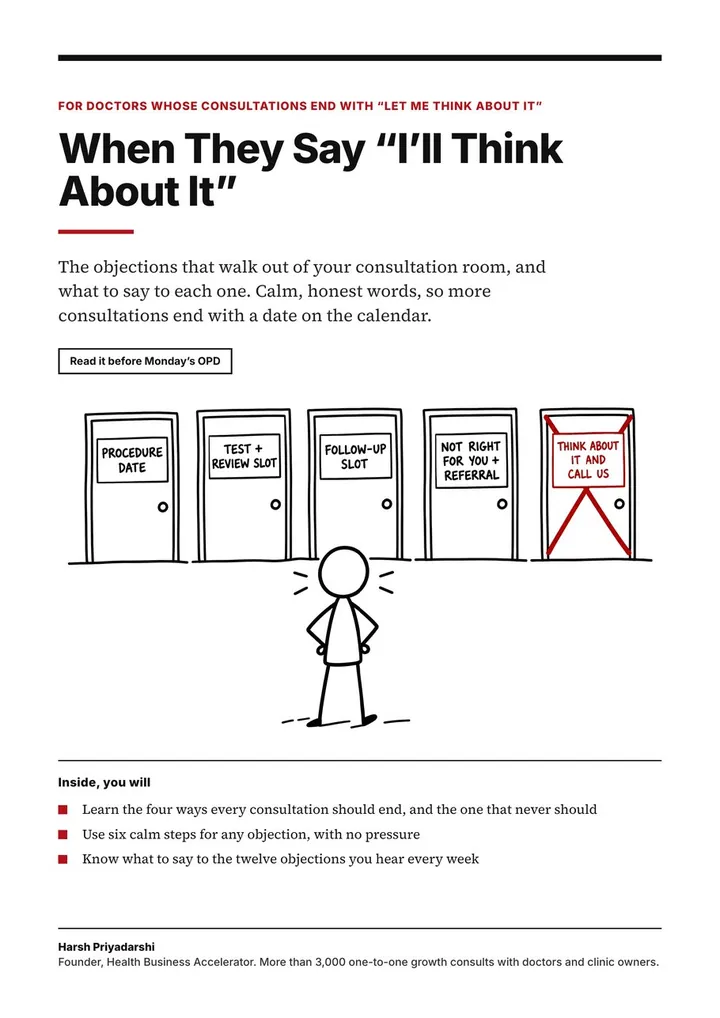
With a clear next step, like every consult. In a second-opinion case it can be one of four:
- Go ahead with the original plan, with the original doctor. You agreed, and you tell them so. This builds more trust in your clinic than you'd think.
- Go ahead with a plan at your clinic. If you differ and the patient wants your plan, book the next step on the day.
- A further test that would settle the question, with a review slot booked.
- A family call or visit with the doctor, booked before they leave.
What it should never end with is "think about it and decide". These patients came to you because they were already stuck between two options.
Let me show you why a fair second opinion still pays. Say your clinic sees eight second-opinion patients a month. In this example, the doctor agrees with the original plan for four and they go back. Three choose your plan, at an example value of ₹1,50,000. That's ₹4,50,000 from three patients. The four who went back tell their families your doctor was honest. In my experience, that kind of honesty keeps bringing patients for years.
How patients arrive at your clinic for a second opinion is often through positioning and authority, and the desk handling is part of our conversion systems work. Big-decision specialities like cardiology and oncology get the most second-opinion calls.
The short version
- Welcome every second-opinion request. Ask what was advised, by when, and who will come.
- Send a WhatsApp checklist: reports, scans, the other doctor's written plan, medicines and questions.
- Book a longer slot, because the doctor needs to read before examining.
- Nobody comments on the other doctor. The doctor gives a fair clinical view, in writing.
- End with a clear next step, even if that step is going back to the first doctor.
Frequently asked questions
Should a clinic charge more for a second opinion consultation?
Charging a fixed, higher fee for a longer second-opinion slot is reasonable if it's written on your fee sheet and said plainly on the phone. The patient is getting more of the doctor's time, including reading records. Keep it the same for everyone, and never adjust it based on whether they choose your plan afterwards.
What if the doctor thinks the other doctor's plan is wrong?
The doctor explains the clinical reasons for a different view, in plain words, without judging the other doctor's skill or motives. "Based on what I see today, I'd suggest this first, and here's why" keeps it about the patient. Put the opinion in writing so the patient can share it with the first doctor if they wish.
Can a second opinion be done on WhatsApp by sending reports?
A doctor can look at reports, but a proper second opinion usually needs an examination and a conversation, especially for surgery. If your clinic offers paid teleconsultation, it can be a first step, with an in-person visit if needed. The front desk shouldn't forward reports to the doctor's personal WhatsApp for a quick free look.
How do I stop my staff from badmouthing other hospitals on the phone?
Make it a written rule, explain why in a team meeting, and give them one replacement line: "The doctor will go through everything carefully and give you a clear view." Then listen to recorded second-opinion calls in your weekly review. If the old phrases come back, correct them gently the same week.
On a free growth call, my team traces your last month from enquiry to treatment and shows you your biggest leak in rupees.