A bariatric patient coordinator is the one person who walks every patient from first enquiry to surgery date. They schedule pre-surgery tests, chase insurance paperwork, speak to families, keep the follow-up calendar and make sure nothing falls through. Pay them a fair fixed salary with written step-ups, and recognise process quality, such as speed and completeness, never a commission per surgery.
Picture a bariatric patient's first month after deciding to go ahead. Six or seven tests at different times. A dietitian visit. A counsellor session. Policy documents for the insurer. A husband who wants to talk to the doctor. Leave to apply for. A date to pick.
Now picture that patient getting calls from four different people at your practice, none of whom knows what the others said. That is how many bariatric practices run. And it is why so many patients quietly stop somewhere between "yes" and the surgery date.
The fix is one person. The patient coordinator.
What does a bariatric patient coordinator actually do?
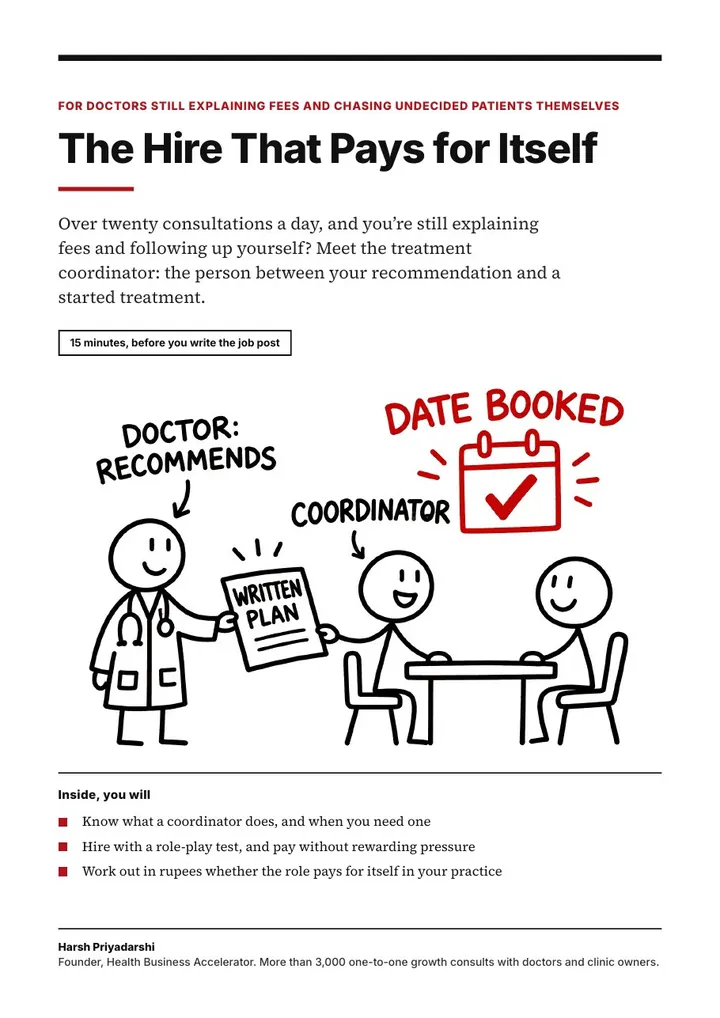
They are the bridge between the surgeon's recommendation and the operating theatre. In Good Doctors Go Broke I described the coordinator as the person who owns the last step. In bariatrics the last step is long, so the job is bigger than in most specialities.
The core of the role:
- Owns the patient from the first call. Introduces themselves by name and stays the same person throughout.
- Walks the patient through the written plan after the consult, slowly, answering the questions the patient felt shy asking the surgeon.
- Schedules the pre-surgery pathway. Every test, the dietitian and counsellor sessions, and the review where results are discussed.
- Runs the insurance paperwork with the insurance desk or hospital TPA team.
- Speaks to the family. Books family sessions, answers logistics and cost questions, and passes clinical questions to the surgeon.
- Holds the follow-up calendar for undecided patients and for everyone in their first year.
The coordinator never negotiates price. They help the patient find the right plan, the right payment structure and the right date.
What checklists should a bariatric coordinator work from?
Three checklists cover most of the job. Here is the pre-surgery one, the one that prevents most delays.
- Written plan explained and a copy given to the patient and family.
- Fee, inclusions and payment method confirmed in writing.
- Insurance documents collected, or self-pay confirmed.
- All pre-surgery tests booked with dates, times and preparation instructions sent.
- Dietitian and counsellor sessions booked.
- Results review with the surgeon booked.
- Family session done, or a reason recorded why not needed.
- Pre-authorisation submitted and decision received, or plan B explained.
- Admission date, time, what to bring and attendant details confirmed.
- First-year review dates booked before discharge.
The other two checklists are for the first call (who they are, what brought them, what they have tried, why now, how they heard of you) and for discharge (follow-up dates, the dietitian's home plan, one WhatsApp number to call).
How does a coordinator handle pre-surgery tests?
This is where coordinators save the most surgeries. A patient who has to call five places to book five tests will give up on two of them.
Good coordinators do three things. They book the tests in as few visits as possible, ideally one morning. They send the preparation instructions the night before, in the patient's language. And they track every result into the CRM, so the surgeon's review never happens with a missing report.
If a test is missed, the coordinator calls the same day. Usually the reason is small: a work clash, a fasting confusion, a fear about the result.
How should a bariatric coordinator be measured?
On the process, not on surgeries. Here are the numbers I would review every week.
| What to measure | Why it matters | Example target to set |
|---|---|---|
| Time to first contact on new enquiries | Speed wins trust | Under 5 minutes in working hours |
| Share of decided patients with all tests booked within 48 hours | Prevents drift | Close to all |
| Pre-surgery checklists complete before admission | Prevents last-minute cancellations | Every one |
| Insurance files sent complete the first time | Prevents queries | Rising every month |
| Undecided patients contacted on schedule | Keeps the door open | Every scheduled touch done |
| First-year reviews booked at discharge | Protects outcomes | Every patient |
| Patient feedback on clarity and kindness | Shows how it feels | Read every comment |
Review a few recorded calls each week too. The numbers tell you what happened. The calls tell you why.
How should you pay a bariatric patient coordinator?
A fair fixed salary, with written step-ups for skills and tenure, and recognition for doing well on the process numbers above. Not a commission per surgery, and not a bonus per patient.
The book suggests incentives on started treatments in general. My advice has changed: the NMC guidelines of 6 October 2026 are cautious about bonuses connected with getting patients, so check the current guidelines before any incentive. For bariatrics I would be firm anyway. This is a life-changing operation, decided over months, often with a worried family. A coordinator paid per surgery will, sooner or later, nudge someone who was not ready. That costs you far more in trust than any target is worth.
Here is an example structure. Say the fixed salary is ₹35,000 a month. On top, up to ₹7,000 a month for process quality: ₹2,000 for speed to first contact, ₹2,000 for complete checklists, ₹1,500 for follow-up done on schedule, and ₹1,500 for patient feedback. Paid monthly, reviewed with the practice owner. Set your own numbers for your city and stage.
Add guardrails. Track complaints, track any patient who says they felt pushed, and take it seriously.
Who makes a good bariatric coordinator?
Warmth first. Many bariatric patients have been judged about their weight for years, by relatives, colleagues and sometimes doctors. A coordinator who is kind, never comments on anyone's body, and explains money calmly is worth more than one with a sales background.
Nurses who want to move out of ward work often do very well. So do people from hospital patient relations, insurance or hospitality. Test with a role-play before hiring: you are a patient who has done the tests, but your mother is now against surgery and you are scared of the cost. Watch whether they listen, and whether they move gently to a next step.
When you are seeing more than about twenty consults a day across your practice, you need a dedicated coordinator. Below that, a well-trained front desk can share the role, but someone must still own it by name.
Our front desk and conversion work includes hiring and training coordinators. How the coordinator fits the rest of the practice is on our bariatric surgery page.
The short version
- One coordinator owns each patient from first call to surgery date, and stays the same person.
- Work from three checklists: first call, pre-surgery and discharge.
- Book all tests within 48 hours of the decision, in as few visits as possible.
- Measure process quality every week, and review recorded calls.
- Pay a fixed salary with written step-ups and recognise process quality, never a commission per surgery.
Official sources
Rules change. Check the current version at the source before you act.
Frequently asked questions
What is the role of a patient coordinator in bariatric surgery?
The coordinator walks each patient from the first enquiry to the surgery date and through the first year. They explain the written plan, book every pre-surgery test and session, run insurance paperwork with the TPA team, speak to the family, and hold the follow-up calendar so no patient drifts off between decision and surgery.
Should a bariatric coordinator get a commission per surgery?
I would not do it. A per-surgery commission eventually pushes someone into a life-changing decision before they are ready. Pay a fair fixed salary with written step-ups, and recognise process quality: speed to first contact, complete checklists, follow-up done on schedule and patient feedback. Track complaints and any sign of pressure.
How many patients can one bariatric coordinator handle?
It depends on your volume and how much the CRM automates. One well-supported coordinator can usually handle one busy surgeon's patients from enquiry through the first year. When checklists start slipping or follow-ups are missed, that is the signal to add a second coordinator or separate the insurance desk from the coordinator role.
What qualifications does a bariatric patient coordinator need?
No single qualification is required. Look for warmth, calm confidence about money, clear explaining, listening and follow-up discipline, plus your patients' language. Nurses moving out of ward work, hospital patient relations staff and people from insurance or hospitality often do well. Test with a realistic role-play before hiring.
On a free growth call, my team traces your last month from enquiry to treatment and shows you your biggest leak in rupees.