To add women's health physiotherapy, start with trained staff and privacy before marketing: a therapist with proper women's health training, a private room, female therapists available, clear consent and chaperone rules. Offer three programmes, such as antenatal exercise classes, postnatal recovery and pelvic floor care, price each as a plan, and build relationships with gynaecologists by teaching and reporting back, never through commissions.
Picture a young mother coming to a physio clinic for her back, eight months after delivery. Halfway through the history she lowers her voice and mentions, almost as an apology, that she has had other problems since the baby too. The therapist, a kind man with no women's health training, says, "That is normal after delivery," and goes back to her back.
She does not come back. Not because the care was bad, but because she does not feel that clinic is a place where she can talk about it.
Women's health physio is a real, growing need in most Indian cities. But it is not a poster you put up. It is a service you have to build properly before anyone will trust it.
Why add a women's health service at all?
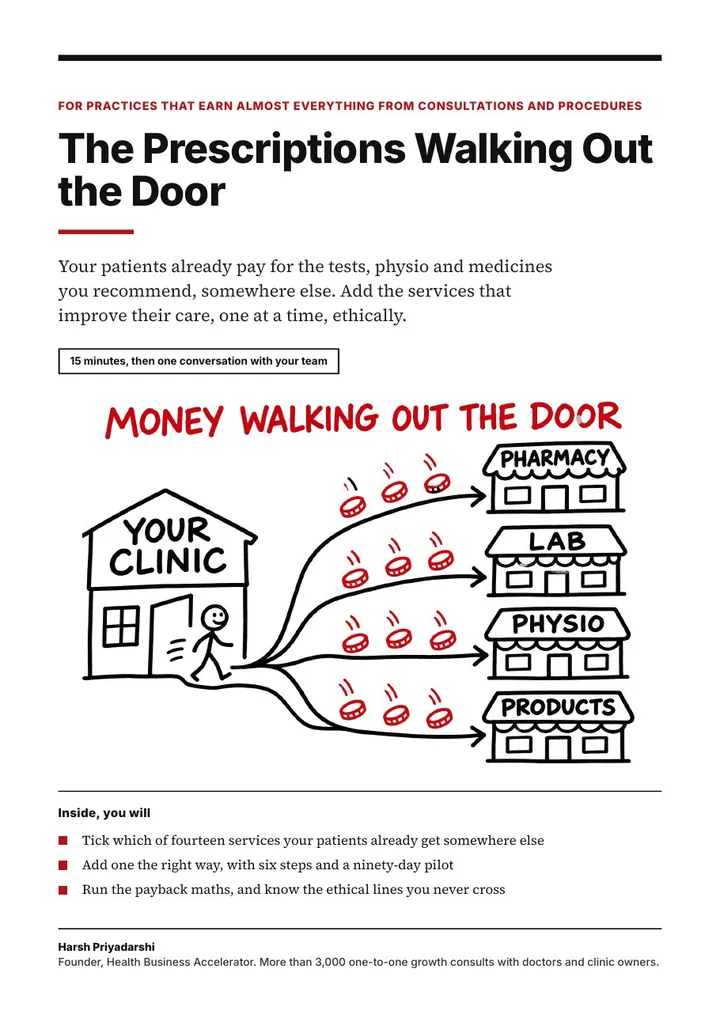
Rich Doctors Walk Away, the third book of my trilogy, has one rule for any new revenue stream: it must make your patients' care better, and it must fit your niche. Women's health passes both tests for most physio clinics. Your existing patients already include pregnant women, new mothers, and women whose problems have been brushed off for years. Many of them would rather get this help from a clinic they already trust.
It also brings longer relationships. A woman who trusts your antenatal classes is likely to come back after delivery, and to trust you with her mother's knee and her husband's back later.
But do it only if you will do it well. A half-built women's health service is worse than none.
What training and privacy do you need first?
Build these before you announce anything:
- Proper training. At least one therapist with dedicated women's health and pelvic floor training from a recognised course, not a weekend overview. Check what your professional council recognises.
- A private room. A real door, not a curtain in the corner of the gym. Sound matters as much as sight.
- Female therapists available. Many women will only discuss these problems with a woman. Make it easy to ask.
- Clear consent. Explain every part of an assessment before you do it, in plain words, and record consent. Patients can stop at any point.
- A chaperone policy. Written down, explained, and offered every time.
- Data privacy. These records are sensitive. Limit who can see them, and never discuss cases on open WhatsApp groups.
- Timings that fit. Morning slots for pregnant women before the heat, and the option to bring the baby for postnatal sessions.
Without these, no amount of marketing will work. With them, word spreads quietly among exactly the right women.
Which programmes should a women's health service offer?
Start with three. Do not launch a long menu. The clinical content of each comes from your trained therapist and the patient's obstetrician or gynaecologist. Here is how one clinic might package them, with example prices.
| Programme | Format | Example structure | Example fee |
|---|---|---|---|
| Antenatal exercise | Small group classes | 8 classes over 8 weeks, by trimester, with the doctor's clearance | ₹4,800 for the course |
| Postnatal recovery | One-to-one plus home programme | Assessment, 6 sessions over 8 weeks, a written home routine | ₹7,500 for the plan |
| Pelvic floor care | One-to-one, private room | Assessment, 8 sessions, progress review at sessions 4 and 8 | ₹9,000 for the plan |
Price each as a plan, written down, with payment in two parts where it helps. Do not run launch offers or "first class free" style hooks to pull women in. The women who need this service are looking for trust, not a deal.
How do you work with gynaecologists?
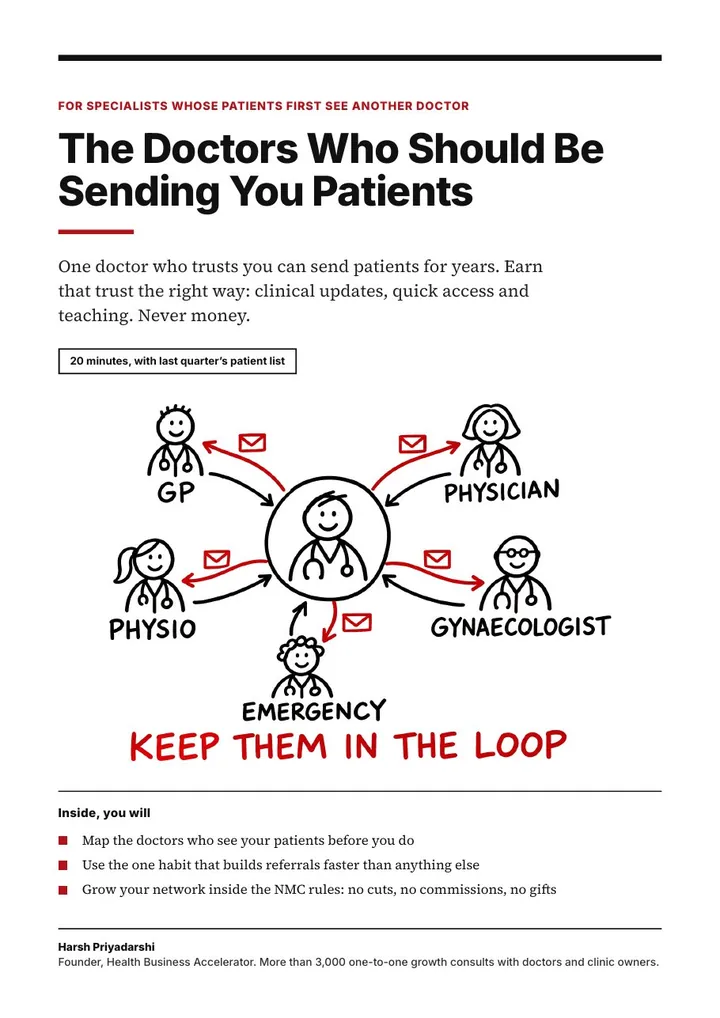
Gynaecologists and obstetricians see your future patients first. Known Doctors Get Booked has a whole chapter on doctor referral networks, and the same rules apply.
- Teach first. Offer a short session for their team on what women's health physio does and when to send someone. Bring a one-page referral guide.
- Ask what they want. Many gynaecologists have firm views on antenatal exercise. Learn them and follow them.
- Report back, with consent. A short note after the assessment and at the end of the plan.
- Make it easy. A WhatsApp line for their team and priority slots for their patients.
- Never exchange money for referrals. No commissions, no cuts, either way.
- Offer visiting sessions where it fits. Some gynaecology clinics have space for an antenatal class. If you run one there, agree a fair rent for the space in writing, checked by a lawyer.
How do you handle family dynamics in pregnancy and after delivery?
In many Indian homes, the pregnant woman is not the only decision-maker. The husband, the mother-in-law or her own mother may have strong views on exercise in pregnancy, on going out after delivery, or on whether "these problems" should be discussed at all.
Do not argue with the family. Educate them.
- Invite the husband or mother to the first antenatal class, so they hear the doctor's clearance and the plan themselves.
- Give a written plan the family can read at home.
- For postnatal sessions, make the clinic baby-friendly: a mat, a corner to feed, no rush.
- Keep private things private. What a woman tells her therapist is hers to share, not the family's.
How do you tell women the service exists, ethically?
Teach, in your own name and your therapist's name. Short videos and posts on what changes in the body after delivery, myths about exercise in pregnancy, and when to see someone. Talks at gynaecology clinics, housing societies and new-mother groups.
What you must not do: share patient stories, photos or progress to promote the service, or promise results. Read the current NMC guidelines and your own council's advertising rules yourself before you publish anything.
Pilot the service for ninety days with one owner, as Rich Doctors Walk Away suggests. Track assessments, plans started, plans completed and where each patient came from. Your existing patients will tell you very quickly whether it is worth building.
This is one of the more rewarding services a clinic can add, if it is built with care. It also opens the door to gynaecologists, who see your future patients first. Planning new service lines like this with physiotherapy clinics is part of our growth consulting, and the method for adding streams one at a time is in Rich Doctors Walk Away.
The short version
- Women's health physio is a real need, but build trust before you market it.
- Train properly, provide a private room, female therapists, consent and a chaperone policy.
- Start with three programmes: antenatal classes, postnatal recovery and pelvic floor care, each priced as a plan.
- Build gynaecologist relationships by teaching and reporting back, never with money.
- Involve the family respectfully, keep private matters private, and teach instead of advertising results.
Official sources
Rules change. Check the current version at the source before you act.
Frequently asked questions
What training do physiotherapists need for women's health?
Dedicated women's health and pelvic floor training from a recognised course, beyond a general degree or a short workshop. Check what your professional council recognises. Pair the training with a private room, clear consent, a chaperone policy and female therapists available before you start offering the service.
How should a physio clinic price antenatal and postnatal programmes?
Price each as a written plan rather than per session. As an example, a clinic might charge ₹4,800 for an eight-class antenatal course, ₹7,500 for a postnatal recovery plan and ₹9,000 for a pelvic floor plan. Offer payment in parts where it helps. Avoid launch offers and free-class hooks.
How do I get gynaecologists to refer to my women's health physio service?
Teach their team what the service does and when to refer, follow their views on antenatal exercise, report back after assessments with consent, and give them a direct WhatsApp line and priority slots. Never offer or accept money for referrals. Trust and good updates build the flow.
Can I share postnatal patient progress on social media?
No. Using patient stories, photos or progress to promote your practice is not safe under the current advertising rules, and these are especially private matters. Teach instead: what changes after delivery, common myths and when to seek help. Read the current NMC guidelines and your own council's rules yourself.
On a free growth call, my team traces your last month from enquiry to treatment and shows you your biggest leak in rupees.