In my experience, most Indian families find an oncologist within a week of the biopsy. They ask the doctor who did the biopsy, call relatives who know a doctor, search Google and ChatGPT at night, and visit two or three centres. To be chosen, you must be named by referring doctors, findable by name and cancer type, reachable on the first call, and ready with a clear plan.
The report usually arrives on WhatsApp. Somebody's phone buzzes at 9 PM, a PDF opens, and one word in the impression line changes the whole house. Nobody sleeps that night. By the next morning, the family is doing something very specific, and almost no oncologist I meet has ever mapped it.
I have sat through more than 3,000 one-to-one consults with practice owners, and oncologists are the ones who most often say, "Patients just come to me." They do. But they come through a path, and every step of that path either carries the family towards you or quietly away. Let me walk you through that path, day by day, from the family's side.
What does a family do in the first 48 hours after a biopsy result?
They call people. Not hospitals. People.
The first call goes to the doctor who did the biopsy or the scan: the surgeon, the gynaecologist, the chest physician, the ENT. "Doctor, ab kahan dikhayein?" Whatever name that doctor gives carries enormous weight, because the family trusts the person who just found the problem.
The second round of calls goes to relatives. The cousin who is a nurse in Delhi. The uncle whose friend had treatment two years ago. The son working in Bengaluru who will do the "research". In many families, the person making the decision is not the patient and not even in the same city.
So the first question for your practice is simple. When a surgeon, physician or gynaecologist in your city gets that call, does your name come out of their mouth? If it doesn't, nothing else on this list fully makes up for it.
What do families search on Google and ChatGPT?
Usually that same night, the son in another city opens Google or ChatGPT. The searches are plain and frightened. "Oncologist for breast cancer in Ranchi." "Is surgery needed for stage 2 colon cancer." "Chemotherapy cost in Patna." "Dr [name] oncologist reviews." They type the name the referring doctor gave, to check it.
Here is what that means for you:
- When they search your name, they should find a complete Google profile, a doctor profile page with your training and the cancers you focus on, and your hospital or clinic timings.
- When they search the cancer type and city, there should be a page that explains, in plain words, how you approach that cancer and what the first visit involves.
- When they ask an AI engine, it can only describe what it can read. Clear pages that answer real questions are what get quoted.
None of this is advertising. It is simply making sure the family can confirm that the name they were given is real, specialised and reachable.
What happens on the first call to your practice?
By day two or three, someone calls. Often it is the relative, not the patient. They are scared, they want to know if you can see them this week, and they will ask "kitna lagega?" within the first minute.
This call decides more than your doctor's degree does. If nobody picks up, they call the next name. If the person who answers sounds rushed, they call the next name. Your front desk should answer at least 95% of calls in working hours and reach every missed call or WhatsApp within five minutes. In oncology, I would treat those numbers as a floor, not a target.
On that call, the family needs three things: a first visit within a few days, a clear list of what reports to bring, and an honest sense of the cost of the first visit and the tests that may follow.
What happens during the week of visits?
Most families visit two or three centres within the first week or ten days. One may be a large corporate hospital. One may be the name the referring doctor gave. One may be a relative's suggestion. They are not being disloyal. They are trying not to make a mistake with someone they love.
At each visit, they compare the same things, even if they never say it out loud:
| Step in the family's week | What the family needs | What you must have in place |
|---|---|---|
| Day 1: the report arrives | A name they can trust | Referring doctors who know when and how to send to you |
| Day 1 to 2: the late-night search | Proof the name is real and specialised | Google profile, doctor page, cancer-specific pages |
| Day 2 to 3: the first call | A quick appointment and honest answers | A trained front desk, 95% answer rate, call back within five minutes |
| Day 3 to 5: before the visit | Knowing what to bring | Report checklist on WhatsApp, one named contact |
| Day 4 to 7: the first visit | A clear plan they can understand | Reports reviewed, plan on paper, phases and cost explained |
| Day 7 to 10: deciding | Something to compare with | A written summary they can take home, and a calm follow-up |
Notice where most practices lose. It is rarely the medicine. It is the call nobody answered on day two, or the family that left the first visit with nothing on paper and could not explain the plan to the son in Bengaluru.
Which of these steps can an oncologist control?
All of them, partly. Here is the order I would fix them in:
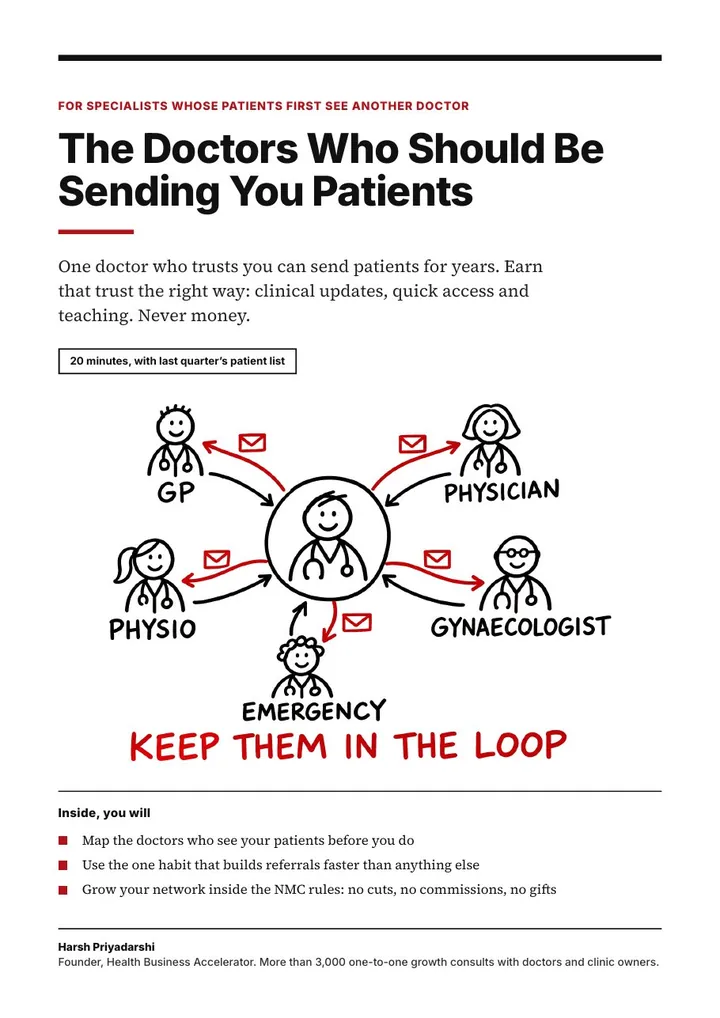
- Referring doctors. Send every referring doctor a short update after every patient, with the patient's consent. This one habit builds more trust than anything else.
- The first call. Measure answer rate and speed to first contact for one month. Fix those before you spend a rupee on visibility.
- The first visit. Ask families to send reports on WhatsApp beforehand, review them, and end the visit with a written plan in phases.
- What families read online. Build one honest page per cancer you focus on, plus a full doctor profile. Keep it educational, in your own name.
- The decision week. Give a written summary and one contact person, and follow up once or twice with something useful, never pressure.
This is the work we do with oncology practices. The visibility side sits under doctor authority, and the call and first-visit side sits under conversion systems.
What should an oncologist never do in this week?
Never use fear to win the family. No "don't delay or it will spread" messaging in ads, no patient stories used for promotion, no result promises, no inducements. The NMC Guidelines on Ethical Advertising and Public Communication of 6 October 2026 are in force, so please read them yourself before you change anything public. And never speak badly of the other centres they visit. Families remember who stayed calm.
I go deeper on referral networks and authority assets in Known Doctors Get Booked.
The short version
- Families find an oncologist through people first: the biopsy doctor, relatives, then Google and ChatGPT.
- Most visit two or three centres within the first week or ten days.
- The first call and the first visit decide more than your profile does.
- Map each step, from report to decision, and fix the weakest one first.
- Win with clarity and calm, never fear.
Official sources
Rules change. Check the current version at the source before you act.
Frequently asked questions
How long do cancer patients in India take to choose an oncologist?
In my experience, most families decide within one to two weeks of the biopsy report. They usually see two or three oncologists in that time. The practices that get chosen are the ones that answered quickly, saw the family within days, and gave them a written plan they could show to relatives who were not in the room.
Do cancer patients find oncologists on Google?
Many families use Google and ChatGPT to check a name, not to find one. The first name usually comes from the doctor who did the biopsy or from a relative. Then they search that name. So your Google profile, doctor page and cancer-specific pages decide whether the name you were given survives the late-night search.
Who usually makes the call to book the first oncology appointment?
Very often a son, daughter or spouse calls, not the patient. Sometimes the decision-maker lives in another city. Your front desk should ask who is calling, note the relationship, ask who else needs to be involved, and offer a video call with the doctor for a relative who cannot travel for the first visit.
What makes a family choose one oncologist over another after visiting several?
Families tend to choose the oncologist who made the situation understandable. That means a plan explained in phases, a cost range on paper, a named person to call, and a date for the next step. Calm explanation and reachability usually matter more to them than the size of the building.
On a free growth call, my team traces your last month from enquiry to treatment and shows you your biggest leak in rupees.