ENT practices keep patients by booking every fine-tuning visit and post-operative review at the decision, calling new hearing aid users in the first weeks, recalling allergy and sinus patients before their season, and offering yearly hearing care plans. Reactivate patients tested but never fitted, keep referring paediatricians and GPs updated, and ask for referrals when patients hear or breathe better.
Some audiologists have a name for them: "drawer aids". These are hearing aids that were bought, worn for a week, found uncomfortable or confusing, and put in a drawer forever. The patient paid. The clinic was paid. And the patient now tells friends that hearing aids don't work. That is what poor retention looks like in ENT. The same thing happens more quietly with sinus patients who skip their post-operative reviews and children whose follow-up never happens. This post is about building the system that keeps ENT patients under your care.
Who needs a place on an ENT recall calendar?
Write down what long-term care looks like for every service you offer, then put those dates into your CRM.
| Patient group | Reason to return | Interval decided by |
|---|---|---|
| New hearing aid users | Fine-tuning in the first weeks, then regular servicing | The audiologist's fitting plan |
| Established hearing aid users | Yearly hearing test, servicing, an upgrade when the aid ages | The audiologist and doctor |
| After sinus or nasal surgery | Post-operative cleaning and reviews | The surgeon's schedule |
| Children after tonsil, adenoid or ear procedures | Review visits and hearing checks where needed | The surgeon |
| Allergy and seasonal sinus patients | A review before their difficult season | The doctor, timed to your city's calendar |
| Patients advised "let's wait and watch" | A review of the decision | The date given at consultation |
The clinical intervals are your call. Making sure nobody slips past those dates is the practice's job.
How do you stop hearing aid users giving up?
The first few weeks decide everything. New users hear sounds they haven't heard in years, and it can feel noisy and strange. Without support, many stop.
So build the support into the plan:
- Book every fine-tuning visit on the day of fitting, not one at a time.
- Call at the end of the first week and the second week. How is it going? Where does it feel uncomfortable? Is a family member helping with charging or cleaning?
- Involve the family. Show them how to help, and ask them to tell you if the aid stops being worn.
- Show progress. Repeat a simple speech test at the review, so the patient sees the difference in numbers as well as feeling it.
- Offer a yearly hearing care plan with servicing, a hearing test and priority adjustments, priced on its value.
Train the front desk to spot the warning signs too. A user who cancels a fine-tuning visit, stops buying batteries or whose family says "he only wears it for functions" is about to become a drawer aid. Flag them in the CRM and have the audiologist call personally.
A missed visit should trigger a friendly call within a day. Most dropouts happen for small reasons: a battery problem, a whistling aid, a bad day in a crowded room. One adjustment fixes most of them.
How do you keep surgical and children's patients coming back?
Book every post-operative review on the day the surgery is booked. A patient who leaves with all the dates in their phone is far more likely to come back than one asked to "call when you're free".
For children, send reminders to both parents with consent, and schedule reviews outside school hours. For sinus patients, the review where they say they can breathe properly is the right moment to talk about what keeps the result: their allergy plan, the season ahead and what warning signs mean they should call.
Related care follows naturally. A child with repeated ear problems may need a hearing check. A sinus patient may have a snoring problem the spouse mentions. The family member who brings an older patient for a hearing test may notice their own hearing too. When it is appropriate, offer them a consultation of their own.
How do you bring back ENT patients who drifted away?
Start by bringing every old enquiry and patient record into the CRM, cleaning it, and keeping only people who agreed to hear from you. Then split it by situation:
- Tested but never fitted. Often the largest and warmest group.
- Advised surgery but never booked a date.
- Hearing aid users not seen for over a year.
- Allergy and sinus patients, contacted a few weeks before their season.
- Happy past patients, for referrals.
Lead with care, not offers. "It has been a year since your mother's hearing test. Hearing can change, and a review would tell us if her aid needs adjusting." Here is an example of what one month can bring. Say 900 opted-in people were tested and never fitted. If 8% reply, that is 72 conversations. If 30 book a review and 20 arrive, and 6 go ahead with a fitting at an example ₹80,000, that is ₹4.8 lakh, from people you had already paid to acquire. Every reply needs a human within minutes. Clinics hand this monthly routine to our retention and reactivation team.
How do you grow referrals from patients and doctors?
Patients refer at their happiest moments. For a hearing aid user, that is the visit where they say they heard their grandchild on the phone. For a parent, it is the review when the child is sleeping quietly and back at school. Ask simply whether they know anyone going through the same thing, give them a short WhatsApp message to forward, record "referred by" for every new patient, and thank every referrer personally. Recognition, never payment. Ask for a Google review at the same moment.
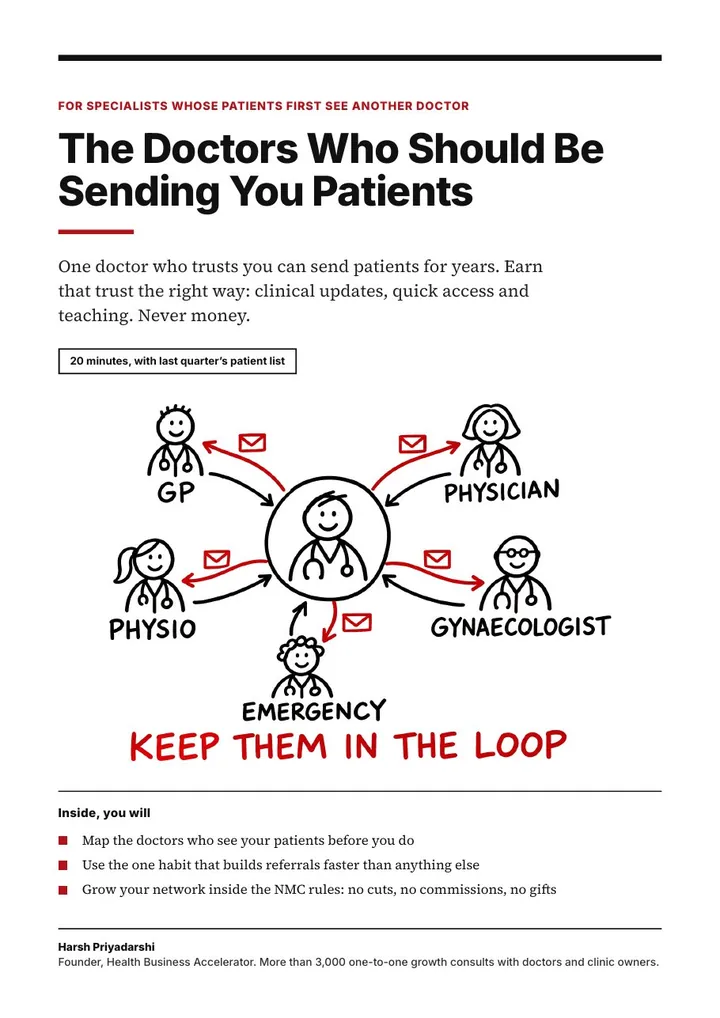
Doctors refer when you keep them informed. Paediatricians, GPs and physicians should get a short update, with consent, after every patient they send, and the patient should go back to them for routine care. A teaching session every quarter, for example on when a child's recurring ear problems need an ENT opinion, makes you the name they remember. Never pay commissions to anyone, including hearing aid dealers or camps. More on this in Good Doctors Go Broke, and on our ENT page. The reminders and recall calls run through our CRM and automation setup.
The short version
- Build a recall calendar for every ENT service, and book all visits at the decision.
- Call new hearing aid users in the first two weeks so their aids don't end up in a drawer.
- Reactivate by group, starting with patients who were tested but never fitted.
- Ask for referrals and reviews when patients hear or breathe better.
- Update every referring doctor and never pay anyone for referrals.
Frequently asked questions
How do I stop patients returning their hearing aids during the trial?
Support them through the first weeks. Book every fine-tuning visit at fitting, call at the end of the first and second weeks, involve a family member in daily use, and repeat a simple speech test at the review to show progress. Most early complaints are about comfort or noise and can be fixed with an adjustment.
How often should ENT patients come back for follow-up?
It depends on the condition and is a clinical decision. Hearing aid users usually need adjustment visits early and regular servicing after that, surgical patients need the reviews the surgeon sets, and seasonal allergy patients benefit from a review before their difficult season. Put every interval in your CRM so nobody is missed.
How can I get more referrals from paediatricians as an ENT doctor?
Make referring easy with a dedicated WhatsApp line and priority slots, then send a short update after every child, with the parents' consent. Send children back for routine care. Run a short teaching session each quarter on when to refer. Never pay for referrals, which is unethical and destroys trust.
What is the best way to bring back patients who had a hearing test but didn't buy?
Message them personally, with permission, and lead with care. Mention how long it has been since the test, explain that hearing can change, and offer a review. Answer every reply within minutes, book a visit with a family member, and present the three options again with the payment choices.
On a free growth call, my team traces your last month from enquiry to treatment and shows you your biggest leak in rupees.