A clinic daily huddle is a ten-minute standing meeting before the first patient. The team reviews yesterday's leads still waiting for a call, today's appointments and procedures, any anxious or VIP patients, and the follow-ups due today. The practice manager or front desk lead runs it, not the doctor. A five-minute end-of-day check then confirms every lead was contacted and every next step is on the calendar.
Most clinic days start the same way. The doctor walks in, the first patient is already waiting, the front desk is answering a call, and someone asks, "Doctor, is the 11 o'clock procedure still on?" while hunting for the file.
Nobody planned the day. The day just happened to them.
Ten minutes fixes most of that. Not a long meeting. A short, standing huddle, at the same time every morning, with the same agenda.
What is a daily huddle in a clinic?
It's a ten-minute meeting before the first patient walks in. The whole team on shift stands together, looks at one screen or one sheet, and goes through the day.
In my framework it covers four things:
- Yesterday's leads that still need calling.
- Today's appointments and procedures.
- Any VIP or anxious patients who need extra care.
- The follow-ups due today.
That's it. The huddle is for operations, not for discussion. Big questions get parked for the weekly meeting.
Why bother, if everyone already knows their job? Because knowing your job and knowing today are different things. The front desk doesn't know the 12 o'clock patient is coming with her husband who has doubts about the cost. The nurse doesn't know the procedure room is booked back to back after lunch. The huddle puts that on the table before it becomes a problem in front of a patient.
And the day closes with a quick check, five minutes before the team leaves: was every lead contacted, and is every next step on the calendar?
What should the daily huddle agenda be?
Use the same order every day, so it runs on its own. Here's the ten-minute version I give clinics.
| Minutes | Topic | Who speaks |
|---|---|---|
| 0 to 2 | Yesterday in three numbers: new leads, leads contacted, bookings made | Front desk lead |
| 2 to 5 | Today's schedule: consultations, procedures, gaps in the calendar | Practice manager |
| 5 to 7 | Patients needing extra care: anxious first-timers, a family coming in, a patient travelling from out of town | Coordinator or nurse |
| 7 to 9 | Open loops: undecided patients due a follow-up today, no-shows to call, leads still uncalled | Lead handler and coordinator |
| 9 to 10 | One focus for today | Practice manager |
The "one focus" is a single sentence. "Every caller today gets offered two slots." Or "We're calling all four of yesterday's no-shows before noon." One thing the team can actually remember at 4 pm.
Run it from the CRM, not from memory. If your system shows yesterday's uncalled leads and today's follow-ups on one screen, the huddle takes eight minutes instead of fifteen.
Who should run the huddle, the doctor or the manager?
Not the doctor.
The doctor should attend when they can, because hearing "the 3 pm patient is very nervous about her procedure" before you meet her changes how you greet her. But the practice manager or the front desk lead runs it.
Why does this matter? Because if the huddle only happens when the doctor is present, it stops the day the doctor is in the OT, on leave or at a conference. And a practice that runs only when you're watching isn't a practice that runs without you.
Rule: If it only happens when you're in the room, it isn't a system yet.
Why do the uncalled leads come first?
Because they're the most expensive thing on the list.
Every enquiry that waited overnight is a patient who has probably messaged two other clinics by now. Here's an example of what slips through without a huddle.
Say your clinic gets 15 enquiries a day and 3 of them go uncalled because the evening shift was busy. Over a six-day week that's 18 enquiries nobody reached. At a 30% booking rate, that's about 5 consultations a week you never got a chance at. At 40% conversion and an average ticket of ₹40,000, roughly 2 patients and about ₹80,000 of treatment, every week, quietly gone.
Putting those leads at the top of every morning means the gap never lasts more than one night. That's why speed to first contact is one of the front desk numbers we watch first in every clinic.
What happens at the end-of-day check?
The morning huddle plans the day. The evening check closes it. Five minutes, run by the front desk lead, with two questions:
- Was every new lead contacted today? If not, who calls them first thing tomorrow?
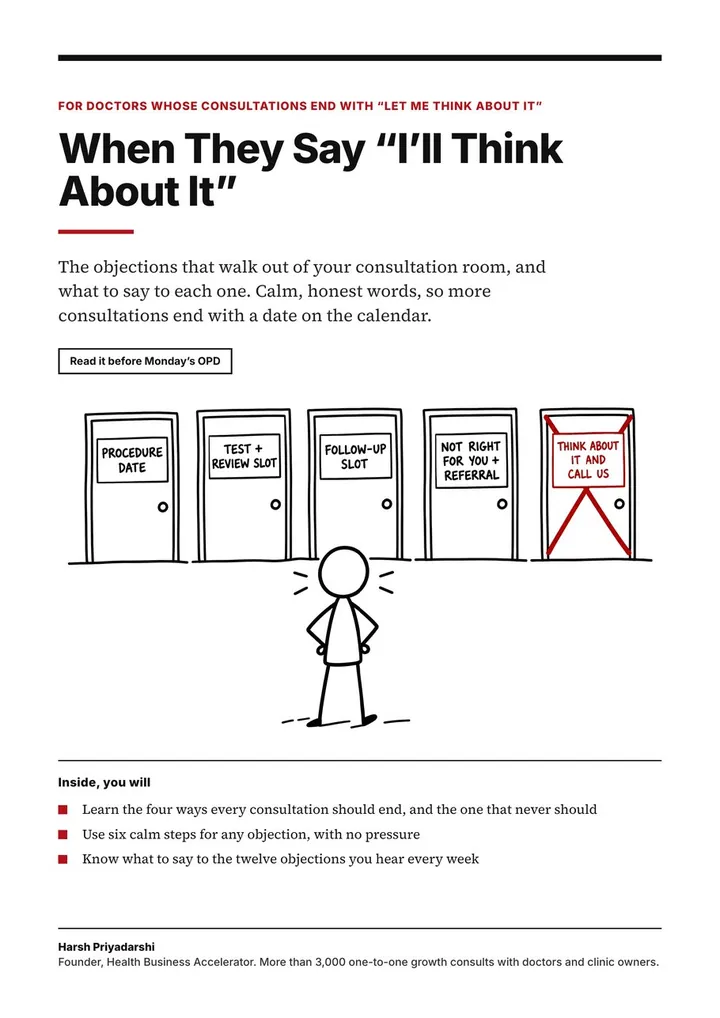
- Does every patient seen today have a next step on the calendar? A procedure date, a test with a review slot, a follow-up, or a family session. No "think about it and call us".
Anything open goes into the CRM with an owner and a time. Tomorrow's huddle starts from that list.
This is where automation helps. Missed-call alerts, instant WhatsApp replies and follow-up reminders can run on their own, so the evening check becomes confirming a short list rather than hunting through phones. We set this up as part of our CRM, WhatsApp and AI work.
What mistakes ruin a daily huddle?
I've seen the same five, again and again:
- It turns into a meeting. Somebody raises a staffing issue and twenty minutes vanish. Park it for the weekly meeting.
- It moves around. 9:50 one day, 10:20 the next, skipped on Saturdays. Same time, every working day.
- It becomes a telling-off. If people get blamed for yesterday's numbers in front of the team, they'll start hiding numbers. Ask what got in the way, then fix it.
- Only the front desk attends. Nurses and the coordinator know which patients need extra care. Bring them in.
- No screen, no list. If the huddle runs on memory, it misses exactly the leads it's meant to catch.
The daily huddle is one part of a bigger rhythm: a daily huddle, a Monday numbers review, books closed by the seventh, a quarterly plan and a yearly review. I lay out the whole rhythm in Rich Doctors Walk Away, and setting it up is part of our growth consulting work.
The short version
- Ten minutes, standing, before the first patient, at the same time every day.
- Cover yesterday's uncalled leads, today's schedule, patients needing extra care and today's follow-ups.
- The practice manager or front desk lead runs it, so it works without the doctor.
- Close every day with two questions: every lead contacted, every next step on the calendar?
- Park discussions for the weekly meeting and never use the huddle to blame people.
Frequently asked questions
How long should a clinic morning meeting be?
Ten minutes is enough for most clinics, and it should never pass fifteen. Keep it standing, at the same time every day, with the same agenda. If a topic needs longer, note it and take it to the weekly meeting. A short huddle that happens every day beats a long one that happens when the doctor has time.
What if my clinic has staggered shifts?
Hold the huddle at the start of the main shift, then do a two-minute handover when the evening team arrives. The handover covers the same open loops: leads still uncalled, patients with follow-ups due and anyone coming in who needs extra care. Write it in the CRM so nothing depends on someone remembering to pass it on.
Should the doctor attend the daily huddle every day?
Attend when you can, especially to hear which patients are anxious or bringing family. But don't run it, and don't let it depend on you. If the huddle stops whenever you're in the OT or away, it isn't a system yet. Your practice manager or front desk lead should own it from day one.
Is the daily huddle the same as a weekly team meeting?
No. The huddle is about today: who is coming in, who needs a call and who needs extra care. The Monday review is about numbers: which of your eight weekly numbers is furthest from its benchmark and the one change you'll make. Keep them separate, or the huddle grows into a long meeting nobody wants.
On a free growth call, my team traces your last month from enquiry to treatment and shows you your biggest leak in rupees.