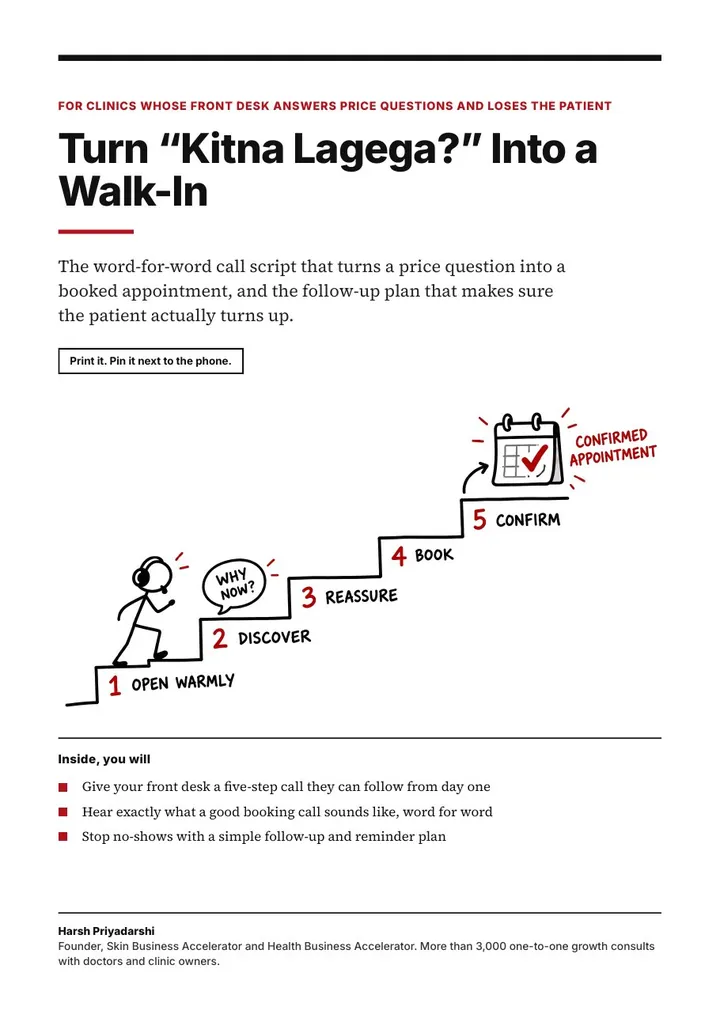
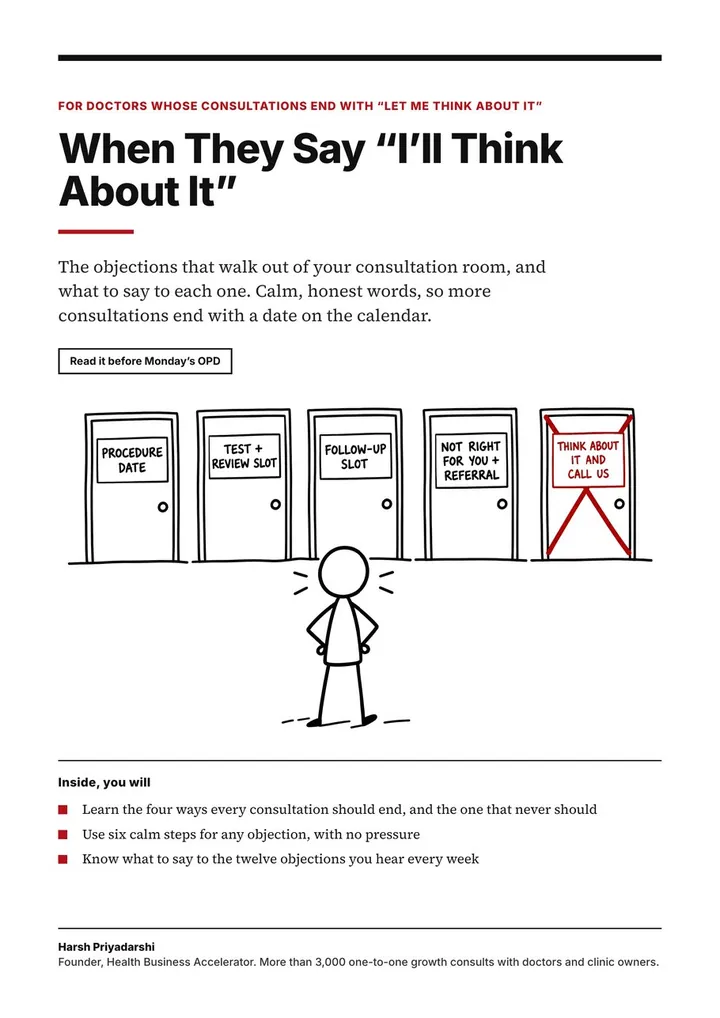
When patients compare bariatric surgery packages, they compare totals because totals are all they can see. An independent surgeon wins by making the whole plan visible: a written list of what is included and excluded, how many years of follow-up come with it, and who they will actually see. Compete on clarity and continuity, never by cutting your fee to match a chain.
A couple walks in with a printout from a big hospital chain. "All-inclusive bariatric package," it says, with one number in bold. They put it on your desk and ask, "Why is yours more?"
Most independent surgeons respond in one of two ways. They drop their fee on the spot. Or they get irritated and start criticising the chain. Both are mistakes. The first teaches the patient that your price was never real. The second makes you look insecure.
There is a better way. Help the patient compare properly.
Why do patients compare bariatric packages on the total?
Because the total is the only thing they can see. A package flyer gives one number. What sits inside that number, and what sits outside it, is rarely spelled out. The patient is not being unfair. They just do not know what questions to ask.
So your job is to show them. Not by attacking anyone else's package, but by making your own completely clear, and giving them a checklist they can use on everyone.
What questions should a patient ask about any bariatric package?
I would hand every patient this list, printed, with your clinic name on it. It works for your package and everyone else's.
- Which tests and assessments before surgery are included?
- Who performs the operation, and will I meet that surgeon before the day?
- How many nights in hospital are included, and what does an extra night cost?
- What happens, and what does it cost, if I need extra care or a longer stay?
- Which consumables and medicines are included, and which are billed separately?
- How many dietitian sessions are included, and over how many months?
- How many surgeon reviews are included, and for how long after surgery?
- Is there a support group or counselling, and is it included?
- Who do I call at night in the first weeks, and is that person part of the team?
- What is not included at all?
A patient who asks these ten questions will compare on substance. Many chains will answer them well, and that is fine. Your aim is not to win every comparison. It is to make sure the comparison is fair.
How should you explain what your price includes?
In writing, line by line, before the price. Here is an example of how an independent surgeon might lay out a plan next to a hypothetical package with a lower headline number. These are illustrative figures, not market prices.
| Item | Example package from a large hospital | Example independent surgeon plan |
|---|---|---|
| Headline price | ₹2,75,000 | ₹3,30,000 |
| Pre-surgery tests | Billed separately, about ₹18,000 | Included |
| Hospital stay | 2 nights | 3 nights |
| Dietitian programme | 2 sessions | 12 sessions over year one |
| Surgeon reviews | Up to month 3 | Up to month 12, then annual |
| Support group | Not mentioned | Monthly, included in year one |
| First-month supplements guidance | Not mentioned | Included consult with dietitian |
| One named coordinator | Not mentioned | Yes, until month 12 |
In this example, the gap that looked like ₹55,000 is smaller once tests are added, and the patient can now see what the extra money buys: a full year of the team, not just the operation.
Never invent the other side's numbers in front of a patient. Use your own plan in detail, give them the checklist, and let them fill in the other column themselves.
Why do follow-up years matter so much in bariatric surgery?
Because the operation is the start, not the finish. What happens in the first year shapes how the patient eats, how they feel, whether small problems are caught early, and what they tell their family afterwards.
A package that ends at discharge or at month three leaves the patient to manage the hardest months alone. A plan that includes a year of dietitian sessions, reviews and a support group keeps them connected. Explain this in plain words in the consult:
"The surgery takes a few hours. The next twelve months decide how you feel about it. That is what most of our fee covers: the team that stays with you."
That sentence is honest, and it shifts the patient from comparing hours in theatre to comparing years of care.
How do you compete on continuity, not price?
A large hospital has scale, brand and budget. You will not beat it on any of those. You can beat it on things it finds hard to copy:
- The same surgeon at every visit. Patients notice when they see a different doctor each time.
- One named coordinator they can WhatsApp, who knows their story.
- Your direct number for real concerns in the first weeks.
- A dietitian who knows them by name at month nine, not just at discharge.
- Speed. A reply in minutes, a consult this week, an answer on insurance within days.
Write these into your plan and your consult. In Good Doctors Go Broke I put it simply: never fight the chain on price, fight on what it cannot copy.
What do you say when the patient asks you to match the price?
Be warm and clear. Here is a line a coordinator can use:
"Our fees are the same for every patient, so everyone is treated fairly. If the budget is a concern, we can look at a plan with fewer extras, or spread the payment through milestones or EMI."
That changes the scope or the payment, never the price. And if the patient still prefers the other package, let them go with good grace. Some will come back. Some will tell their friends that you were the surgeon who explained everything and never pushed.
Building this kind of clear, written plan is part of our front desk and conversion work, and our growth consulting helps independent surgeons price against chains. If you run a bariatric practice, start with our bariatric surgery page for the full picture.
The short version
- Patients compare totals because that is all a package flyer shows them.
- Give every patient a printed checklist of questions to ask about any package.
- Lay out your own plan line by line, before the price, in writing.
- Explain that the first year of care is what most of the fee covers.
- Compete on the same surgeon, a named coordinator and speed, never by cutting the fee.
Frequently asked questions
Why is my bariatric surgery fee higher than the hospital package?
Often because your plan includes things the package lists separately or leaves out: tests, extra hospital nights, a year of dietitian sessions, surgeon reviews and a support group. Lay your plan out line by line in writing, give the patient a checklist to ask every provider the same questions, and let them compare on substance.
Should an independent bariatric surgeon match a chain's package price?
No. Matching tells the patient your price was never real and shrinks the margin that pays for your follow-up programme. Explain what your price includes, then offer a plan with fewer extras or a different payment schedule if budget is a concern. Change the scope or the payment, never the price.
What should be included in a bariatric surgery package?
That is the surgeon's clinical decision, but patients usually want clarity on pre-surgery tests, the surgeon, hospital nights, consumables and medicines, dietitian sessions, surgeon reviews and for how long, support groups, after-hours contact and what is excluded. Writing every item down is what makes your plan easy to compare fairly.
How do I explain the value of bariatric follow-up to price-sensitive patients?
Tell them plainly that the operation takes hours but the next twelve months decide how they feel about it. Show the year of reviews, dietitian sessions and support in writing, with dates. Then show the monthly figure through milestones or EMI, so the full year of care feels reachable without lowering the price.
On a free growth call, my team traces your last month from enquiry to treatment and shows you your biggest leak in rupees.