Oncology practices keep patients in care by booking every cycle and review at the start, giving each family a navigator and a side-effect helpline, calling within hours when a cycle is missed, and running surveillance on the schedule the oncologist sets for years. Support survivors and families, keep referring doctors updated at every milestone, and approach referrals and reviews with great sensitivity.
In most specialities, retention is about lifetime value. In oncology, it is about something more basic: making sure patients finish the treatment their doctors planned, and keep coming back for the follow-up that was asked of them. A family that stops halfway is rarely saying no to you. They are usually overwhelmed by side effects, cost, travel or advice from relatives. And when they stop, they often do it quietly. This post covers how to build the support that keeps patients in care, and how referrals work in a speciality where trust is everything.
Why do patients drop out of cancer treatment midway?
The reasons are usually human, not clinical. Side effects that frighten them. The cost of each cycle adding up. Long journeys from another town. Exhaustion in the caregiver. Relatives pushing an unproven remedy. Or simply feeling better and deciding the rest is unnecessary.
The plan completion system from Good Doctors Go Broke applies directly. Book every cycle and every review on the day the plan is agreed, not one at a time. The CRM must show, at a glance, every patient on active treatment, the next due date and every missed appointment. A missed cycle in oncology should get a call within hours, not days, from the navigator who knows the family. Ask what got in the way, and solve what can be solved: a transport problem, a payment question, a side effect that needs the doctor's attention. Clinical decisions always go to the oncologist.
How do you support patients between visits?
Most of a patient's treatment happens at home, between visits. That is where families feel most alone. Map the journey and decide what you do at each stage.
| Stage | What the family is feeling | What the practice does |
|---|---|---|
| Diagnosis and planning | Shock, confusion | One navigator, a written plan, a direct number |
| The first cycle or surgery | Fear of the unknown | A clear walkthrough, a visit to the day-care unit, updates to the family |
| The middle of treatment | Tiredness, doubt, side effects | A nurse-led helpline with clear escalation to the doctor, nutrition and counselling support |
| The end of treatment | Relief mixed with worry | A completion review with the oncologist, and the surveillance plan booked |
| The follow-up years | Anxiety before every review | Reminders, a familiar team and quick access when something feels wrong |
A nurse-led helpline is one of the most powerful things an oncology practice can offer. Give it written escalation rules, so every clinical question reaches the right doctor quickly. For families from other towns, use teleconsultations for questions and report reviews where an examination isn't needed, and outreach clinic days for follow-ups closer to home.
How should surveillance and survivorship be organised?
When treatment ends, the follow-up years begin. The intervals are the oncologist's decision. Making sure nobody falls between those dates is the practice's job.
Book the first surveillance visits at the completion review, before the family leaves. Send reminders before each one. Call anyone who is overdue. A survivorship clinic, with reviews, rehabilitation, nutrition and emotional support, gives patients a reason to stay connected to the team that treated them. Where it is clinically appropriate, offer family members the counselling or screening their doctors recommend.
One process matters more than people realise. When a patient passes away, update the records immediately so that no reminder, review request or birthday message ever reaches the family. A single automated message at the wrong moment undoes years of good care.
How do you reconnect with patients lost to follow-up?
Reactivation in oncology is about care, not campaigns. Clean your database, keep only people who agreed to hear from you, and split it carefully:
- Patients overdue for surveillance, with a personal reminder from the team and a call if there is no reply.
- Families who came for a second opinion and never returned, with one gentle check-in at most, and a standing offer of help.
- People screened at a camp or workplace who are due again, with a simple reminder.
- Patients who completed treatment, with an invitation to the survivorship clinic or support group.
Never include bereaved families, and never send anything that feels like marketing.
Here is an example of the scale of care involved. Say 400 patients are overdue for surveillance reviews. If calls and messages bring 240 of them back, at an example ₹4,000 per review with tests, that is ₹9.6 lakh of care. More importantly, it is 240 reviews the oncologist asked for that would otherwise not have happened. We run this kind of careful monthly routine through our retention and reactivation service.
How do referrals work in oncology?
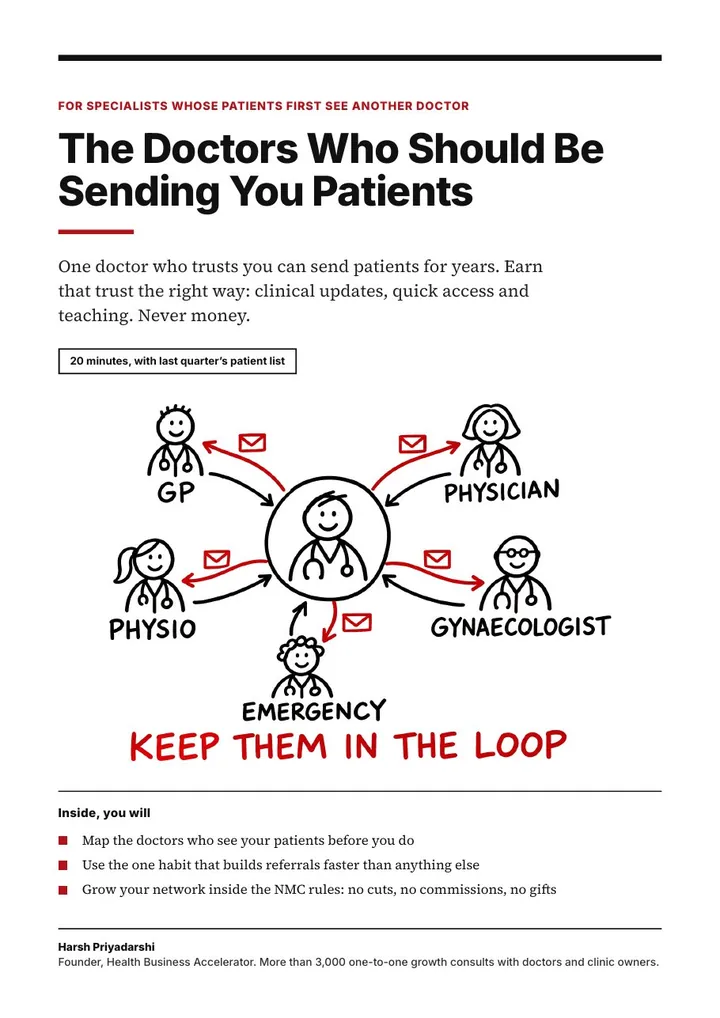
Most oncology patients come through other doctors, so the referral relationship is the heart of growth. Update the referring doctor, with consent, at diagnosis, at the treatment plan, at completion and at each key follow-up. Send the patient back for general care the referring doctor can give, and work alongside them during treatment. Run teaching sessions for referring doctors on referral pathways in your niche, and invite them to case discussions where appropriate. Referral cuts, in either direction, have no place in cancer care.
Be easy to reach, too. A physician who can call you directly about a doubtful scan will send patients far sooner than one who has to go through the front desk, and earlier referrals are better for everyone.
Patient word of mouth works differently in oncology. Many survivors and caregivers want to help others facing what they faced. A well-run support group gives them a way to do that. Never raise referrals during treatment or after difficult news. If a family offers to share your details, make it easy with a short message they can forward, and thank them personally. Ask for reviews only at genuine milestones, usually from the caregiver, and never mention a diagnosis in replies. Our CRM and automation setup keeps surveillance dates and referral updates on schedule. See more on our oncology page and in Good Doctors Go Broke.
The short version
- Book every cycle and review at the start, and call within hours when a cycle is missed.
- Run a nurse-led helpline with written escalation rules, plus nutrition and counselling support.
- Book surveillance at the completion review, and remove bereaved families from every list immediately.
- Reactivate overdue surveillance patients with care, never with marketing.
- Keep referring doctors updated at every milestone, and never pay or accept cuts.
Frequently asked questions
How do I stop cancer patients missing chemotherapy cycles?
Book every cycle when the plan is agreed, show the next due date in your CRM, and have a navigator call within hours if a cycle is missed. Most missed cycles come from side effects, cost, travel or family pressure, many of which can be solved. Clinical concerns should always go straight to the oncologist.
What should an oncology follow-up system include?
Surveillance visits booked at the completion review, reminders before each one, calls for anyone overdue, a nurse-led helpline with clear escalation rules, teleconsultations where an examination isn't needed, and a survivorship clinic. It must also update records promptly when a patient passes away, so no message reaches a grieving family.
How can oncologists build stronger referral relationships?
Keep referring doctors informed at every milestone, with consent: diagnosis, plan, completion and key follow-ups. Send patients back for general care, be easy to reach for doubtful cases, and run teaching sessions on referral pathways. Never pay or accept cuts, which are unethical and destroy trust.
Is it appropriate to ask cancer patients for Google reviews?
Only with great care. Avoid hard phases of treatment, moments after difficult news and palliative care entirely. Ask at genuine milestones, such as completing treatment, and often ask the caregiver. Accept that many families won't post, offer nothing in return and never mention any medical detail in your replies.
On a free growth call, my team traces your last month from enquiry to treatment and shows you your biggest leak in rupees.