Mumbai clinics should hire front desk staff for warmth you can hear on the phone, persistence, and fluency in the languages patients speak, whether Marathi, Hindi or Gujarati. Test with a phone call and a role play before any interview. Add a treatment coordinator once you pass twenty consultations a day. Pay a fair salary plus incentives on show-ups and started treatments, with guardrails against pressure.
Picture a clinic in South Mumbai whose front desk has changed four times in a year. Each person was good. Each one left. Look closely and you often find the same pattern: long journeys each way, an evening OPD that runs late, and a person reaching home well after ten every night. They were not bad hires. The job was designed without thinking about Mumbai.
Hiring for a Mumbai clinic is not only about finding good people. It is about designing roles that good people can keep doing.
What should a Mumbai clinic hire front desk staff for?
Most clinics hire for the wrong things: polished English, a nice appearance, and a low salary. What you actually need is very different:
- Warmth you can hear in a voice, because most first contact happens on the phone or a WhatsApp voice note.
- Empathy for people who are anxious or in pain.
- Persistence to follow up without sounding pushy.
- Fluency in your patients' languages. In Mumbai, that often means Marathi and Hindi, and in many suburbs Gujarati too, alongside English.
Be honest about the hours and the commute at interview. Ask how the candidate would get to work and home after your last slot. A candidate who can reach you without exhausting themselves is far more likely to still be with you in a year.
How do you test a candidate before hiring?
You do not find warmth on a CV. Test it.
- The phone test. Before any interview, call the candidate and talk for five minutes. That is exactly how your patients will meet them.
- The language check. Switch to Marathi or Gujarati partway through, the way a real caller might. See whether they follow comfortably.
- The role play. You play a worried caller who only wants the price. The best candidates ask questions, listen and naturally try to help. The worst read out information.
- The shadow day. Let your best candidate spend a paid day at the desk before you decide.
When does a Mumbai clinic need a treatment coordinator?
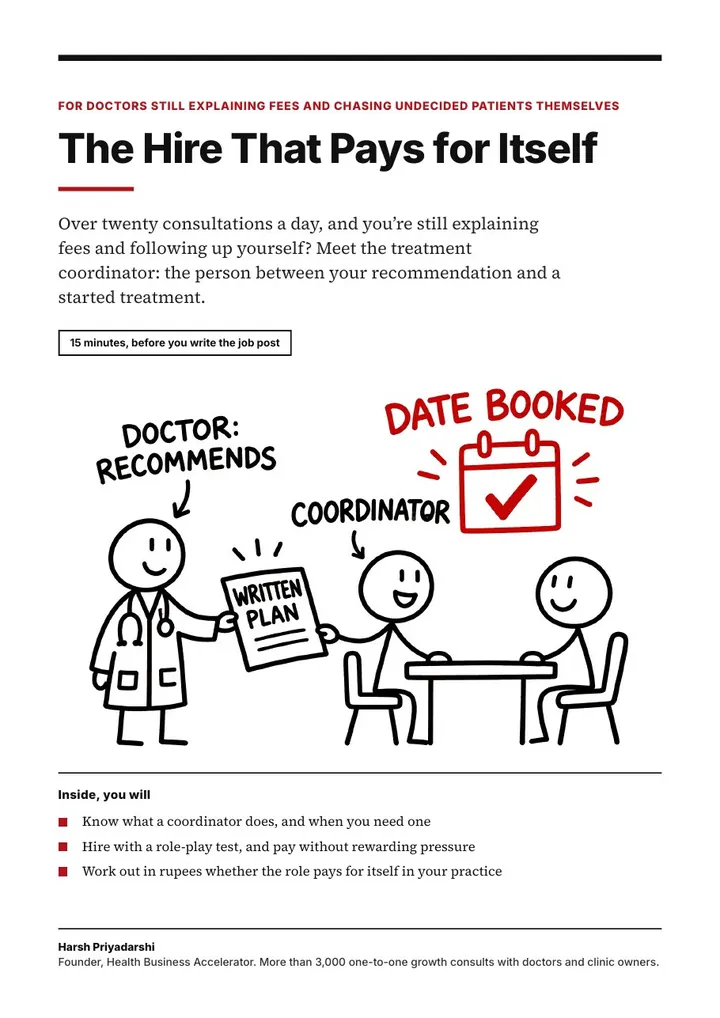
My framework is simple: once you do more than twenty consultations a day, you need a dedicated treatment coordinator. Below that, the doctor and a well-trained front desk can usually share the job.
The coordinator is the bridge between your recommendation and the patient's decision. They sit with the patient after the consultation, walk through the written plan and three options, explain fees, EMI and insurance paperwork, book the date, talk to the family, and follow up with everyone who did not decide on the day.
Where to find them in Mumbai:
- Patient counsellors already working in hospitals and larger clinics.
- Nurses who are great with patients and want to move out of clinical work.
- People from hospitality, airlines, banking and insurance, who are comfortable with service and money conversations.
- Your own front desk, if someone is ready to step up.
What does a coordinator actually add?
Here is an example with illustrative numbers. Say your clinic sees 25 consultations a day, six days a week, so 150 a week. Without a coordinator, 30% start treatment, so 45 patients. With a trained coordinator owning the handover and the follow-up, conversion rises to 36%, so 54 patients.
That is 9 extra patients a week. At an average plan of ₹35,000, about ₹3.15 lakh more a week. Even if your numbers move only half that much, the role pays for itself many times over, and the doctor gets their time back.
How should you pay and train them?
Pay a fair fixed salary plus an incentive.
| Role | Fixed salary plus incentive on | Guardrails |
|---|---|---|
| Front desk | Patients who book and actually show up, not bookings alone | Weekly call reviews, no booking anyone just to hit a number |
| Treatment coordinator | Treatments actually started | Track refund requests and complaints, review conversations weekly, never reward pressure |
A coordinator negotiates the plan, never the price. They help the patient find the right option, the payment structure and the date, never a discount.
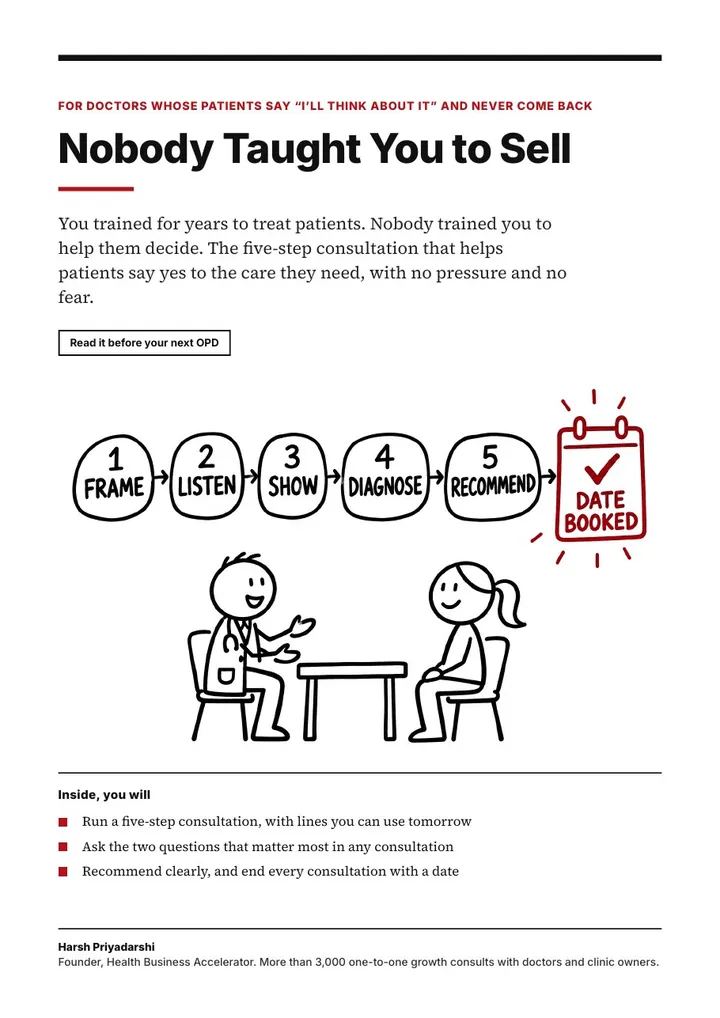
Train properly. In the first week, a new front desk person learns your niche, your doctor, your plans and fee sheet, the five-step call script in each language, and your systems, and listens to good and bad recorded calls. A new coordinator gets four weeks: learning your core treatments at a patient's level, sitting in on consultations, mastering the three options and every payment option, and practising objections in role plays until they feel natural.
After that, training never stops. Review three recorded calls a week together, with the caller's knowledge. Celebrate great calls in front of the team. Our team training work builds these scripts and reviews, alongside our conversion systems.
What does a front desk role card look like?
Skip the long job description nobody reads. Write one page with three parts.
What they own: every new enquiry from first contact to a confirmed appointment that actually happens, plus confirmations, reminders and same-day calls to no-shows.
The numbers they are measured on: answer rate of at least 95% in working hours, first contact within five minutes, booking rate between 25 and 40%, and show rate between 60 and 75%.
What a great week looks like: every missed call returned within five minutes, every caller asked their preferred language and "how did you find us?", every booking confirmed on WhatsApp with the station and landmark, and three recorded calls reviewed with the manager on Monday.
Give the coordinator a card of their own, built the same way around started treatments.
How do you keep good people in a Mumbai clinic?
Design the role for the city:
- Split or staggered shifts, so the person who opens is not also the person who closes after the evening rush.
- A one-page role card for each person: what they own, the numbers they are measured on, and what a great week looks like.
- A weekly thirty-minute numbers review where they see how their work turns into patients.
- A clear path from front desk to coordinator to team lead.
More on how we support clinics here is on our Mumbai page.
The short version
- Hire for warmth, persistence and fluency in Marathi, Hindi or Gujarati, not polish.
- Test with a phone call, a language switch, a role play and a shadow day.
- Past twenty consultations a day, hire a treatment coordinator.
- Pay for show-ups and started treatments, with guardrails against pressure.
- Design shifts and commutes so good people stay. The full system is in Good Doctors Go Broke.
Frequently asked questions
Where can I find a good treatment coordinator in Mumbai?
Look first at patient counsellors in hospitals and larger clinics, and at nurses who want to move out of clinical work. People from hospitality, airlines, banking and insurance often do well too. Ask your team and network for referrals. Wherever they come from, test with a role play about a patient who loved the doctor but needs to ask family.
Should my front desk speak Gujarati if my clinic is in Mumbai?
If a meaningful share of your patients speak Gujarati at home, yes, at least on some shifts. Patients relax in their own language, and relaxed patients book more readily. Check your CRM or ask the front desk to note each caller's preferred language for a month, then build your roster around what you find.
How long does it take to train a new clinic receptionist?
Plan for a focused first week covering your niche, doctor, plans, fee sheet, scripts and systems, with recorded calls and role plays. Most new people become confident within a few weeks if they get weekly call reviews afterwards. Training never really stops. The best clinics review a few calls every single week.
What incentive should I give my clinic front desk?
A fair fixed salary plus an incentive tied to patients who book and actually turn up, not bookings alone. That one detail stops people booking anyone just to hit a number. Keep the incentive simple, review a sample of calls every week, and never reward pushing patients into slots they did not want.
On a free growth call, my team traces your last month from enquiry to treatment and shows you your biggest leak in rupees.