Kanpur clinics should hire front desk staff and treatment coordinators for warmth, persistence, calm with money and fluent everyday Hindi, not polished English or looks. Start with a phone test, then a role-play with a patient who bargains, pay a fair fixed salary plus an incentive on patients who arrive or start treatment, and train for a full week or four weeks before they handle patients alone.
Picture two receptionists at a Kanpur clinic. The first has the best English in the building. She is polite, correct and slightly distant, and older callers from Kanpur Dehat hang up halfway. The second is quieter and only answers when the main desk is busy, but she speaks the way the patients speak, asks about their family and always offers two slots. Most doctors would call the first one their best receptionist. The call recordings would usually say it is the second. I see this pattern in clinics across India, and it is why hiring for the wrong things is so expensive.
What should a Kanpur clinic hire for?
The usual hiring checklist of good English, a smart appearance and a low salary measures the wrong things. What you actually need is very different.
| Role | What they own | What to hire for | Measured on |
|---|---|---|---|
| Front desk and lead handler | Calls, WhatsApp, bookings, confirmations | Warmth you can hear, persistence, fluent everyday Hindi | Answer rate, speed to first contact, booking rate, show rate |
| Treatment coordinator | From the doctor's recommendation to a treatment paid for and started | Warmth, calm confidence about money, clear explaining, follow-up discipline | Started treatments, time to decide, average plan value |
| Practice manager | Day-to-day running of the clinic | Organisation, fairness with staff, comfort with numbers | Weekly numbers, SOPs followed, staff turnover |
Write a one-page role card for each person: what they own, the numbers they are measured on, and what a great week looks like. That page is worth more than a long job description nobody reads.
Do I need a treatment coordinator yet?
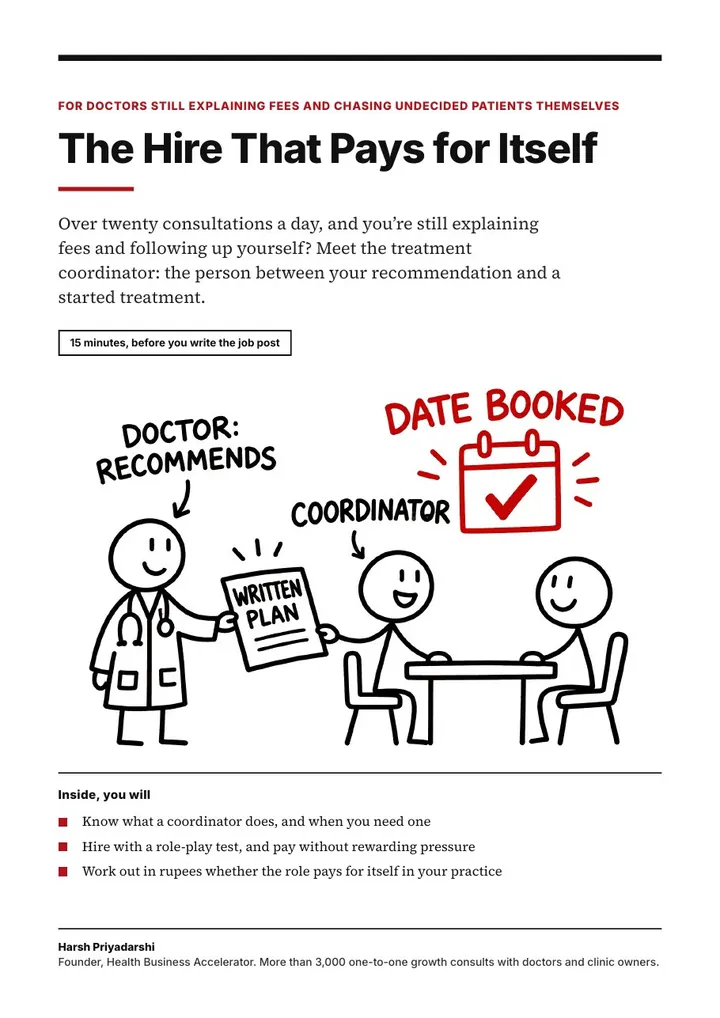
My framework is simple. If you do more than twenty consultations a day, you need a dedicated treatment coordinator. Below that, the doctor and a well-trained front desk can share the job, with a clear handover.
In Kanpur, the coordinator carries a load that is easy to miss: the family. Many patients arrive with a relative, and many decisions are finally made by someone at home. The coordinator sits with the patient and the relative after the consultation, walks them through the written plan, explains the three options and the EMI figure, and offers to call the person who decides. A coordinator never negotiates the price. They negotiate the plan, the payment schedule and the date.
Where do I find good candidates in Kanpur?
The best people usually come from places where they already handle anxious customers and important decisions.
- Patient counsellors and coordinators at other hospitals and clinics in the city.
- Nurses who want to step away from bedside work but still love patients. They understand the medicine and the fear.
- People from banking, insurance, hospitality and retail who are comfortable talking about money.
- Your own team. Someone at your desk may already be ready to step up.
Two practical points matter in Kanpur. Commute matters, because crossing the city at peak hours takes time and evening shifts end late, so a candidate who lives within reasonable distance is more likely to stay. And fluency matters both ways: comfortable everyday Hindi for most patients, and enough English to handle reports, insurance forms and the occasional English-speaking caller.
How do I test candidates before hiring?
You do not find warmth on a CV. Test it.
- The phone test. Before any interview, call the candidate and have a short conversation. That is exactly how your patients will hear them.
- The front desk role-play. You play a worried patient who asks "kitna lagega?" in the first breath, then says "main baad mein call karta hoon". The best candidates ask questions, listen and gently try to book. The worst read out information.
- The coordinator role-play. You play a patient who loved the doctor but says the fee is more than expected and she needs to ask her husband. Watch how they listen, whether they separate the total from paying it all at once, and whether they move to a next step.
- A trial day. Before deciding, have your top candidate spend a full OPD day with the team.
How should I pay them?
Pay a fair fixed salary, plus an incentive tied to what actually matters.
For the front desk, reward bookings that arrive, not just bookings. That one detail stops people booking anyone just to hit a number. For the coordinator, reward treatments actually started, not consultations.
Here is an example to show the structure, not a recommended salary. Say a front desk incentive is ₹150 for every new patient who books and arrives. If 60 new patients arrive in a month, that is ₹9,000 on top of the fixed salary, earned only when the clinic earns.
Add guardrails. Never reward pressure. Track complaints and refund requests. Review a sample of conversations every week. A coordinator who pushes patients into plans they regret will cost you far more in reputation than any target they hit, and in a city where people talk, that cost arrives quickly.
How do I train them in the first weeks?
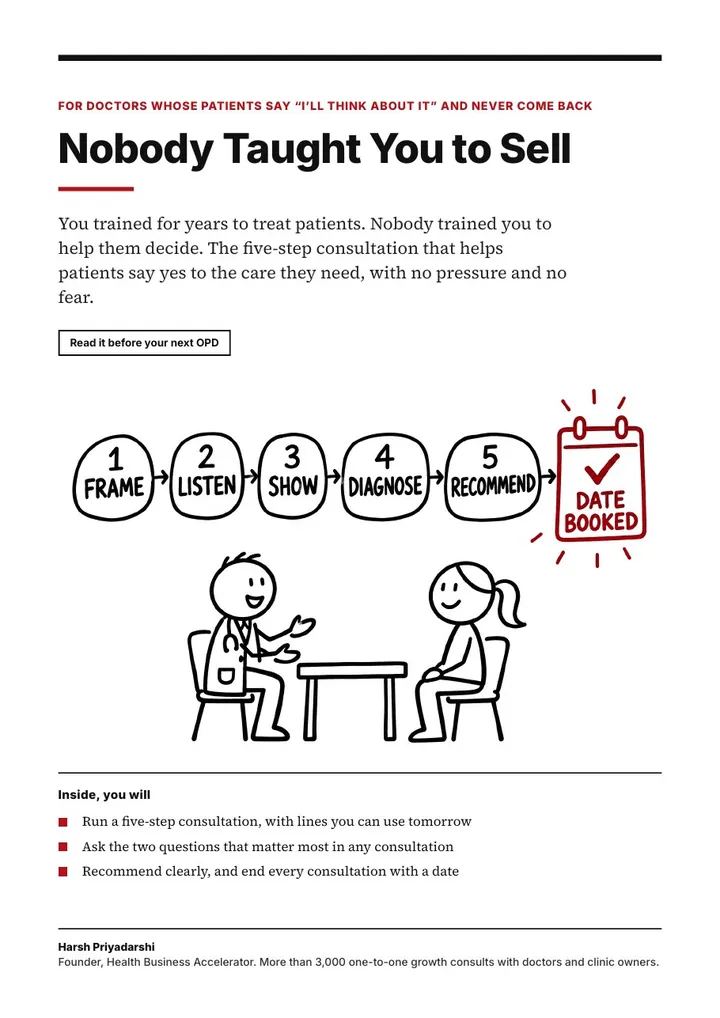
Front desk, week one: your speciality, your doctor, your plans and fee sheet, the five-step call structure, the WhatsApp templates and the CRM. Listen to recorded calls, good and bad. Role-play until the structure feels natural in Hindi.
Coordinator, first four weeks:
- Learn your core treatments at a patient's level.
- Sit in on consultations and watch procedures where possible.
- Learn the plans, the three options, the fee sheet and every payment option.
- Practise objection handling in role-plays.
- Learn the follow-up cadence: same day, next day, then days 3, 7 and 14.
After that, training never stops. Record every call with the caller's knowledge, score three a week out of five, and celebrate great calls in front of the team. We run this kind of programme under team training, alongside the call and follow-up systems in conversion systems. The full coordinator method is in Good Doctors Go Broke, and our Kanpur page explains why fluent everyday Hindi matters so much at the desk.
The short version
- Hire for warmth, persistence and fluent everyday Hindi, not polished English.
- Past twenty consultations a day, hire a dedicated treatment coordinator who also handles the family.
- Test with a phone call and a role-play where the patient bargains or wants to ask at home.
- Pay a fair fixed salary plus incentives on patients who arrive or start, with guardrails against pressure.
- Train for a week or four weeks, then review recorded calls every week.
Frequently asked questions
Should my Kanpur clinic receptionist speak English or Hindi?
Both help, but fluent everyday Hindi matters most for most Kanpur patients. Patients relax when the person on the phone sounds like them. Enough English for reports, insurance forms and the occasional English-speaking caller is useful. Test both in the phone interview and the role-play rather than relying on a CV.
What is the difference between a receptionist and a treatment coordinator?
The front desk turns enquiries into appointments that actually happen. The treatment coordinator takes over after the doctor's recommendation, explains the written plan, options, fees and EMI, talks to the family, books the procedure date and follows up with patients who did not decide. They negotiate the plan and payment, never the price.
How do I stop front desk staff booking anyone just to hit a target?
Pay the incentive on patients who book and actually arrive, not on bookings alone. Then review recorded calls every week and track show rate. If bookings rise but show rate falls, the desk is booking people who were never committed, and you will see it in the numbers within weeks.
Can a nurse become a treatment coordinator?
Often, yes, and some of the best coordinators are former nurses. They understand the medicine and the patient's fear, and patients tend to trust them. They still need training on the plans, fee sheet, payment options and objection handling, plus practice talking calmly about money, before they work with patients alone.
On a free growth call, my team traces your last month from enquiry to treatment and shows you your biggest leak in rupees.