Meta and Instagram ads work for hair transplant clinics when they educate men about hair loss without pointing at the viewer. Use the surgeon on camera, formats like hairline ratings and myth-busting, adults-only targeting and three to five fresh creatives a week. Add qualifying questions to forms, reply on WhatsApp in seconds, call within five minutes, and judge each ad by consultations and surgeries.
A man who has ignored his receding hairline for two years is not searching for a surgeon. He is watching cricket clips, car reviews and memes. Meta lets a hair clinic reach him in that feed, and a good video is often the thing that finally makes him act. A bad one gets rejected, or worse, gets approved and brings a flood of cheap leads who never pick up the phone.
Why do hair transplant ads get rejected?
Because most of them point at the viewer. A hair clinic we worked with had its ads rejected again and again, and every one of them opened with "Are you losing your hair?"
Meta does not allow ads that assert or imply something about the viewer's personal attributes, including health or appearance. It does not allow ads that make people feel bad about their bodies. And cosmetic procedures must be targeted at adults only.
The fix is small. Talk about the problem, not the person:
- Not "Are you losing your hair?" but "Most men start losing hair in their twenties. Here's what actually works."
- Not "Embarrassed by your bald patch?" but "A thinning crown and a receding hairline are treated differently. Here's why."
- Not "Tired of wearing a cap?" but "Three questions to ask any clinic before a hair transplant."
That clinic rewrote every ad this way, set cosmetic campaigns to adults only, and replaced shame with education and empathy. The ads were approved, and they performed better too. Men respond to a doctor who explains, not one who points fingers.
Which hair transplant videos do men actually watch?
Your creative is your targeting on Meta. The video decides who stops, so it must speak to the exact man from your patient map.
| Format | Example | Why it works |
|---|---|---|
| Rating hairlines | The surgeon rates well-known hairlines out of ten and explains what looks natural | Educates and entertains, and teaches what a good result looks like |
| Myth versus fact | "Transplanted hair falls out after a year": true or false? | Answers the doubts men pick up from forums |
| The donor area | Why grafts must be taken to protect the back of the head for the future | Separates a careful surgeon from a graft factory |
| Surgery day, honestly | What the day feels like, hour by hour, without showing a patient | Takes away the fear of the unknown |
| The wedding timeline | Why a groom should plan about a year ahead | Speaks directly to the most common "why now" |
A hair transplant surgeon we worked with had accurate, useful videos that barely got watched. They educated, but did nothing else. When he started rating celebrity hairlines out of ten and explaining in simple words why each looked natural or fake, the format went viral more than once. Every viewer who watched to the end learned what a good hairline looks like, which is exactly what you want a future patient to know.
Results matter in hair, and patient journeys at three, six and twelve months are powerful proof. Use them only with written consent, keep lighting and angles honest, show typical results, and check the current platform rules for before-and-after images in your category before each campaign.
How should a hair clinic set up Meta ads?
- Tracking before spending. The pixel on your site and CRM events sent back to Meta, so it learns which leads booked and had surgery.
- A simple structure. A few well-funded ad sets, broad targeting within the area men travel from, adults only.
- Three to five new creatives a week, with the surgeon on camera, pulled from the patient map.
- Patience with changes. Raise budgets gradually and do not judge an ad set in its first week.
Organic video and ads feed each other. Record five to eight short videos in one weekly slot, post them on Reels, Shorts and Facebook, and use the best performers as ads. The authority this builds is the doctor authority side of a hair practice.
How do you follow up hair transplant leads?
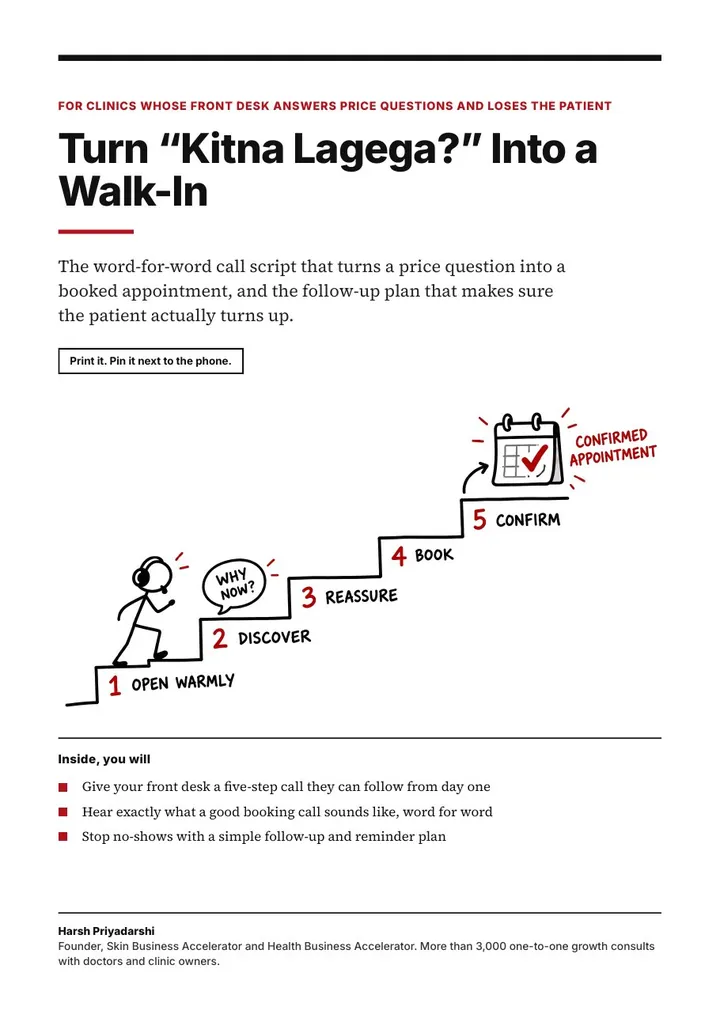
A hair clinic we worked with was getting leads at a very low cost, and almost none of them booked. Many did not even remember filling in the form. We added qualifying questions, set up an instant WhatsApp reply and a call within five minutes, and started sending booked and treated patients back to Meta. Leads got a little more expensive, and far more of them walked through the door.
Here is the routine:
- Ask two or three questions on the form: where the hair loss is (front, crown or both), when he would like to get it done, and which city he lives in.
- Reply on WhatsApp within seconds, with the surgeon's name and one question.
- Call within five minutes. Three attempts on day one, then days two, four, seven and fourteen.
- Ask for photos if he is outstation. Front, top and crown, so the surgeon can give an honest range before he travels. The surgeon reviews them. The front desk never comments on them.
- Offer two specific consultation slots, in person or by video for men in other cities.
A first WhatsApp might read: "Hi Arjun, this is Rohit from Dr Menon's hair clinic. Thanks for your enquiry. Doctor sees hairline and crown cases every day. Could you tell me roughly how long you've noticed the change?" Our CRM, WhatsApp and AI setup sends this automatically, day or night.
How do you know which hair ads are working?
Track each ad through four numbers: leads, consultations booked, consultations attended and surgeries. Not likes. Not cost per lead.
When Meta seems to stop working for a hair clinic, it is almost always one of two things. The same creative has run for months, or leads are being called hours later. Fix those two and most accounts recover.
The short version
- Talk about hair loss, never about the viewer, and run cosmetic campaigns for adults only.
- Formats like hairline ratings, myths and honest surgery-day videos beat polished graphics.
- Track with the pixel and CRM events, keep the structure simple, and refresh creatives weekly.
- Qualify on the form, reply in seconds, call in five minutes, and ask outstation men for photos.
- See how we grow hair clinics on our hair transplant page.
Frequently asked questions
How do I write hair transplant ads that Meta will approve?
Talk about hair loss as a topic, never about the viewer. Replace hooks like 'Are you going bald?' with educational lines such as 'Most men start losing hair in their twenties. Here is what actually works.' Target cosmetic campaigns to adults only, avoid shaming language, and check current rules on before-and-after images before each campaign.
What kind of content works best for hair transplant surgeons on Instagram?
Formats that educate and entertain together: rating well-known hairlines, myth versus fact, explaining the donor area, honest surgery-day walkthroughs and wedding timelines. Keep every video on your one outcome, put the surgeon on camera, turn winning formats into weekly series, and add a comment keyword that sends a guide and a WhatsApp link.
Why are my hair clinic's Meta leads cheap but not booking?
Cheap leads often come from forms that are too easy and follow-up that is too slow. Add two or three qualifying questions, reply on WhatsApp within seconds and call within five minutes. Send booked and operated patients back to Meta so it learns who real patients are. Leads may cost a little more, but more of them arrive.
Should hair clinics ask leads to send photos of their scalp?
For outstation patients it helps, as long as the surgeon reviews the photos and the front desk never comments on them. Front, top and crown views let the surgeon give an honest range and decide whether a video or in-person consultation is the right next step, before the patient spends on travel.
On a free growth call, my team traces your last month from enquiry to treatment and shows you your biggest leak in rupees.